
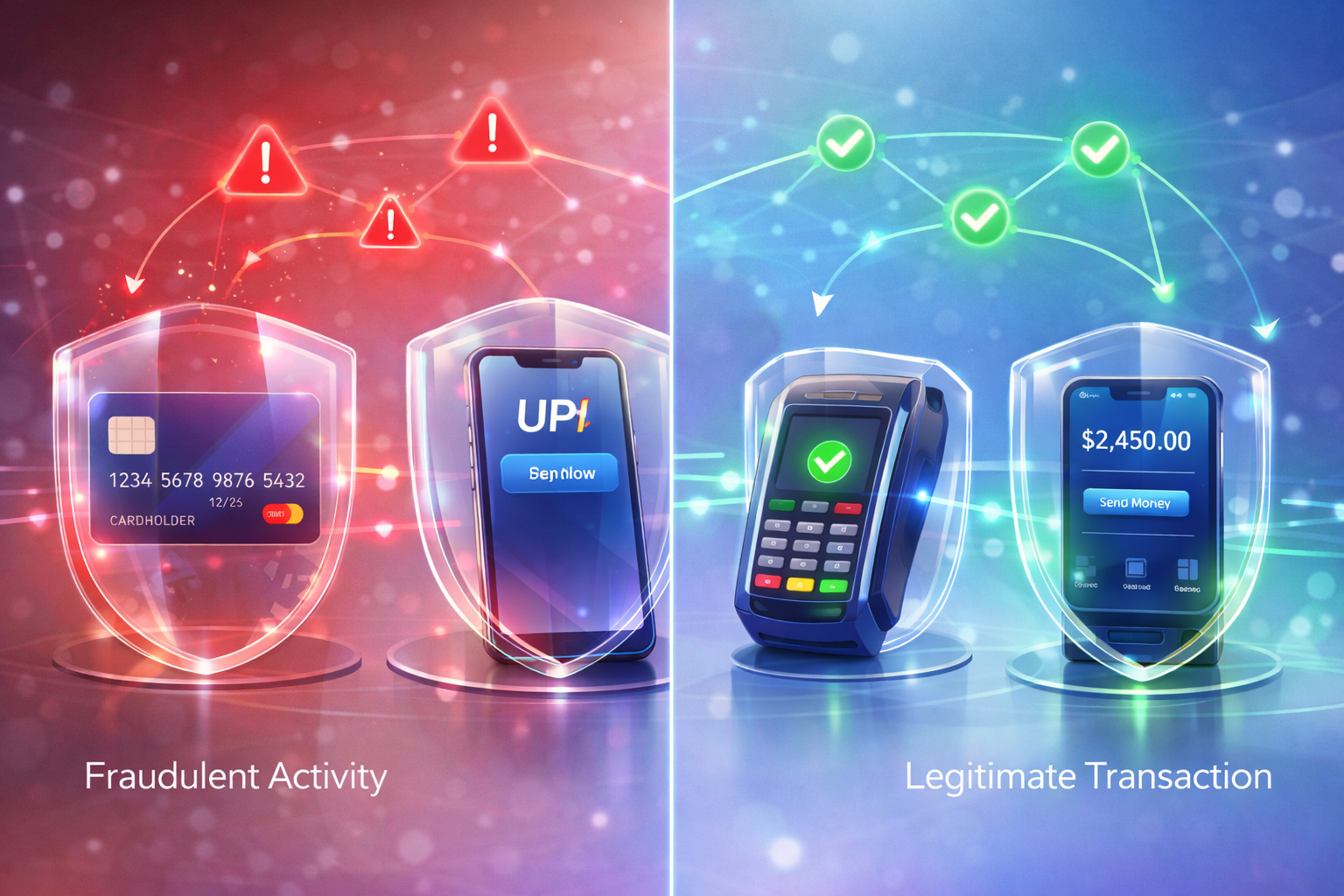
Agentic AI is transforming real-time fraud detection in payments. Learn how autonomous AI agents prevent fraud, reduce losses, and improve security
✨ Introduction: Why Fraud in Payments Is No Longer a “Future Problem”
Imagine you’re making a simple UPI payment or tapping your card at a store.
Behind the scenes, hundreds of checks happen in milliseconds — location, device, spending pattern, merchant behavior, and more.
Now imagine fraudsters evolving faster than traditional systems.
That’s exactly where Agentic AI comes in.
In 2025, real-time fraud detection is no longer rule-based or reactive. It’s autonomous, adaptive, and proactive — powered by AI agents that think, decide, and act on their own.
This article explains:
- What Agentic AI really means (in simple words)
- How it works in the payment domain
- Why banks, fintechs, and payment gateways are adopting it fast
- Real-world benefits, architecture, and future trends
Let’s break it down step by step 👇
🧠 What Is Agentic AI? (Simple Definition)
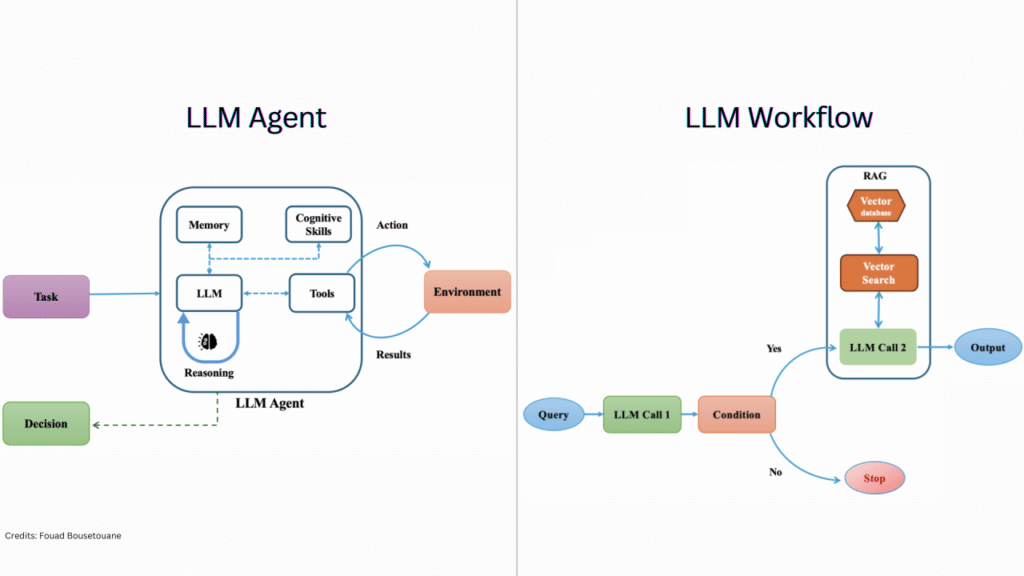
Agentic AI refers to autonomous AI agents that can:
- Observe data in real time
- Make independent decisions
- Take actions without human intervention
- Learn continuously from outcomes
In simple terms:
Agentic AI behaves like a smart digital employee who doesn’t wait for instructions every time.
🧠 How It’s Different from Traditional AI
| Traditional AI | Agentic AI |
| Reacts to inputs | Acts autonomously |
| Fixed workflows | Dynamic decision paths |
| Limited context | Full situational awareness |
| Human approval needed | Self-executing actions |
📲 Why the Payment Domain Needs Agentic AI (Urgently)
Payment fraud today includes:
- UPI fraud
- Card-not-present fraud
- Account takeover
- Merchant fraud
- Synthetic identity fraud
- Friendly fraud (false chargebacks)
🚨 The Core Problem
Traditional fraud systems:
- Depend heavily on static rules
- Generate high false positives
- Block genuine customers
- React after damage is done
Agentic AI flips this approach
🔍 How Agentic AI Works in Real-Time Fraud Detection
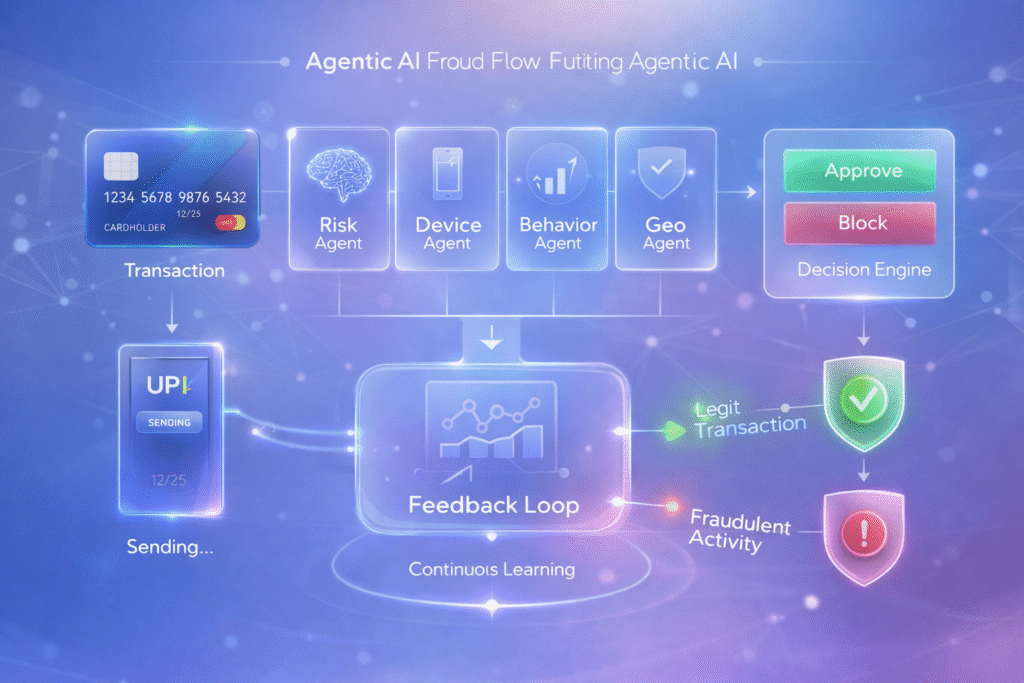
⚙️Step-by-Step Sequence
| 1. Transaction Initiated |
| Card, UPI, wallet, or BNPL payment starts |
| 2. AI Agents Activate |
| Risk Agent |
| Behavior Agent |
| Device Agent |
| Network Agent |
| Compliance Agent |
| 3. Real-Time Data Analysis |
| User history |
| Device fingerprint |
| Location mismatch |
| Velocity checks |
| Merchant risk score |
| 4. Autonomous Decision |
| Approve instantly |
| Trigger step-up authentication |
| Block and alert |
| 5. Continuous Learning |
| Feedback loop improves future decisions |
⏱️ All of this happens in under 300 milliseconds
📊 Key AI Agents Used in Payment Fraud Systems
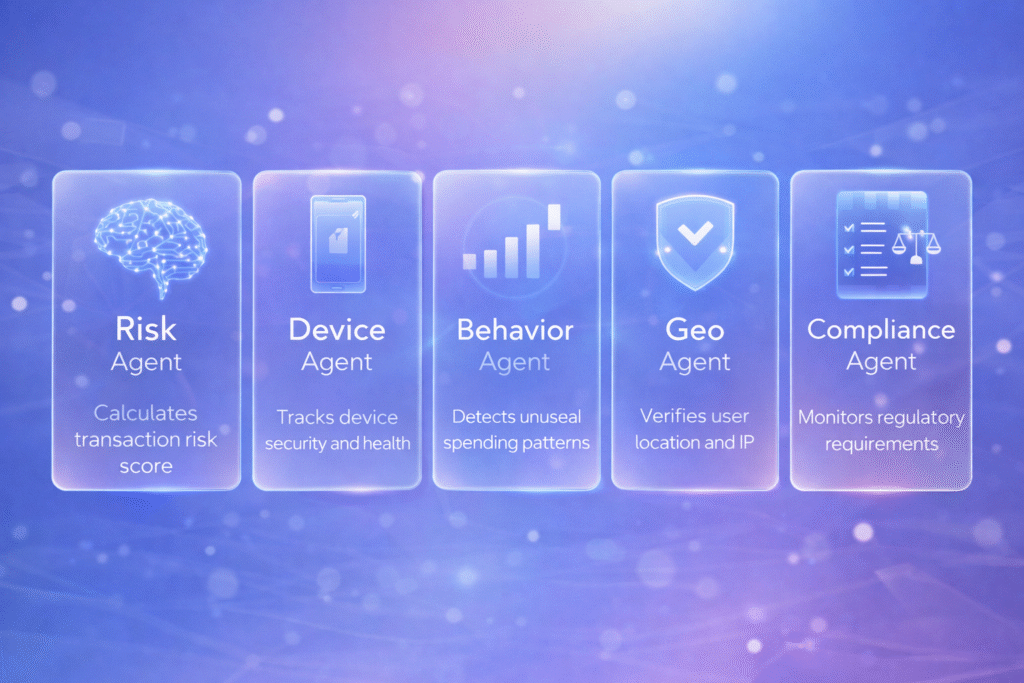
🧠 Risk Assessment Agent
- Calculates transaction risk score
- Uses ML + behavioral analytics
📱 Device Intelligence Agent
- Tracks device ID, OS, emulator detection
- Flags jailbroken or rooted devices
🔍 Behavioral Pattern Agent
- Detects unusual spending patterns
- Identifies bot-like activity
🌍 Geo-Location Agent
- Compares IP, GPS, merchant location
- Detects impossible travel patterns
⚖️ Compliance & AML Agent
- Ensures regulatory alignment
- Flags suspicious transactions for reporting
💡 Benefits of Agentic AI in Payment Fraud Prevention

🚀 1. Real-Time Protection
No delays. Fraud is stopped before money leaves the account.
🎯 2. Fewer False Positives
Legitimate customers face fewer declines → better UX.
📈 3. Scales Automatically
Handles millions of transactions without manual tuning.
🔄 4. Continuous Self-Learning
Adapts to new fraud patterns without rewriting rules.
💰 5. Cost Reduction
- Lower chargebacks
- Reduced manual reviews
- Fewer customer complaints
📊 Business Impact for Banks & Fintechs
| Area | Impact |
| Customer Trust | ↑ Higher |
| Fraud Losses | ↓ 40–70% |
| Transaction Approval Rate | ↑ 5–10% |
| Compliance Risk | ↓ Significantly |
| Operational Cost | ↓ Major savings |
⚙️ Reference Architecture (Payment Domain)
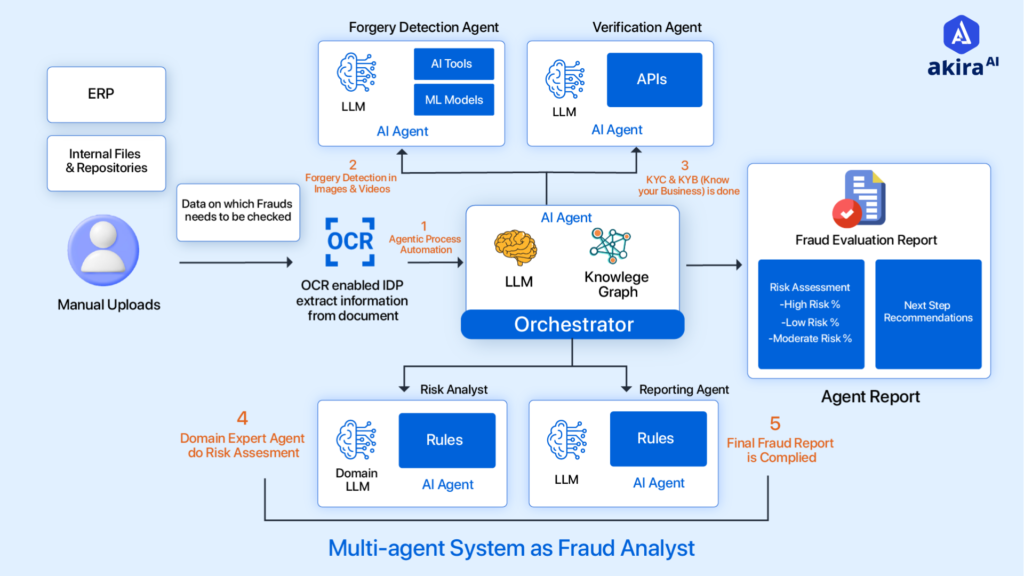

🧩 Architecture Layers
- Transaction Layer
- Cards, UPI, wallets, POS
- Data Ingestion Layer
- Kafka, APIs, event streams
- Agentic AI Layer
- Multiple AI agents (risk, behavior, device)
- Decision Engine
- Approve / Challenge / Block
- Learning & Feedback Loop
- Model retraining
- Reinforcement learning
🧠 Role of LLMs in Agentic Fraud Systems
Large Language Models (LLMs) add:
- Explainable decisions
- Fraud reasoning summaries
- Investigator support
- Natural-language alerts
Example:
“Transaction blocked due to unusual merchant behavior combined with new device and location mismatch.” This improves trust and auditability
🌍 Real-World Use Cases (2025)
- UPI fraud prevention in India
- Card fraud detection for global payment gateways
- BNPL risk scoring
- Merchant onboarding fraud
- Cross-border payment security
📈 Future Trends in Agentic AI for Payments

🔮 What’s Coming Next?
- Self-negotiating AI agents between banks and merchants
- Federated learning (privacy-first fraud detection)
- AI-driven regulatory reporting
- Voice & biometric fraud agents
- Autonomous chargeback handling
By 2027, most payment fraud systems will be fully agent-driven
🏁 Conclusion: The Future of Payment Security Is Autonomous
Agentic AI is not just an upgrade —
it’s a fundamental shift in how payment systems think and protect users.
For banks, fintechs, and payment companies, the message is clear:
Fraud prevention must be real-time, intelligent, and autonomous.
And Agentic AI is the technology making that possible. If you found this useful, share it, bookmark it, or drop a comment — because the future of payments is being built right now