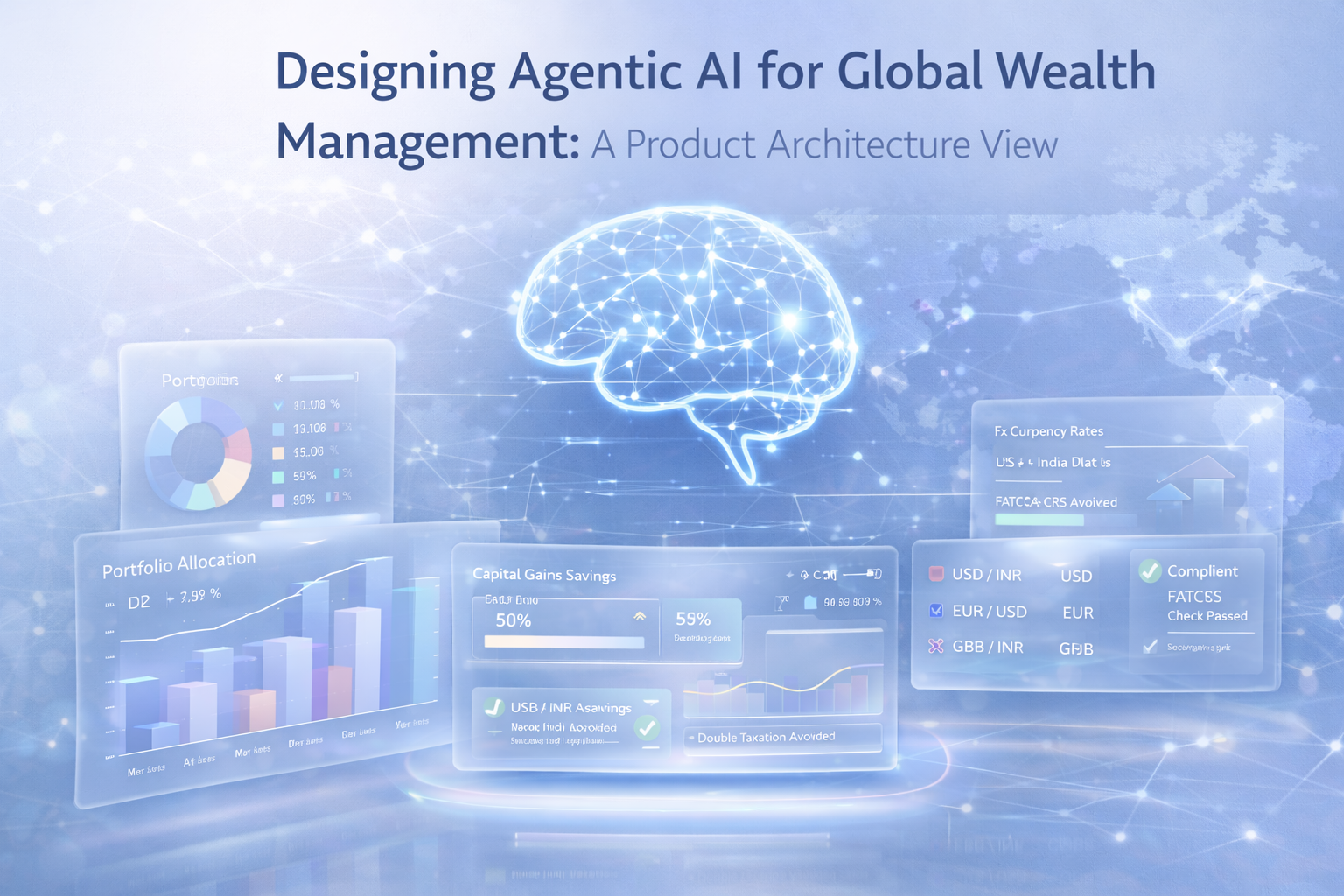
Explore how Agentic AI architecture powers global wealth management platforms with intelligent portfolio, tax, FX, and compliance agents
🧭 Introduction: Why Wealth Management Needs a New Architecture
Let’s be honest.
Traditional wealth management systems were built for a local world:
- One country
- One tax system
- One currency
- One advisor reviewing portfolios once or twice a year
But today’s investors—especially NRIs and global professionals—live very different lives.
Money flows across:
- Countries
- Currencies
- Tax regimes
- Regulatory boundaries
Trying to manage this complexity using static rules or manual workflows simply doesn’t scale.
This is where Agentic AI changes the game.
In this article, I’ll explain—in simple, non-technical language—how Agentic AI-driven product architecture is reshaping global wealth management platforms, and how you can think about designing such systems as a Product Manager, Business Analyst, or FinTech builder.
🧠 What Is Agentic AI? (Simple Definition)
Agentic AI refers to AI systems made up of autonomous agents that can:
- Observe data continuously
- Make independent decisions
- Take actions toward defined goals
- Learn and improve over time
- Coordinate with other agents
Think of it as AI that doesn’t just recommend—but acts responsibly within boundaries.
In wealth management, this means:
AI agents that actively manage portfolios, taxes, currency risk, and compliance—without waiting for human triggers.
🌍 Why Global Wealth Management Is a Perfect Use Case for Agentic AI
Global investing is a multi-variable optimization problem.
Key challenges:
🔍 Different tax laws
📉 Currency volatility
📜 Regulatory complexity
📊 Real-time market movements
🧩 Fragmented data sources
Agentic AI is well-suited because:
- It works continuously, not periodically
- It handles dynamic decision-making
- It can coordinate multiple objectives simultaneously
⚙️ High-Level Architecture: Agentic AI Wealth Platform
Before going deep, let’s look at the big picture.
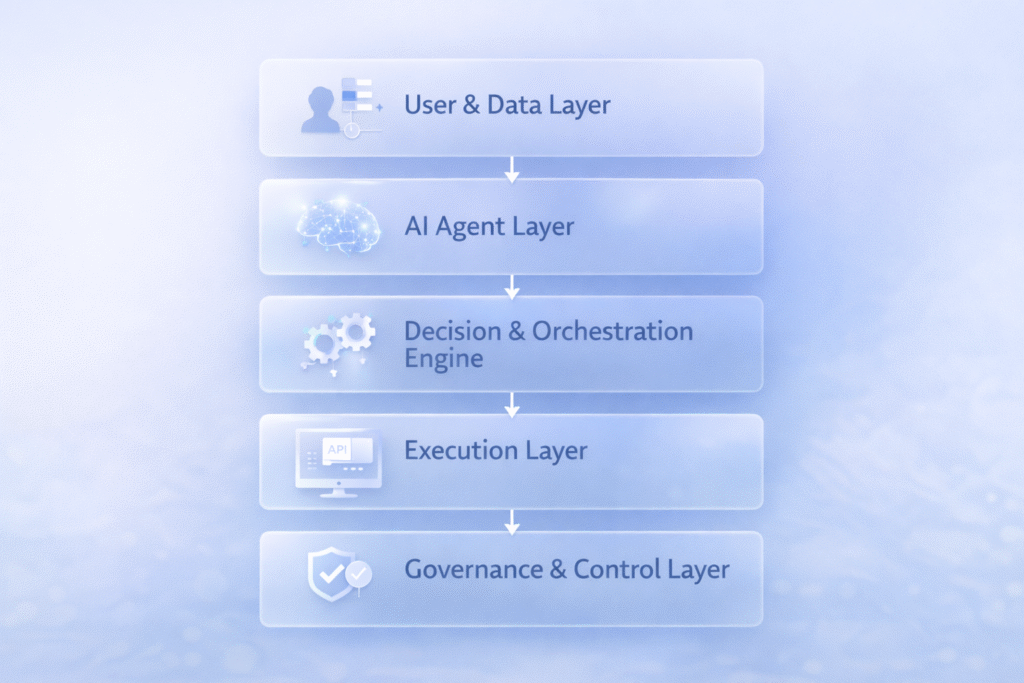
Core Layers:
- User & Data Layer
- AI Agent Layer
- Decision & Orchestration Layer
- Execution Layer
- Governance & Control Layer
Each layer solves a specific problem
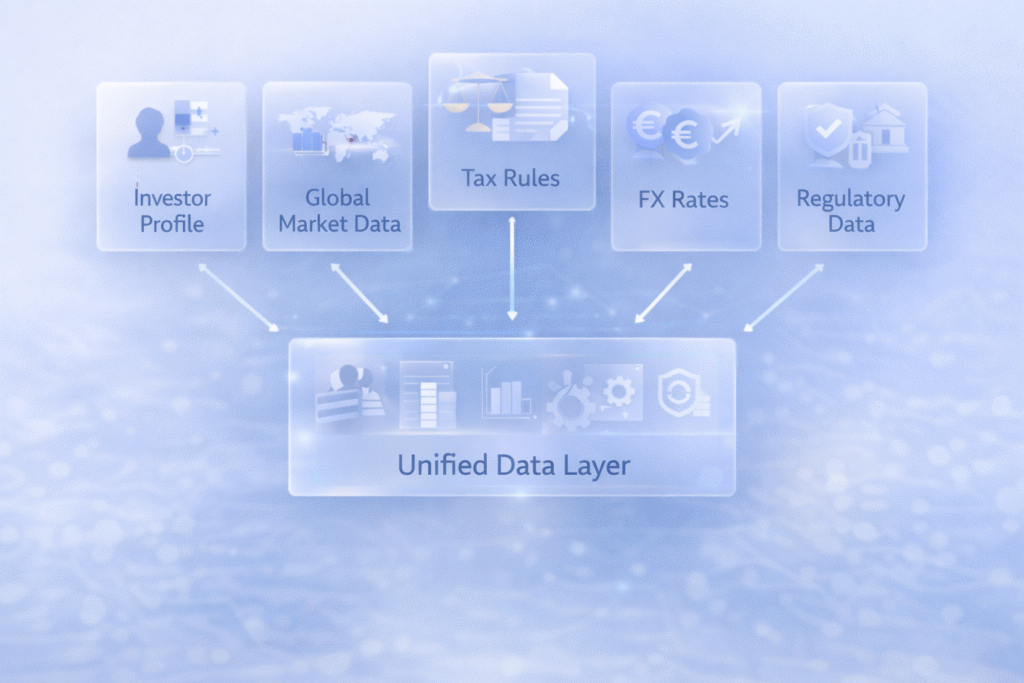
🧩 Layer 1: User & Financial Data Layer 📲
This is the foundation.
Inputs include:
- Investor profile (residency, goals, risk appetite)
- Global asset data (stocks, ETFs, bonds, alternatives)
- Market feeds (prices, volatility, macro indicators)
- Tax rules (DTAA, capital gains, withholding taxes)
- Currency data (FX rates, trends)
📌 Design principle:
Garbage in = garbage out.
This layer must be clean, real-time, and standardized
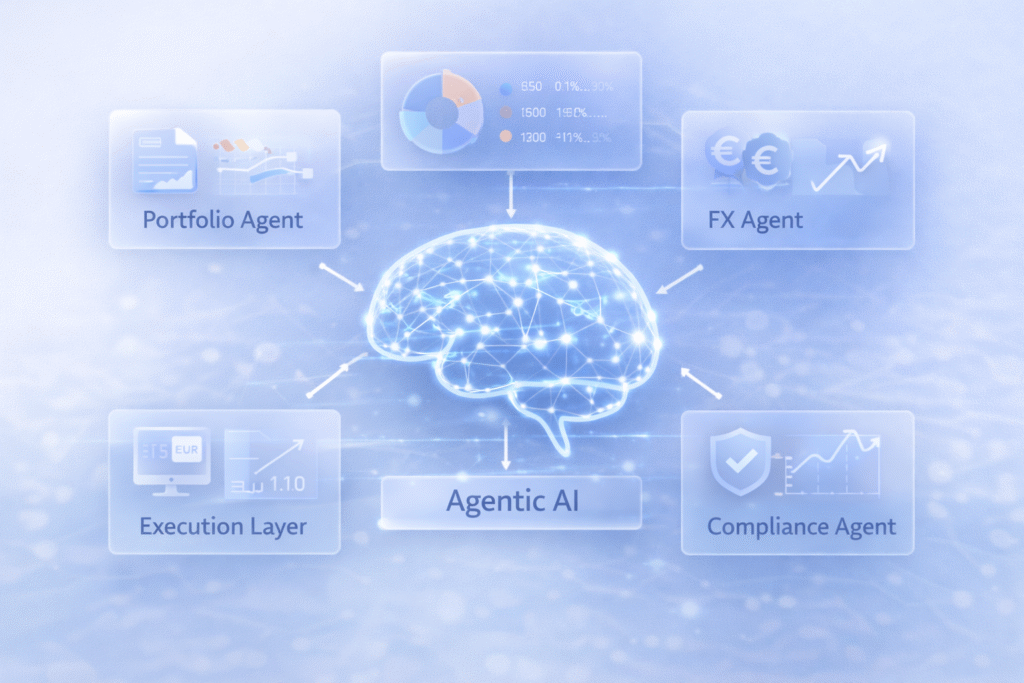
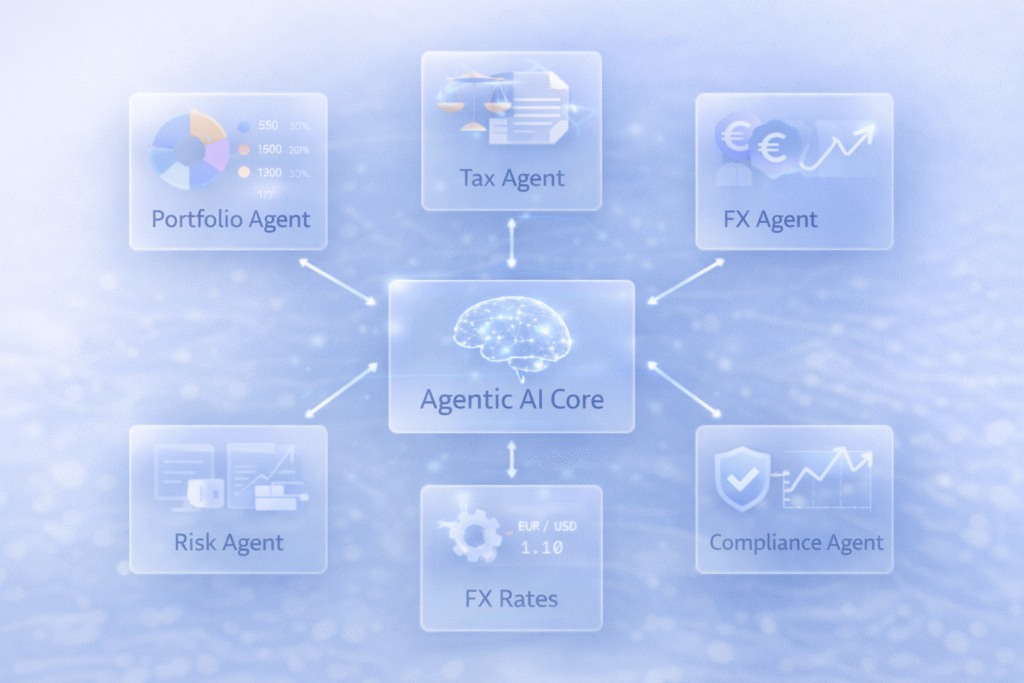
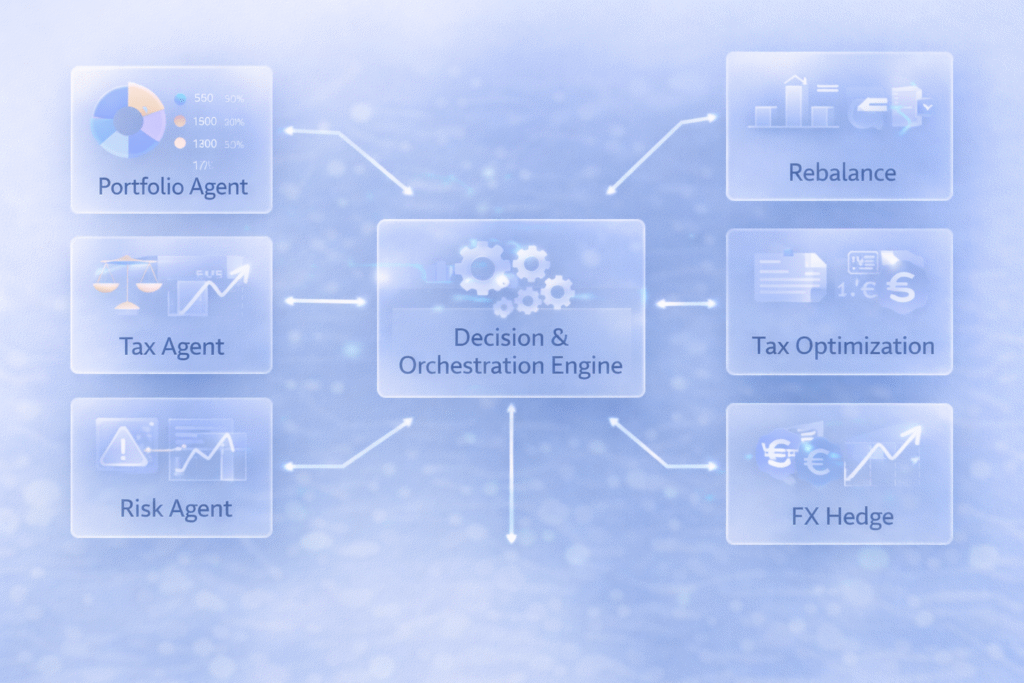
🧠 Layer 2: Specialized AI Agents (The Real Power)
Instead of one large AI model, modern systems use multiple specialized agents.
Key Agents Explained:
🧠 Portfolio Agent
- Asset allocation logic
- Risk-return optimization
- Rebalancing decisions
💡 Tax Agent
- DTAA interpretation
- Tax-efficient asset placement
- Capital gains optimization
🌍 FX Agent
- Currency exposure analysis
- Natural hedging logic
- Repatriation timing signals
🔍 Compliance Agent
- FATCA / CRS checks
- Residency rules
- Regulatory alerts
Each agent focuses on one responsibility—just like good software design.
⚙️ Layer 3: Decision & Orchestration Engine 📊
This layer coordinates agent outputs.
Example:
- Portfolio Agent wants to rebalance
- Tax Agent warns of short-term capital gains
- FX Agent flags currency risk
The orchestration layer:
- Weighs priorities
- Applies business rules
- Selects the optimal action
📌 This is where product logic meets AI intelligence
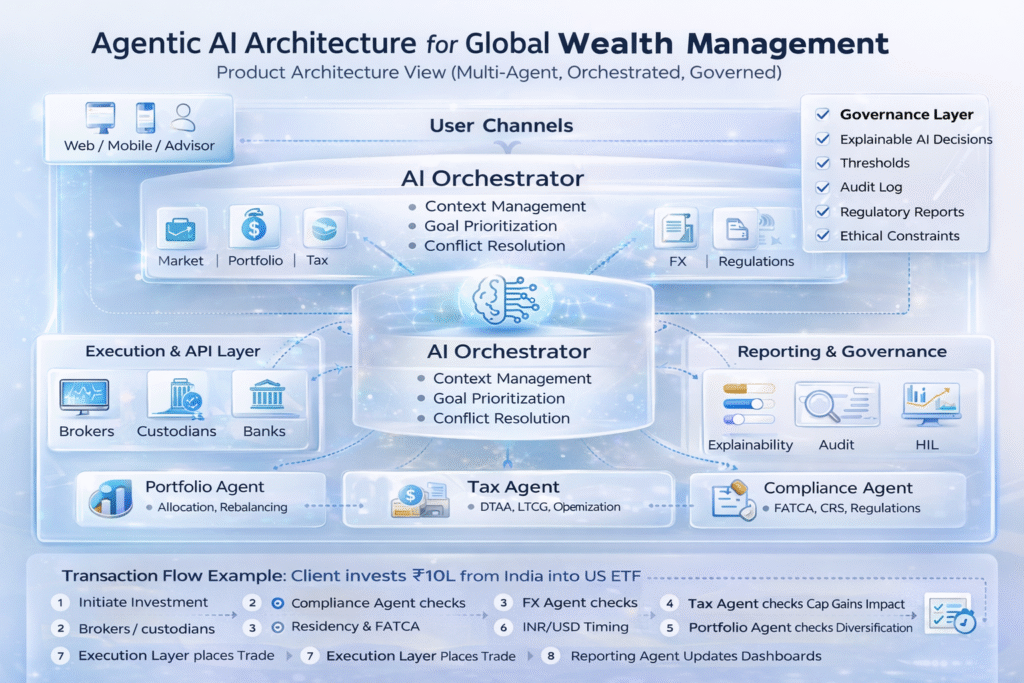
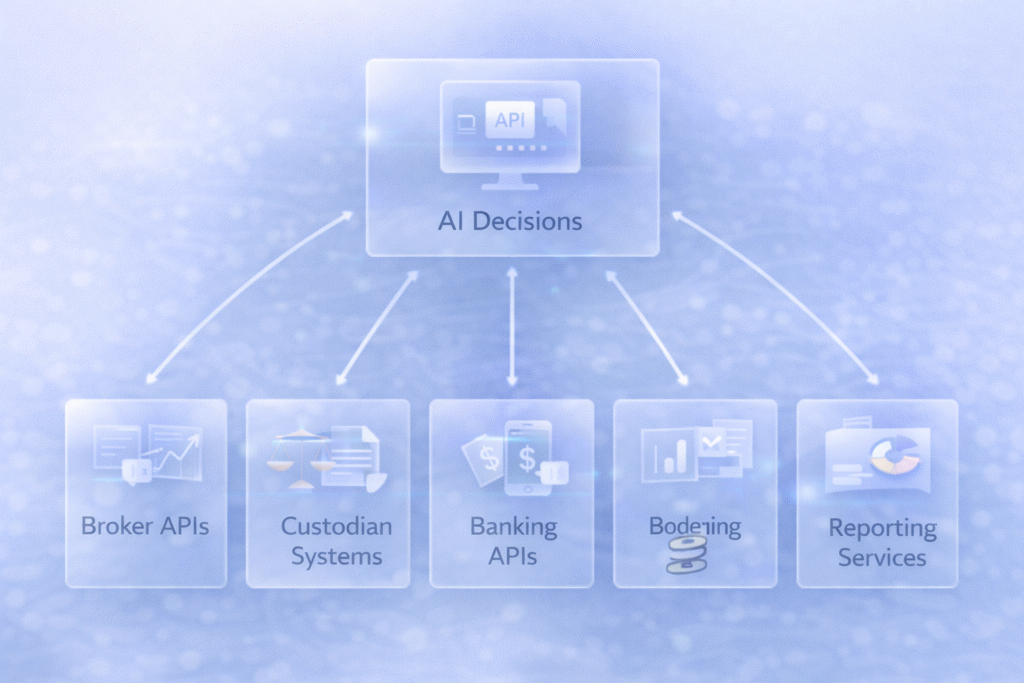
📈 Layer 4: Execution Layer (APIs & Actions)
Once a decision is approved, it must be executed safely.
Actions include:
- Portfolio rebalancing
- Asset switching
- Tax-loss harvesting
- Cash allocation
- Reporting updates
This layer connects to:
- Broker APIs
- Custodians
- Banking systems
- Reporting tools
📌 Key requirement:
Strong audit trails + rollback mechanisms
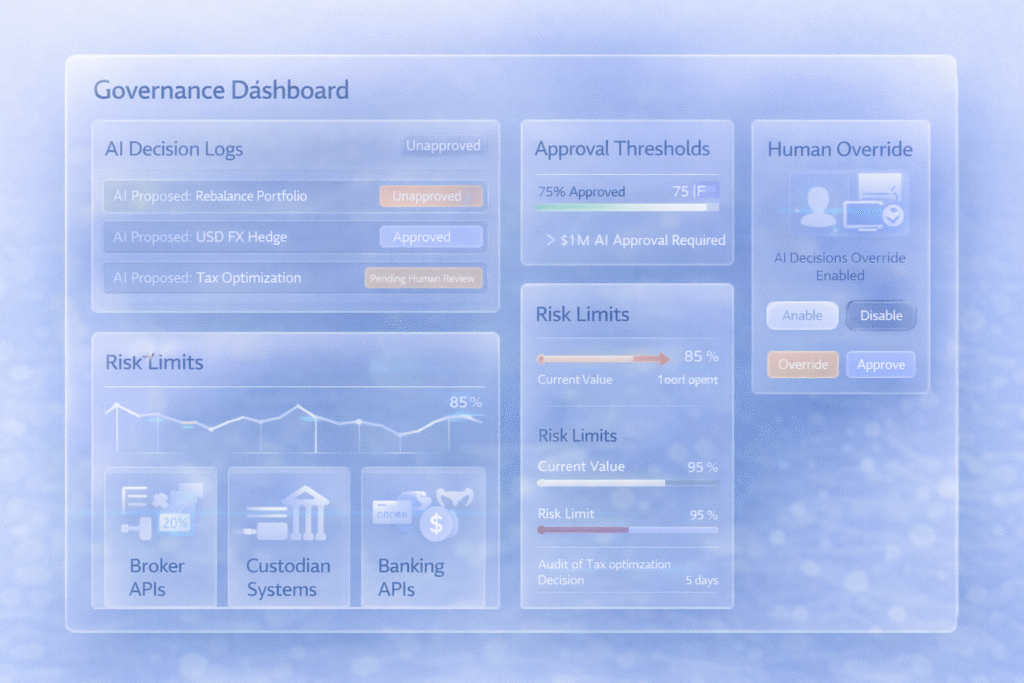
🧭 Layer 5: Governance, Ethics & Human-in-the-Loop 🏁
Agentic AI must never be a black box.
Essential controls:
✔ Explainable AI outputs
✔ Approval thresholds
✔ Risk limits
✔ Manual overrides
✔ Regulatory compliance logs This builds trust—with users, regulators, and internal teams
💡 Benefits of Agentic AI Architecture in Wealth Platforms
From a Product Perspective:
- Scales across geographies
- Reduces operational costs
- Improves customer experience
- Enables personalization
From a User Perspective:
- Better post-tax returns
- Lower compliance anxiety
- Real-time portfolio intelligence
- Fewer manual decisions
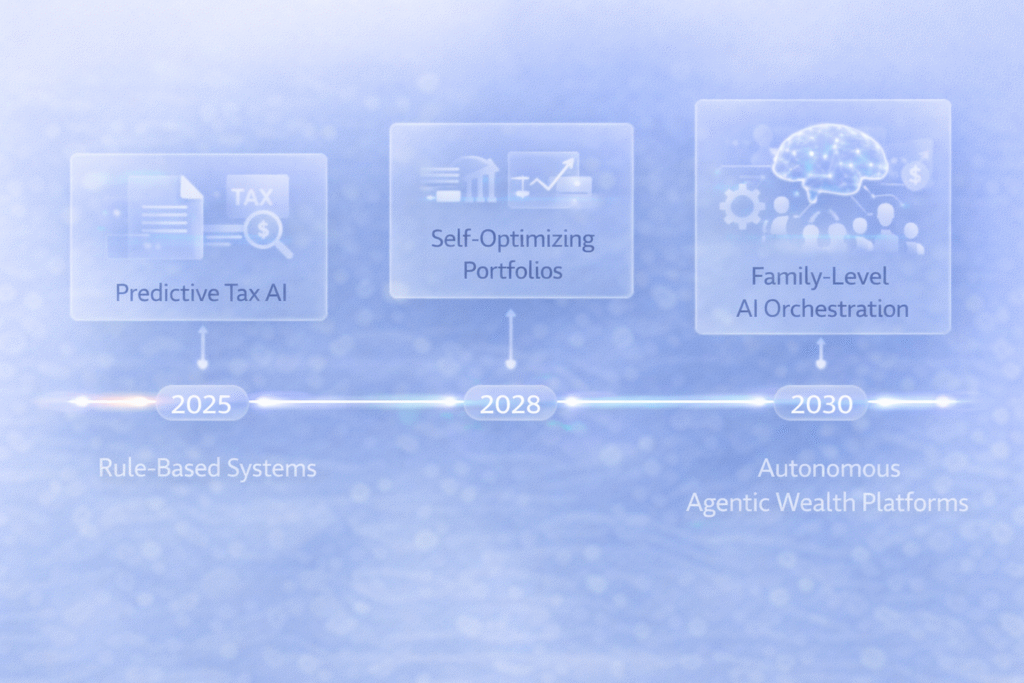
🔮 Future Trends in Agentic AI Wealth Architecture
Here’s what’s coming next:
🚀 Predictive tax simulations
🚀 Country migration impact modeling
🚀 Family-level AI wealth orchestration
🚀 AI-driven goal-based life planning
🚀 Autonomous compliance adaptation Within a few years, manual wealth management will feel outdated
🏁 Conclusion: Designing for Intelligence, Not Automation
Agentic AI isn’t about replacing humans.
It’s about designing systems that think, adapt, and assist responsibly.
For global wealth management, this architecture:
- Matches modern investor lives
- Handles complexity intelligently
- Creates scalable fintech products
If you’re building or analyzing fintech platforms, understanding Agentic AI architecture is no longer optional—it’s foundational