


Filter by

Prashant Gavhane CFPยฎ CSMยฎ CSPOยฎ

 Explore our expert insights across Agile & Scrum, SAFe Agile, Project Management, Business Analysis, Product Management, Tools & Technology, Domain Knowledge, and Artificial Intelligence. Discover tips, best practices, and industry trends to enhance your skills, manage projects effectively, and stay ahead in the digital world.

Recent Posts

Categories

Tags

โœจ Generative AI & Agentic AI

๐Ÿง How Intelligent AI Agents Are Transforming Payments Security in 2025 and Beyond

Agentic AI is transforming real-time fraud detection in payments. Learn how autonomous AI agents prevent fraud, reduce losses, and improve security

โœจ Introduction: Why Fraud in Payments Is No Longer a โ€œFuture Problemโ€

Imagine youโ€™re making a simple UPI payment or tapping your card at a store.
Behind the scenes, hundreds of checks happen in milliseconds โ€” location, device, spending pattern, merchant behavior, and more.

Now imagine fraudsters evolving faster than traditional systems.

Thatโ€™s exactly where Agentic AI comes in.

In 2025, real-time fraud detection is no longer rule-based or reactive. Itโ€™s autonomous, adaptive, and proactive โ€” powered by AI agents that think, decide, and act on their own.

This article explains:

  • What Agentic AI really means (in simple words)
  • How it works in the payment domain
  • Why banks, fintechs, and payment gateways are adopting it fast
  • Real-world benefits, architecture, and future trends

Letโ€™s break it down step by step ๐Ÿ‘‡

๐Ÿง  What Is Agentic AI? (Simple Definition)

Agentic AI refers to autonomous AI agents that can:

  • Observe data in real time
  • Make independent decisions
  • Take actions without human intervention
  • Learn continuously from outcomes

In simple terms:

Agentic AI behaves like a smart digital employee who doesnโ€™t wait for instructions every time.

๐Ÿง  How Itโ€™s Different from Traditional AI

Traditional AIAgentic AI
Reacts to inputsActs autonomously
Fixed workflowsDynamic decision paths
Limited contextFull situational awareness
Human approval neededSelf-executing actions

๐Ÿ“ฒ Why the Payment Domain Needs Agentic AI (Urgently)

Payment fraud today includes:

  • UPI fraud
  • Card-not-present fraud
  • Account takeover
  • Merchant fraud
  • Synthetic identity fraud
  • Friendly fraud (false chargebacks)

๐Ÿšจ The Core Problem

Traditional fraud systems:

  • Depend heavily on static rules
  • Generate high false positives
  • Block genuine customers
  • React after damage is done

Agentic AI flips this approach

๐Ÿ” How Agentic AI Works in Real-Time Fraud Detection

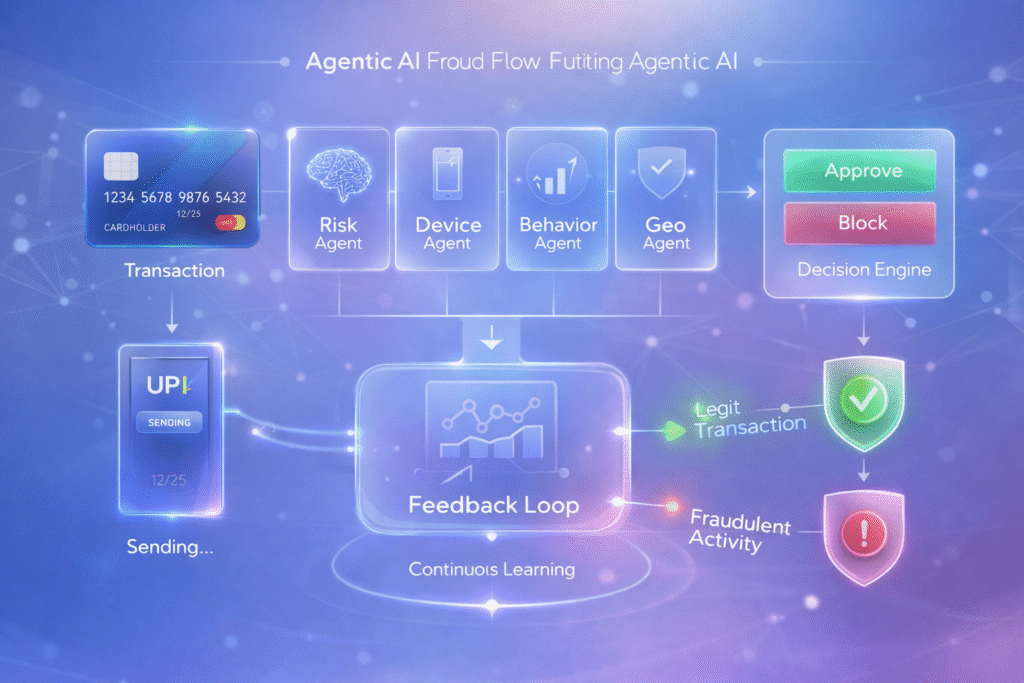
Agentic AI fraud detection flow in real-time payment transactions

โš™๏ธStep-by-Step Sequence

1.      Transaction Initiated
Card, UPI, wallet, or BNPL payment starts
2.      AI Agents Activate
Risk Agent
Behavior Agent
Device Agent
Network Agent
Compliance Agent
3.      Real-Time Data Analysis
User history
Device fingerprint
Location mismatch
Velocity checks
Merchant risk score
4.      Autonomous Decision
Approve instantly
Trigger step-up authentication
Block and alert
5.      Continuous Learning
Feedback loop improves future decisions

โฑ๏ธ All of this happens in under 300 milliseconds

๐Ÿ“Š Key AI Agents Used in Payment Fraud Systems

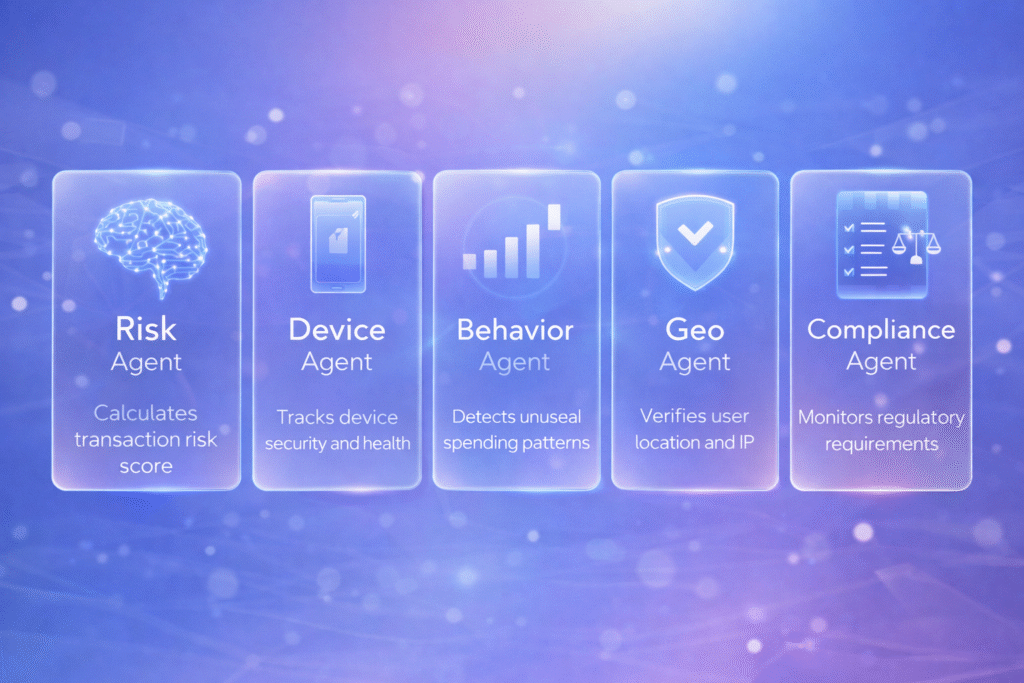
AI agents roles in payment fraud detection system

๐Ÿง  Risk Assessment Agent

  • Calculates transaction risk score
  • Uses ML + behavioral analytics

๐Ÿ“ฑ Device Intelligence Agent

  • Tracks device ID, OS, emulator detection
  • Flags jailbroken or rooted devices

๐Ÿ” Behavioral Pattern Agent

  • Detects unusual spending patterns
  • Identifies bot-like activity

๐ŸŒ Geo-Location Agent

  • Compares IP, GPS, merchant location
  • Detects impossible travel patterns

โš–๏ธ Compliance & AML Agent

  • Ensures regulatory alignment
  • Flags suspicious transactions for reporting

๐Ÿ’ก Benefits of Agentic AI in Payment Fraud Prevention

๐Ÿš€ 1. Real-Time Protection

No delays. Fraud is stopped before money leaves the account.

๐ŸŽฏ 2. Fewer False Positives

Legitimate customers face fewer declines โ†’ better UX.

๐Ÿ“ˆ 3. Scales Automatically

Handles millions of transactions without manual tuning.

๐Ÿ”„ 4. Continuous Self-Learning

Adapts to new fraud patterns without rewriting rules.

๐Ÿ’ฐ 5. Cost Reduction

  • Lower chargebacks
  • Reduced manual reviews
  • Fewer customer complaints

๐Ÿ“Š Business Impact for Banks & Fintechs

AreaImpact
Customer Trustโ†‘ Higher
Fraud Lossesโ†“ 40โ€“70%
Transaction Approval Rateโ†‘ 5โ€“10%
Compliance Riskโ†“ Significantly
Operational Costโ†“ Major savings

โš™๏ธ Reference Architecture (Payment Domain)

๐Ÿงฉ Architecture Layers

  1. Transaction Layer
    1. Cards, UPI, wallets, POS
  2. Data Ingestion Layer
    1. Kafka, APIs, event streams
  3. Agentic AI Layer
    1. Multiple AI agents (risk, behavior, device)
  4. Decision Engine
    1. Approve / Challenge / Block
  5. Learning & Feedback Loop
    1. Model retraining
    1. Reinforcement learning

๐Ÿง  Role of LLMs in Agentic Fraud Systems

Large Language Models (LLMs) add:

  • Explainable decisions
  • Fraud reasoning summaries
  • Investigator support
  • Natural-language alerts

Example:

โ€œTransaction blocked due to unusual merchant behavior combined with new device and location mismatch.โ€ This improves trust and auditability

๐ŸŒ Real-World Use Cases (2025)

  • UPI fraud prevention in India
  • Card fraud detection for global payment gateways
  • BNPL risk scoring
  • Merchant onboarding fraud
  • Cross-border payment security

๐Ÿ“ˆ Future Trends in Agentic AI for Payments

๐Ÿ”ฎ Whatโ€™s Coming Next?

  • Self-negotiating AI agents between banks and merchants
  • Federated learning (privacy-first fraud detection)
  • AI-driven regulatory reporting
  • Voice & biometric fraud agents
  • Autonomous chargeback handling

By 2027, most payment fraud systems will be fully agent-driven

๐Ÿ Conclusion: The Future of Payment Security Is Autonomous

Agentic AI is not just an upgrade โ€”
itโ€™s a fundamental shift in how payment systems think and protect users.

For banks, fintechs, and payment companies, the message is clear:

Fraud prevention must be real-time, intelligent, and autonomous.

And Agentic AI is the technology making that possible. If you found this useful, share it, bookmark it, or drop a comment โ€” because the future of payments is being built right now

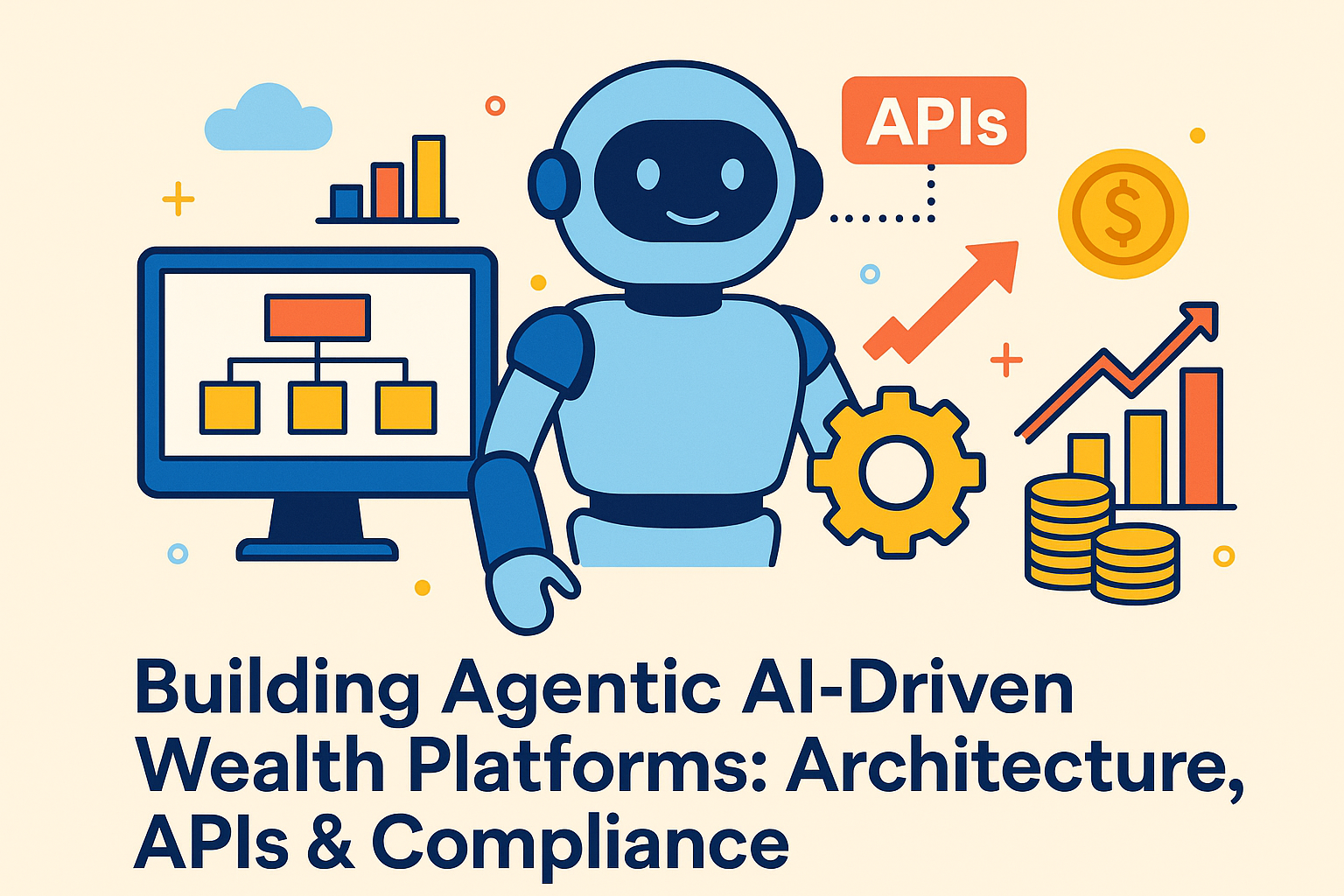
๐Ÿ’ก Building Agentic AI-Driven Wealth Platforms: Architecture, APIs & Compliance

Discover how Agentic AI-driven wealth platforms combine architecture, APIs, and compliance to create smarter, autonomous financial ecosystems.

๐ŸŒ Introduction: The Future of WealthTech Is Agentic AI

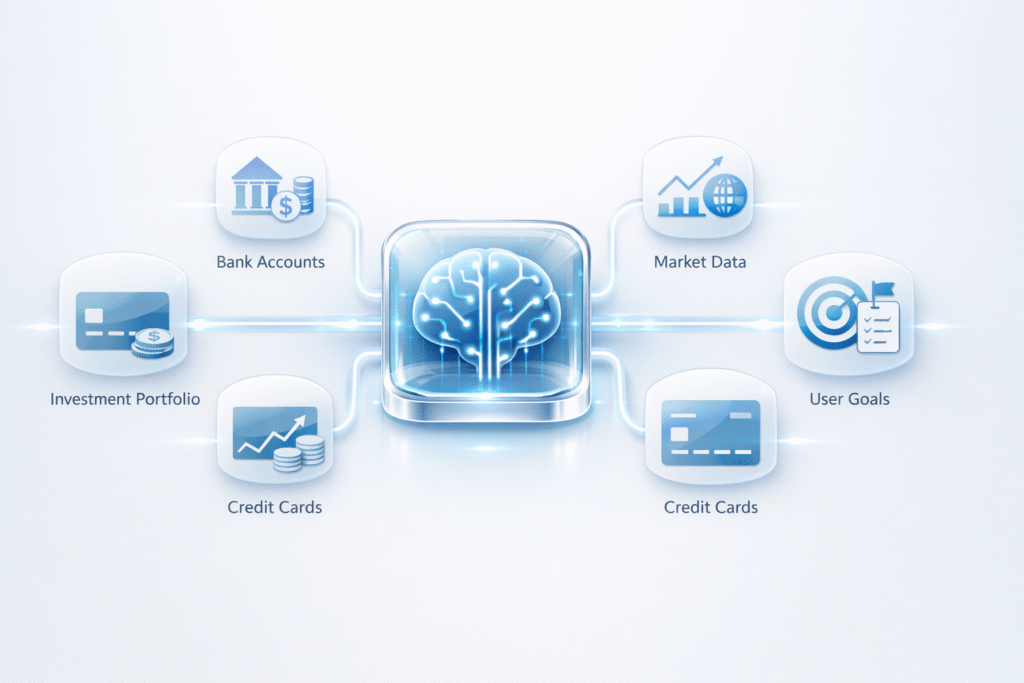
Imagine if your wealth management app didnโ€™t just track your portfolio but could think, decide, and act like a financial expert โ€” automatically rebalancing assets, detecting compliance risks, and optimizing returns in real time.

Thatโ€™s what Agentic AI-Driven Wealth Platforms aim to achieve โ€” intelligent systems capable of autonomous decision-making, real-time compliance, and personalized financial guidance.

By combining AI agents, API-driven architecture, and regulatory intelligence, modern wealth platforms are no longer static dashboards โ€” theyโ€™re living, learning financial ecosystems.

Letโ€™s break this down in simple, practical terms.

๐Ÿง  What Is an Agentic AI Wealth Platform?

An Agentic AI Wealth Platform is a next-generation digital system that uses autonomous AI agents to handle complex financial processes such as:

  • Portfolio rebalancing
  • Risk profiling
  • Market analysis
  • Client onboarding
  • Compliance reporting

๐Ÿ” Definition:

Agentic AI refers to AI systems that can make independent, goal-oriented decisions based on data, predefined rules, and continuous learning โ€” reducing the need for manual supervision.

So unlike a traditional robo-advisor (which executes predefined rules), an Agentic AI system can reason, self-correct, and adapt to changing markets or client preferences.

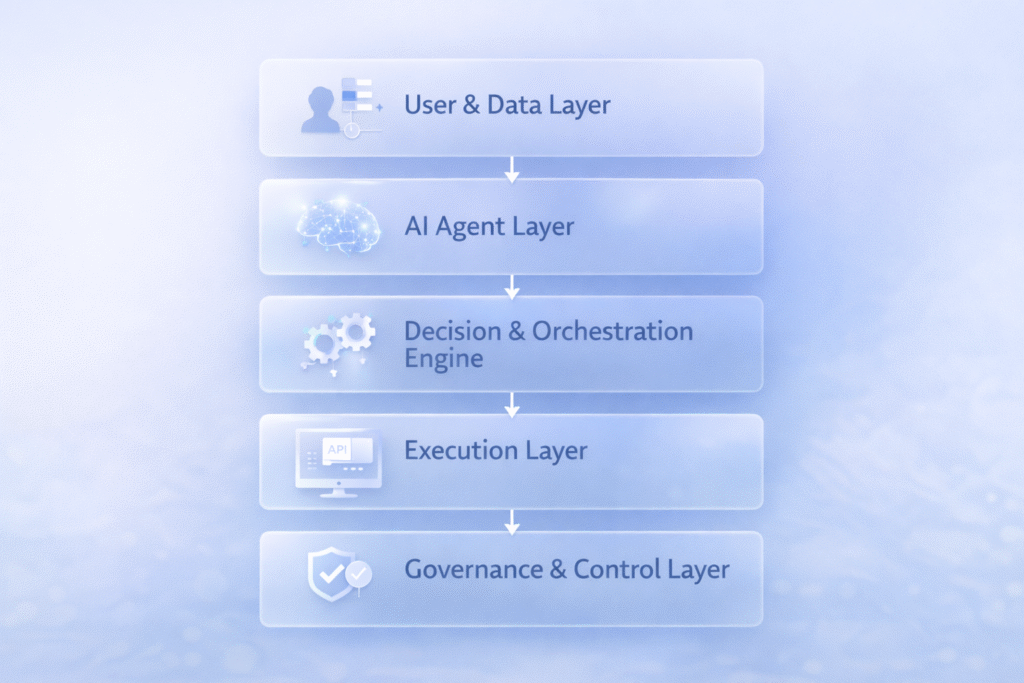
โš™๏ธ The Core Architecture: How It All Works

To build an intelligent wealth platform, developers follow a modular architecture that connects multiple layers โ€” from data inputs to autonomous actions.

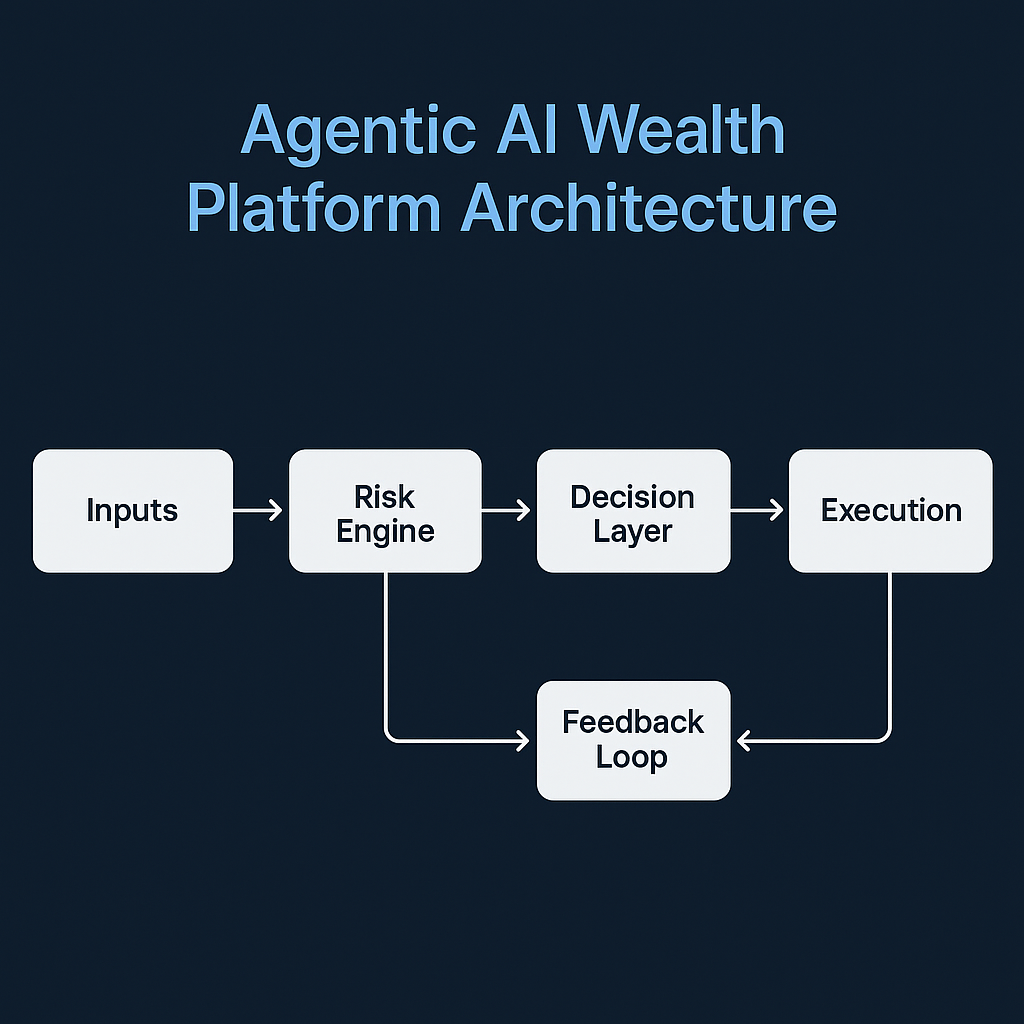
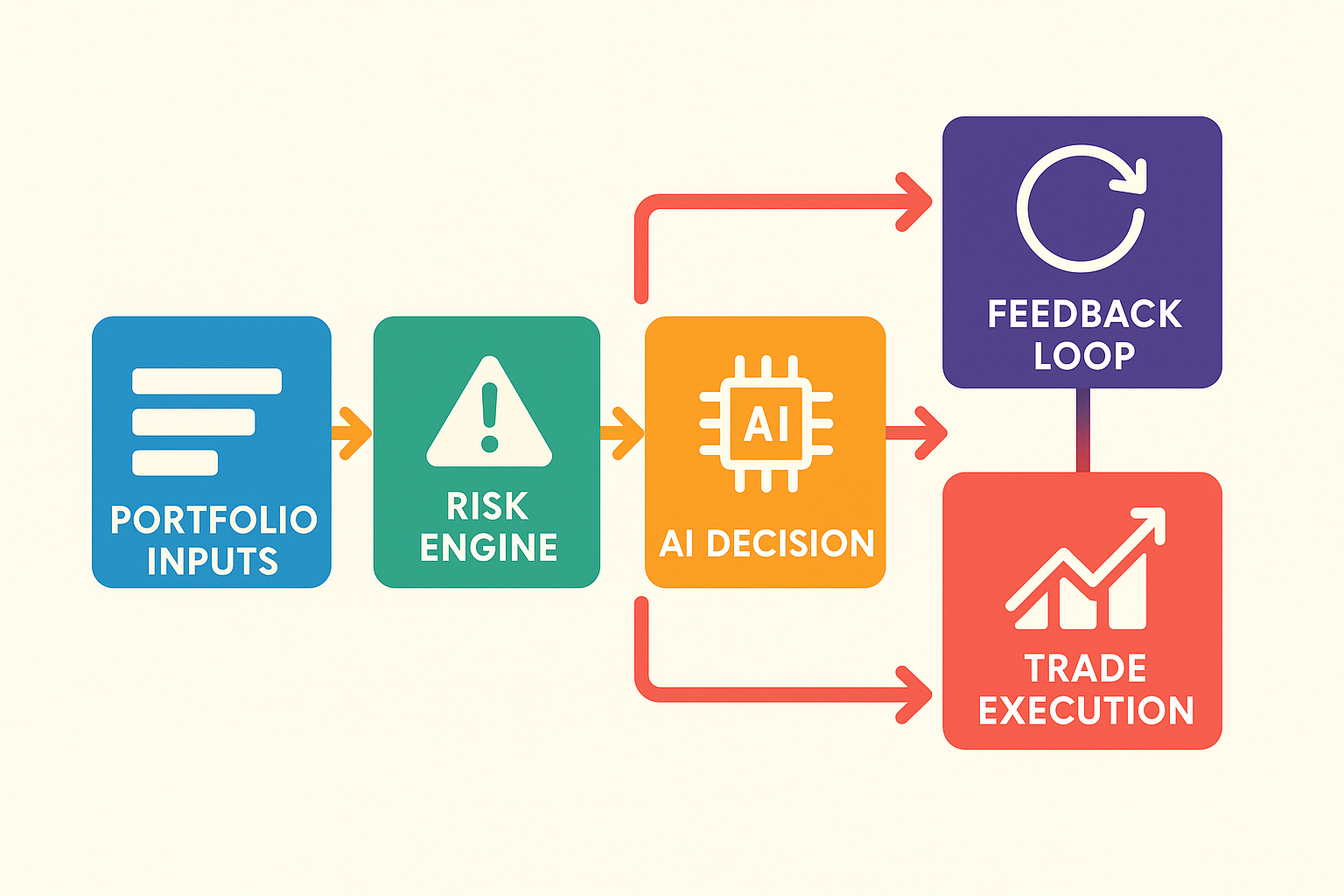
Hereโ€™s a simplified workflow diagram:

๐Ÿงฉ Agentic AI Wealth Platform Architecture

Agentic AI Wealth Platform Architecture
LayerFunctionExample Technologies
Data InputsCollect data from KYC, market APIs, CRM, transactionsREST APIs, Plaid, Finbox, Alpha Vantage
AI Risk EngineAnalyze investor profile, behavior, and risk capacityMachine Learning, NLP, Sentiment Analysis
Decision LayerGenerate personalized investment advice and insightsReinforcement Learning, Predictive Analytics
Execution LayerExecute trades, rebalancing, and reports automaticallyBroker APIs, Algo-trading modules
Feedback LoopLearn from outcomes to improve next recommendationsAI Monitoring, A/B Testing, Explainable AI

๐Ÿ—๏ธ Why This Architecture Works

  • Scalable: Easily integrate new APIs (e.g., tax calculators, ESG scores).
  • Adaptive: Learns from market conditions and user actions.
  • Compliant: Embeds rule-based compliance checks at every step

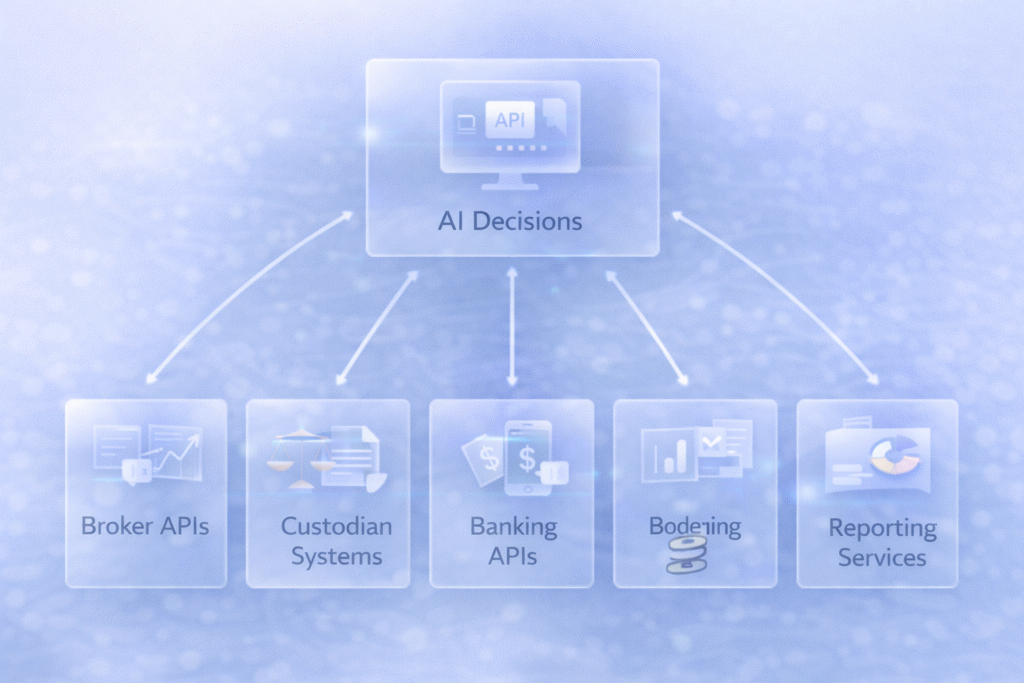
๐Ÿ”— The Role of APIs: The Connective Tissue of WealthTech

APIs (Application Programming Interfaces) are the lifelines of modern financial platforms. They connect data, AI engines, and services seamlessly โ€” like pipes in a digital financial network

๐Ÿ’ผ Key API Categories in Wealth Management

API TypePurposeExamples
Market Data APIsReal-time stock, crypto, and fund dataBloomberg, Yahoo Finance, Alpha Vantage
KYC/AML APIsIdentity and compliance verificationSignzy, Trulioo, Onfido
Payment & Banking APIsTransactions, deposits, payoutsRazorpayX, Stripe, Open Banking APIs
Portfolio APIsPosition management, performance metricsMorningstar, Plaid, DriveWealth
Advisory & Robo APIsAutomated advice generationQuantConnect, Riskalyze
Analytics & Reporting APIsDashboards and client analyticsPower BI, Tableau Embedded, Snowflake

๐Ÿง  Why APIs Matter

  • Enable real-time connectivity between tools and markets.
  • Reduce cost and time by reusing third-party data services.
  • Make it possible for small startups to build enterprise-grade systems without heavy infrastructure

๐Ÿ’ก Benefits of Agentic AI Wealth Platforms

BenefitDescription
1. Hyper-PersonalizationAI understands client goals, emotions, and behaviors.
2. Automation EfficiencyTasks like rebalancing, alerts, and onboarding become hands-free.
3. Compliance AssuranceBuilt-in rule engines ensure regulatory alignment (MiFID II, SEBI, FINRA).
4. Scalable GrowthAPIs allow new features to be added modularly.
5. Cost ReductionReduces dependency on manual teams and middle-office operations.
6. Continuous LearningFeedback loops improve accuracy with every transaction.

๐Ÿงฉ Example Flow: Agentic AI in Action

  1. Client signs up โ†’ AI KYC verifies identity.
  2. Risk profiling โ†’ System assesses risk appetite via questionnaire + behaviour.
  3. Goal setting โ†’ Defines savings, retirement, or education goals.
  4. AI portfolio generation โ†’ Suggests assets via market pattern recognition.
  5. Execution engine โ†’ Places trades via broker APIs.
  6. Compliance check โ†’ System validates actions under regulations.
  7. Feedback loop โ†’ Learns from returns, adjusts models automatically

๐Ÿ›ก๏ธ Compliance: The Non-Negotiable Backbone

When money and algorithms meet, compliance must lead innovation.

AI-driven wealth platforms must integrate RegTech (Regulatory Technology) to ensure transparency, security, and fairness.

โš–๏ธ Key Compliance Areas

Regulation FocusCompliance Implementation
KYC/AMLAutomated ID verification & transaction monitoring
GDPR / Data PrivacyEncryption, consent management, and anonymization
SEBI / MiFID II / FINRASuitability and risk documentation for each client
Audit TrailsBlockchain-based recordkeeping for every AI decision
Explainable AI (XAI)Every automated action must have a clear reason code

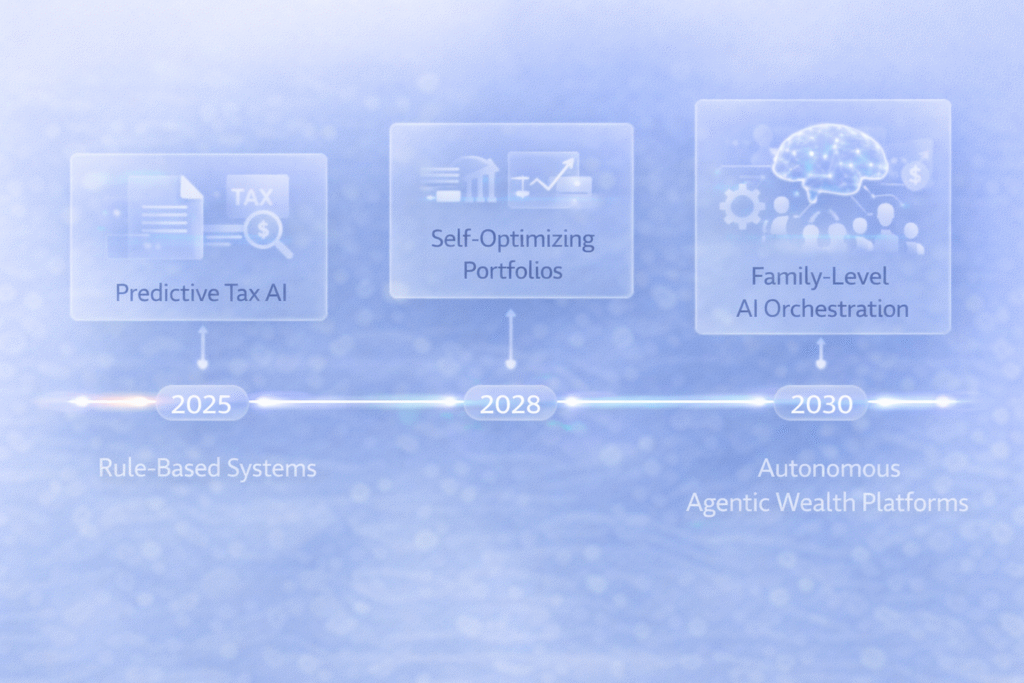
๐Ÿš€ Future Trends in Agentic AI Wealth Management (2025โ€“2030)

TrendImpact
Multi-Agent EcosystemsDifferent AI agents (risk, compliance, portfolio) collaborate autonomously.
Voice-Driven Wealth AssistantsClients will speak to AI planners like Alexa for finance.
Emotion-Aware AdvisoryAI detects stress or overconfidence and adjusts advice.
AI-Blockchain IntegrationSmart contracts for real-time compliance and settlement.
Open Banking 3.0Seamless data sharing between global financial institutions.
Personalized AI ETFsAI dynamically creates ETF baskets based on your goals.

๐Ÿงฉ Step-by-Step: How to Build an Agentic AI Wealth Platform

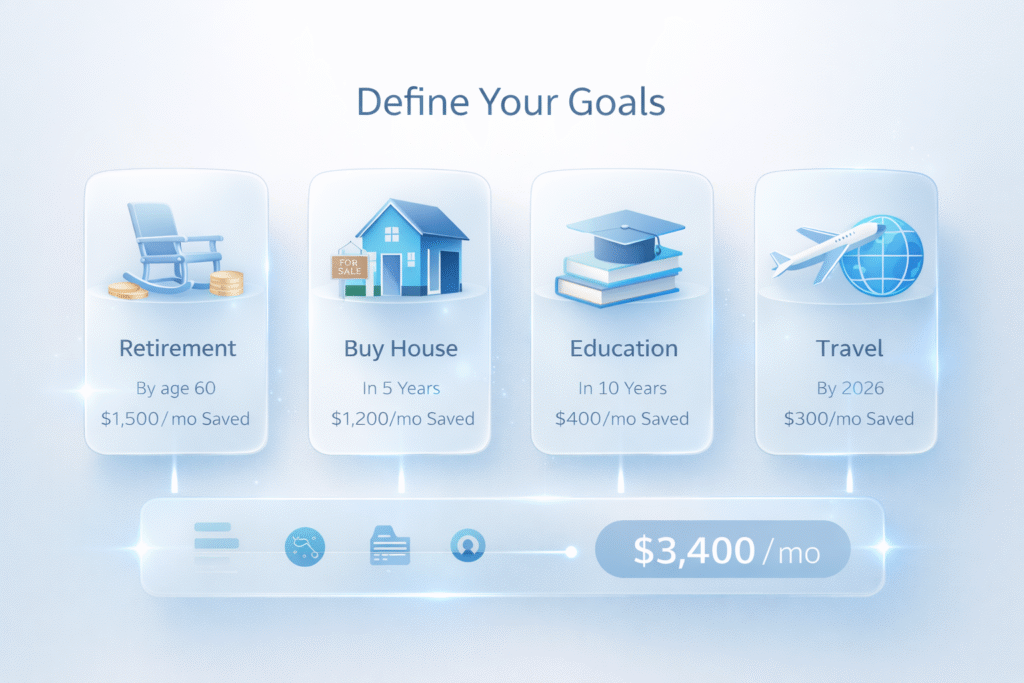
  1. Define Your User Goals
    โ€“ Who are your clients? Retail investors, advisors, or institutions?
    โ€“ Define financial objectives (e.g., passive investing, goal-based planning).
  2. Design a Modular Architecture
    โ€“ Separate AI, API, and Data layers.
    โ€“ Use microservices for easy scaling.
  3. Integrate Trusted APIs
    โ€“ Select reliable market data, KYC, and brokerage APIs.
    โ€“ Ensure 99.9% uptime and regulatory compliance.
  4. Build the AI Decision Engine
    โ€“ Use machine learning for predictions and reinforcement learning for optimization.
    โ€“ Implement explainable outputs for compliance.
  5. Embed RegTech from Day One
    โ€“ Incorporate KYC, AML, and audit logs into your codebase.
  6. Develop Dashboards & Alerts
    โ€“ Provide visual insights for users and compliance officers.
  7. Test, Learn, and Optimize
    โ€“ Run simulations on historic data.
    โ€“ Use A/B testing for user flows and recommendations.

๐Ÿ“‰ Challenges in Implementation

ChallengePossible Solution
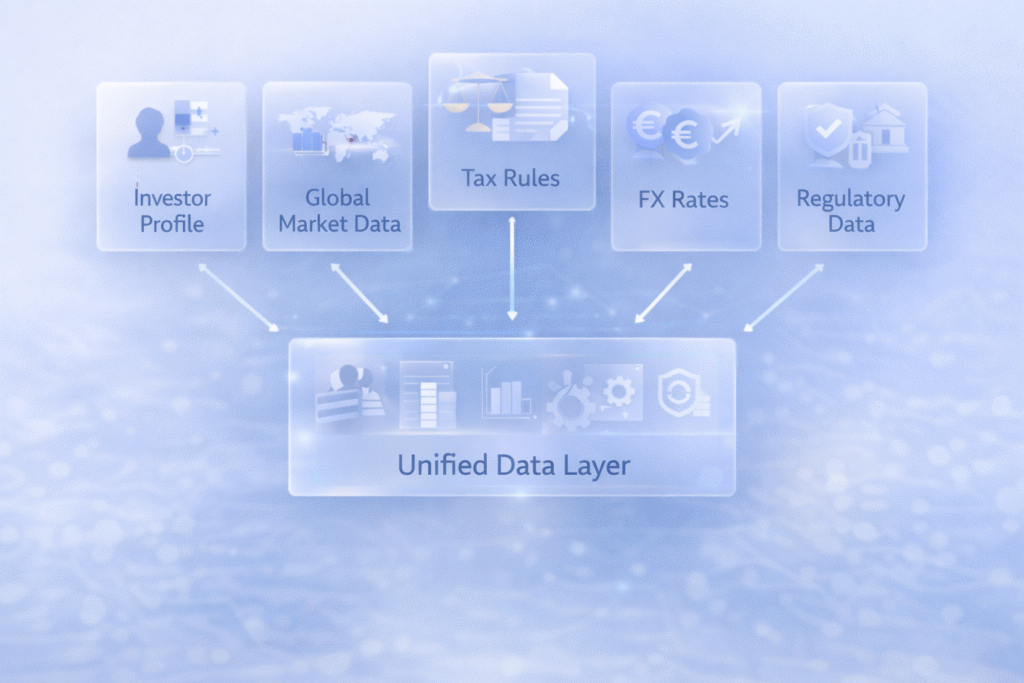
Data SilosUse unified data lakes and API integration hubs.
Compliance ComplexityPartner with RegTech startups or API providers.
High Initial CostsAdopt modular open-source AI frameworks.
Bias in AI ModelsTrain with diverse, verified datasets.

๐Ÿงญ Conclusion: The Rise of Intelligent Wealth Ecosystems

Agentic AI is transforming wealth management from reactive to proactive.

Tomorrowโ€™s wealth platforms wonโ€™t just show your portfolioโ€”theyโ€™ll understand your life goals, predict your financial risks, and act on your behalf to safeguard your future.

If youโ€™re building a WealthTech startup or reimagining an existing advisory system, focus on:

  • Modular architecture for flexibility
  • API-first design for scalability
  • Compliance automation for trust
  • Explainable AI for accountability

The future of finance will belong to those who blend intelligence with integrity โ€” and thatโ€™s exactly what Agentic AI Wealth Platforms represent.

Generative AI in Requirement Analysis

๐Ÿง  Generative AI for BAs: 7 Smart Ways to Speed Up Requirement Analysis

Discover how Business Analysts can use Generative AI to speed up requirement analysis, improve accuracy, and boost productivity with real-world use cases.

๐ŸŒŸ Introduction: The New Age of Smart Analysis

Imagine finishing a complete Business Requirement Document (BRD) in hours instead of days โ€” and with fewer errors. Sounds impossible? Not anymore.

Generative AI (GenAI) tools like ChatGPT, Claude, Gemini, or Copilot are reshaping how Business Analysts (BAs) work โ€” from capturing stakeholder needs to drafting use cases and user stories. Instead of spending endless hours writing or reformatting requirements, AI can now generate, summarize, validate, and even simulate scenarios for you. Letโ€™s explore how you, as a BA, can use Generative AI to work smarter, faster, and with more confidence

๐Ÿงฉ What Is Generative AI in Requirement Analysis?

Generative AI refers to AI systems capable of creating new content โ€” text, diagrams, process flows, or documentation โ€” based on the data or prompts you provide.

In requirement analysis, that means:

  • Converting meeting notes into clear requirements
  • Generating acceptance criteria automatically
  • Translating business goals into technical specifications
  • Creating visual diagrams and workflows

In simple terms, AI becomes your co-pilot โ€” helping you capture, clarify, and communicate requirements faster.

๐Ÿ’ก Why Traditional Requirement Analysis Slows You Down

Every BA knows the pain points:

  • Hours spent documenting and rewriting requirements
  • Miscommunication between stakeholders and developers
  • Repetitive formatting of BRDs, FSDs, or user stories
  • Manual creation of diagrams, flowcharts, and test cases

These tasks are vital โ€” but they take time. Generative AI helps automate the heavy lifting so you can focus on insight and strategy

โš™๏ธ How BAs Can Use Generative AI Step-by-Step

Step 1: Gather Raw Inputs

Use AI to summarize stakeholder meetings, interview transcripts, and chat logs.

๐Ÿงฐ Example Prompt:

โ€œSummarize this transcript into key business requirements and categorize them by functional area.โ€

Step 2: Convert Needs into Clear Requirements

AI can help refine vague statements like โ€œWe want faster client onboardingโ€ into SMART, measurable requirements.

๐Ÿงฐ Example:

โ€œGenerate clear business and functional requirements for improving client onboarding efficiency.โ€

Step 3: Create User Stories & Acceptance Criteria

You can feed AI with personas or process details, and it can generate structured user stories.

๐Ÿงฐ Example Prompt:

โ€œWrite 10 user stories for a mobile banking app with acceptance criteria using INVEST principles.โ€

Step 4: Generate BRD/FSD Templates

AI can create professional BRD or FSD documents with clear headings, tables, and version control sections.

๐Ÿงฐ Example:

โ€œCreate a BRD structure for a Wealth Management Onboarding System with purpose, scope, requirements, risks, and dependencies.โ€

Step 5: Visualize With Diagrams

AI-powered tools (like Whimsical, Miro AI, or Lucidchart AI) can instantly generate:

  • Process flow diagrams
  • Data flow diagrams (DFDs)
  • Entity Relationship Diagrams (ERDs)

๐Ÿงฐ Example:

โ€œGenerate a Level 1 DFD for an online loan application process.โ€

Step 6: Validate and Detect Gaps

GenAI can detect contradictions or missing data in your requirements.

๐Ÿงฐ Example:

โ€œReview this BRD and highlight missing dependencies or unclear acceptance criteria.โ€

Step 7: Translate Requirements Across Teams

AI can translate your document into:

  • Developer-friendly technical specs
  • Client summaries
  • Agile backlog items in Jira format

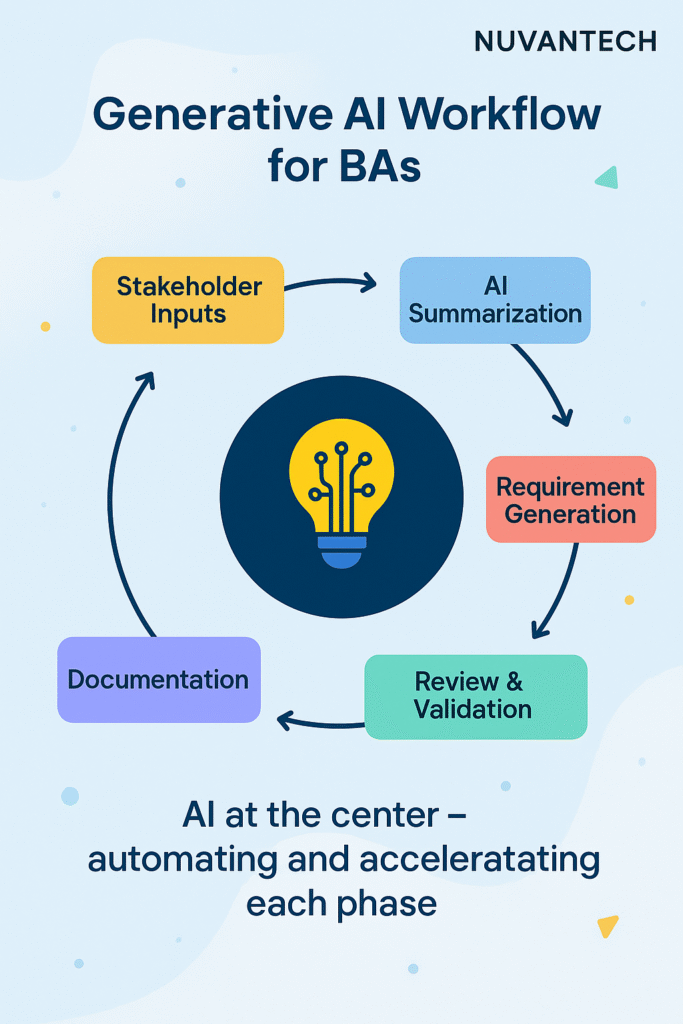
๐Ÿ“Š Diagram: Generative AI Workflow for BAs

Generative AI Workflow for BAs

๐Ÿš€ Key Benefits of Using Generative AI in Requirement Analysis

BenefitDescription
โฑ๏ธ SpeedAutomate documentation and analysis tasks that used to take hours.
๐Ÿ“‹ AccuracyAI identifies inconsistencies and improves requirement clarity.
๐Ÿง  Knowledge RetentionAI learns from past projects and maintains context across versions.
๐Ÿ’ฌ Better CollaborationAI generates summaries and Jira-ready tickets to keep all teams aligned.
๐Ÿ’ฐ Cost EfficiencyReduces human error and time wastage, leading to faster delivery.
๐Ÿ” TraceabilityGenerates traceability matrices linking requirements to user stories and test cases.

๐Ÿงญ Real-World Use Cases

  1. Banking & FinTech โ€“ Generate detailed workflows for KYC, AML, or onboarding automation.
  2. E-Commerce โ€“ Draft product catalog rules, order flow logic, and payment gateway specs.
  3. Healthcare โ€“ Convert patient journey data into process flows and compliance-ready documentation.
  4. Insurance โ€“ Summarize claim workflows and generate risk-mitigation requirement sets

๐Ÿง  Pro Tips for BAs Using Generative AI

  • โœ… Start small: Use AI for summaries and story drafts before full automation.
  • ๐Ÿงพ Review everything: AI speeds up, but you remain accountable for accuracy.
  • ๐Ÿ’ฌ Use custom prompts: The more context you give, the better the output.
  • ๐Ÿงฉ Integrate tools: Connect ChatGPT, Jira, Confluence, or Notion for seamless flow.
  • ๐Ÿ“ˆ Track improvement: Measure saved time and documentation accuracy to prove ROI

๐Ÿ”ฎ Future Trends: Whatโ€™s Next for AI-Powered BAs?

TrendDescription
๐Ÿค– Conversational Requirement GatheringVoice-based AI tools that record meetings and convert them into BRDs instantly.
๐Ÿงฉ AI-Driven TraceabilityAuto-generated RTMs linked across systems for live updates.
๐Ÿ“Š Predictive Requirement AnalyticsAI will predict potential project risks and requirement gaps.
๐Ÿ’ก AI Pair-AnalysisTwo AIs collaborating with a BA โ€” one for content generation, one for validation.

๐Ÿ Conclusion: Your AI-Powered BA Journey Starts Now

Generative AI isnโ€™t here to replace Business Analysts โ€” itโ€™s here to empower them.
By using AI to automate repetitive documentation and analysis tasks, you gain more time to focus on creativity, strategy, and stakeholder value.

If you start integrating AI today, youโ€™ll soon find yourself delivering faster, more consistent, and smarter results โ€” and thatโ€™s exactly what future-ready organizations want.

๐Ÿ’ฌ So, whatโ€™s stopping you? Try AI for your next requirement-gathering session โ€” and experience the difference.

๐Ÿค– Agentic AI + Large Language Model Agents: Automating KYC, Risk Profiling & Portfolio Rebalancing

Discover how Agentic AI and Large Language Model (LLM) Agents automate KYC, risk profiling, and portfolio rebalancing โ€” simplifying wealth management

๐ŸŒ Introduction: From Manual to Autonomous Wealth Management

Think about your last financial task โ€” verifying your identity, filling a risk-profiling form, or adjusting your investment portfolio.
Now imagine a world where all of this happens automatically โ€” accurately, securely, and in real-time โ€” powered by Agentic AI and Large Language Model (LLM) Agents.

Welcome to the new era of intelligent wealth management โ€” where AI systems donโ€™t just assist humans; they act like humans, making financial workflows faster, more compliant, and deeply personalized.

This article breaks down how these intelligent agents are revolutionizing KYC (Know Your Customer), Risk Profiling, and Portfolio Rebalancing โ€” three pillars of modern financial services.

๐Ÿง  Understanding Agentic AI and LLM Agents

๐Ÿงฉ What Is Agentic AI?

Agentic AI refers to artificial intelligence systems that can act independently toward a specific goal using reasoning, memory, and feedback loops.
Unlike traditional AI models that require constant instructions, agentic AI can:

  • Analyze data
  • Make context-based decisions
  • Execute tasks automatically
  • Learn continuously from outcomes

In wealth management, this means AI systems that can analyse client data, suggest actions, and even implement investment decisions โ€” all while staying compliant

๐Ÿ—ฃ๏ธ What Are Large Language Model (LLM) Agents?

Large Language Models (like GPT or Gemini) are AI systems trained on massive datasets of text and code.
When combined with agentic frameworks, they evolve into LLM Agents โ€” capable of:

  • Understanding human language and context
  • Conducting conversations naturally
  • Connecting to APIs, databases, and fintech tools
  • Executing step-by-step financial workflows autonomously

In simpler words, LLM Agents = AI Advisors that talk, think, and act.

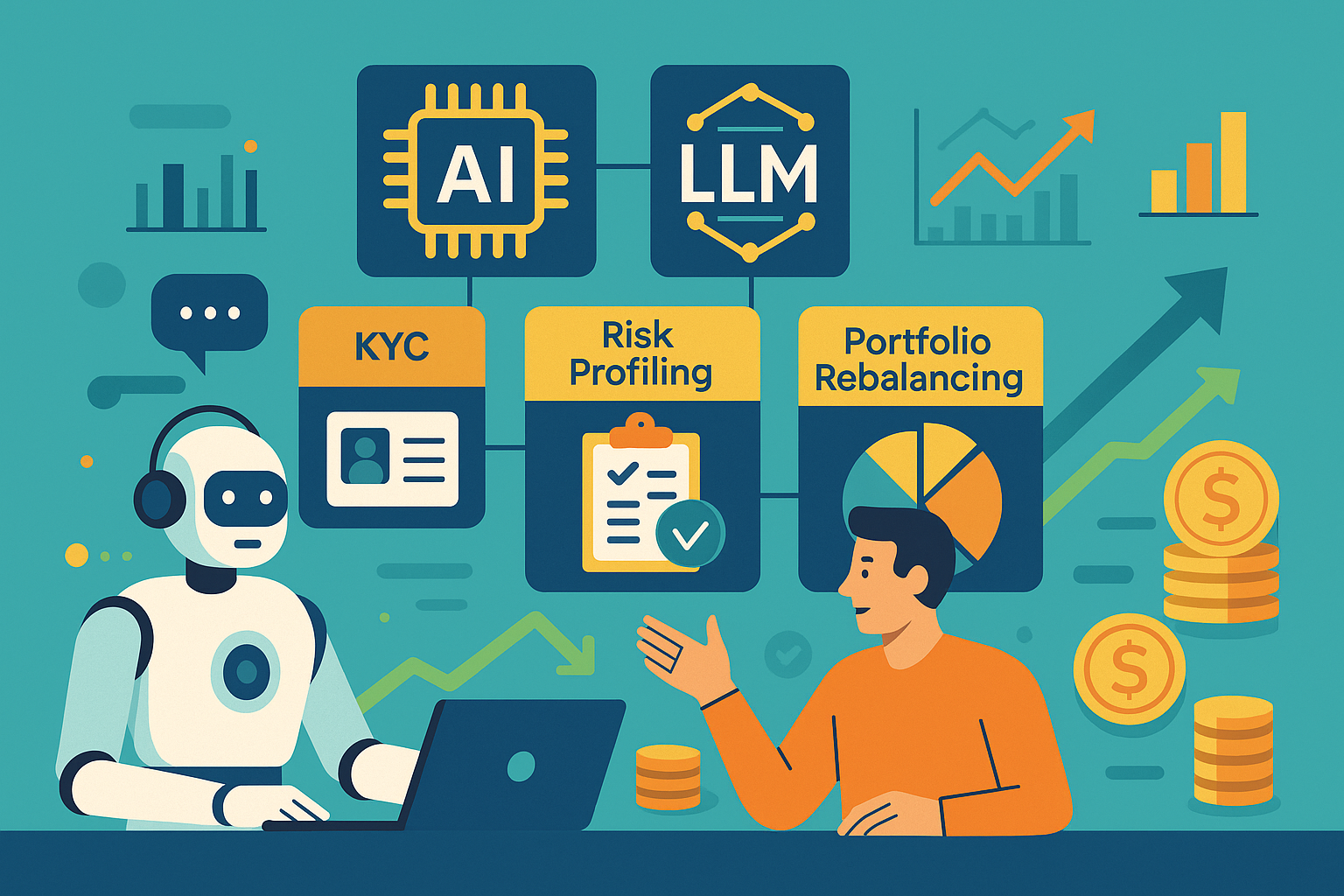
๐Ÿง  Agentic AI + LLM Agents = The Smartest Financial Assistant

๐Ÿง  Agentic AI + LLM Agents = The Smartest Financial Assistant

When you combine Agentic AIโ€™s reasoning with LLMโ€™s conversational understanding, you get autonomous systems that can handle complex, regulated workflows in wealth management.

๐Ÿฆ 1. Automating KYC (Know Your Customer) with Agentic AI

๐Ÿงพ The Problem: Manual KYC = Slow, Costly, Error-Prone Traditional KYC involves collecting IDs, verifying documents, checking databases, and logging audit trails โ€” often done manually by back-office teams.
This process can take days and increase onboarding costs significantly

โš™๏ธ The Solution: AI-Powered, Autonomous KYC

Agentic AI systems can automate the entire KYC journey end-to-end:

๐Ÿ”„ Step-by-Step Sequence:

  1. Data Capture โ€“ Extracts customer info using OCR (Optical Character Recognition) from uploaded documents.
  2. Identity Verification โ€“ Compares face, signature, and ID using computer vision models.
  3. Database Check โ€“ Integrates with APIs for AML (Anti-Money Laundering) and sanctions screening.
  4. LLM-Driven Reasoning โ€“ Interprets KYC anomalies and generates audit notes in plain English.
  5. Decision Engine โ€“ Approves or flags cases for compliance officer review.

๐Ÿ’ก Benefits of AI-KYC

BenefitExplanation
SpeedInstant identity checks within minutes instead of days
AccuracyNear-zero human error with machine-based verification
ScalabilityHandles thousands of KYC requests simultaneously
ComplianceBuilt-in regulatory rule engines (FATF, SEBI, FINTRAC)
User ExperienceSeamless onboarding across web & mobile
Automating KYC (Know Your Customer) with Agentic AI

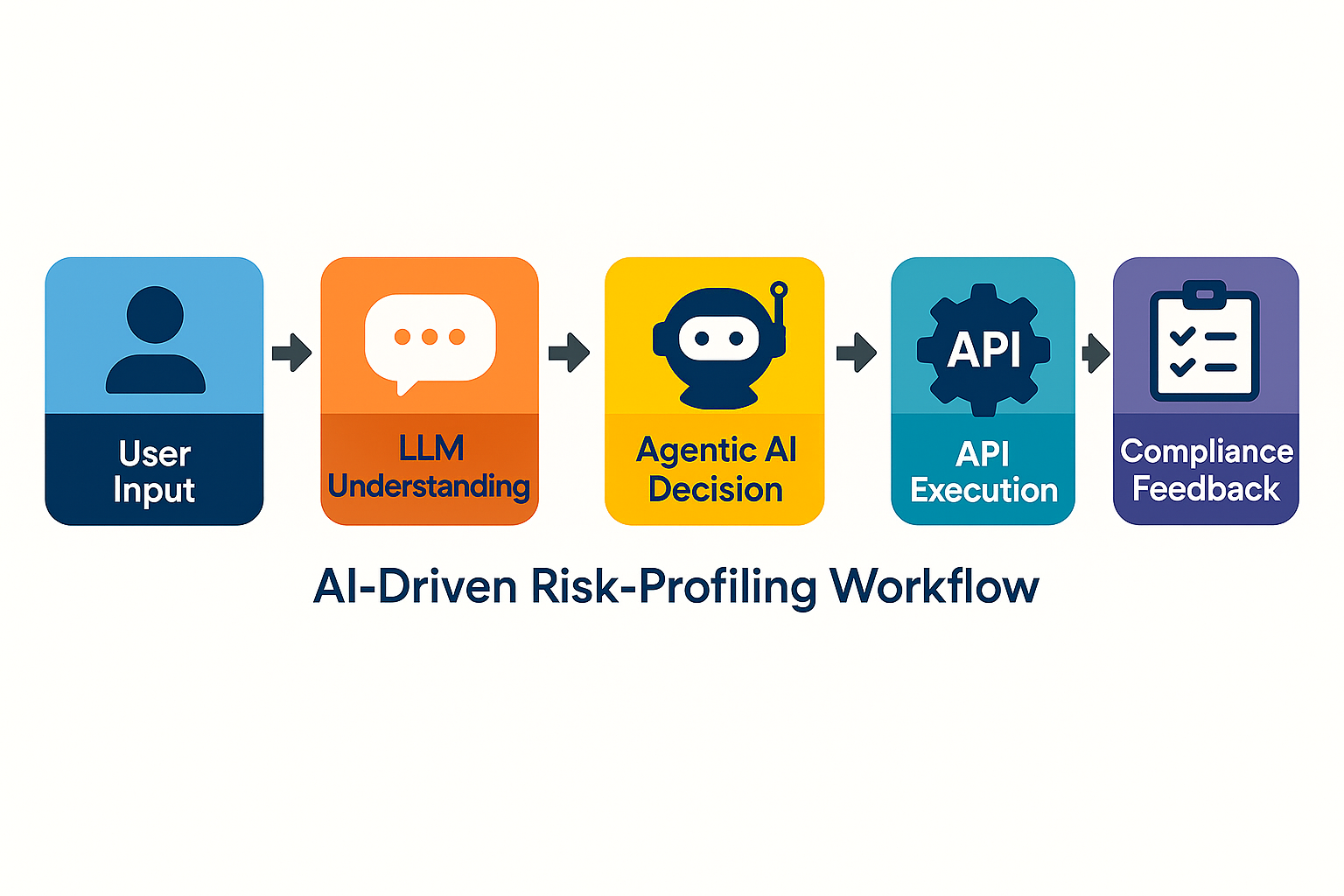
๐Ÿ“Š 2. AI-Driven Risk Profiling: Understanding Investors Like Humans Do

๐Ÿ’ฌ The Challenge Human advisors spend hours asking clients about their income, goals, and risk tolerance โ€” but answers can be inconsistent, subjective, and hard to quantify

๐Ÿค– The AI-LLM Solution

LLM Agents can converse like a financial planner โ€” analyzing tone, keywords, and context โ€” while Agentic AI models translate responses into actionable financial insights.

๐Ÿ’ก Step-by-Step AI Risk Profiling Flow

  1. Interactive Chat Interface โ€“ LLM agent conducts a natural-language interview (โ€œTell me about your investment goalsโ€).
  2. Sentiment Analysis โ€“ AI detects optimism, fear, or uncertainty in answers.
  3. Quantitative Scoring โ€“ Risk algorithms assign numerical tolerance scores.
  4. Dynamic Profiling โ€“ AI adjusts risk appetite automatically as client data changes.
  5. Feedback Loop โ€“ Results feed back into portfolio models and compliance systems
AI-Driven Risk Profiling: Understanding Investors Like Humans Do

๐Ÿงฎ Benefits of AI Risk Profiling

BenefitDescription
PersonalizedAdapts to lifestyle, emotions, and real-time financial data
Continuous UpdatesProfile evolves as markets and goals change
Emotion DetectionUnderstands fear, greed, or overconfidence in clients
Regulatory AlignmentAutomatically maps answers to risk categories (Conservative, Balanced, Aggressive)

๐Ÿงฉ Example

Imagine an investor says:

โ€œIโ€™m nervous about market drops, but I still want some growth.โ€

A human might interpret this vaguely.
An LLM-powered AI agent instantly categorizes this as Moderate Risk, balances equity vs. debt allocation, and logs the reasoning transparently for compliance.

๐Ÿ’ฐ 3. Portfolio Rebalancing: Intelligent, Real-Time Adjustments

๐Ÿ“‰ The Traditional Way

Portfolio rebalancing is often periodic โ€” monthly or quarterly โ€” and heavily manual.
Advisors check deviations, analyse market performance, and then recommend changes. This process is slow and reactive.

โš™๏ธ The AI Way: Continuous & Autonomous

Agentic AI systems use autonomous decision loops to monitor portfolios continuously and rebalance automatically when needed.

๐Ÿง  AI Workflow Sequence

  1. Data Ingestion โ€“ AI fetches market data, asset prices, and portfolio weightages in real-time.
  2. Deviation Detection โ€“ Identifies drift beyond pre-set thresholds.
  3. LLM Reasoning โ€“ Explains rationale in human terms (โ€œEquity overweight due to market surgeโ€).
  4. Execution Layer โ€“ Automatically triggers rebalancing via broker APIs.
  5. Audit & Feedback โ€“ Logs every action for transparency and learning
Portfolio Rebalancing: Intelligent, Real-Time Adjustments

๐ŸŒŸ Benefits of AI Portfolio Rebalancing

BenefitExplanation
24/7 MonitoringAI never sleeps โ€” tracks all portfolios in real-time
Emotion-Free DecisionsNo panic selling or over-optimism
Cost EfficiencyFewer manual analysts and faster execution
Performance OptimizationBetter returns through timely, rule-based adjustments
ExplainabilityEach trade decision is documented in plain language

4 ๐Ÿ”’ Compliance & Transparency: The Core of AI Automation

No automation is complete without trust and auditability.
Agentic AI systems are built with Explainable AI (XAI) and RegTech integration โ€” ensuring every action is justified and traceable.

โš–๏ธ Key Compliance Features:

  • KYC Audit Logs: Every client verification step is timestamped and recorded.
  • Regulatory Mappings: MiFID II, SEBI, or FINRA standards embedded in algorithms.
  • Explainable Outputs: Each AI decision includes a human-readable summary.
  • Anomaly Detection: AI flags suspicious transactions automatically.

๐Ÿ’ฌ Example:

โ€œClientโ€™s risk profile has shifted from Moderate to Aggressive due to income increase โ€” system recommends adjusting equity ratio.โ€

Thatโ€™s not just automation โ€” itโ€™s AI governance in action.

Compliance & Transparency The Core of AI Automation
LayerDescription
LLM AgentsUnderstand natural language, handle user interaction
Agentic AI LayerExecutes logic, decisions, and continuous learning
API GatewayConnects with KYC, brokerage, and analytics systems
Data LakeStores transactions, logs, and performance data
Compliance EngineValidates every action against regulations

5 ๐ŸŒ Real-World Applications (2025 & Beyond)

CompanyInnovation
JP Morgan COINAI contract intelligence for compliance
Wealthfront 2.0Automated tax-loss harvesting with AI agents
Kristal.AI & QuantelaHybrid human + AI advisory
Finbox, Plaid, DriveWealthAPI ecosystems enabling real-time automation

๐Ÿ”ฎ Future Trends (2025โ€“2030)

TrendImpact
Multi-Agent SystemsSpecialized AI agents for KYC, trading, and compliance collaborating autonomously
Voice-Based AdvisoryTalk to your AI wealth manager via Alexa-style assistants
Emotion-Aware AIDetects stress or bias before executing trades
DeFi + AI IntegrationCross-border asset management on decentralized ledgers
Zero-Touch Onboarding100% AI-managed client journeys from signup to investment

๐Ÿ’ก Practical Tips for Wealth Managers

  1. Start Small โ€“ Automate just KYC or risk profiling first.
  2. Choose Secure APIs โ€“ Partner only with audited fintech API providers.
  3. Invest in Explainability โ€“ Use dashboards showing AI reasoning.
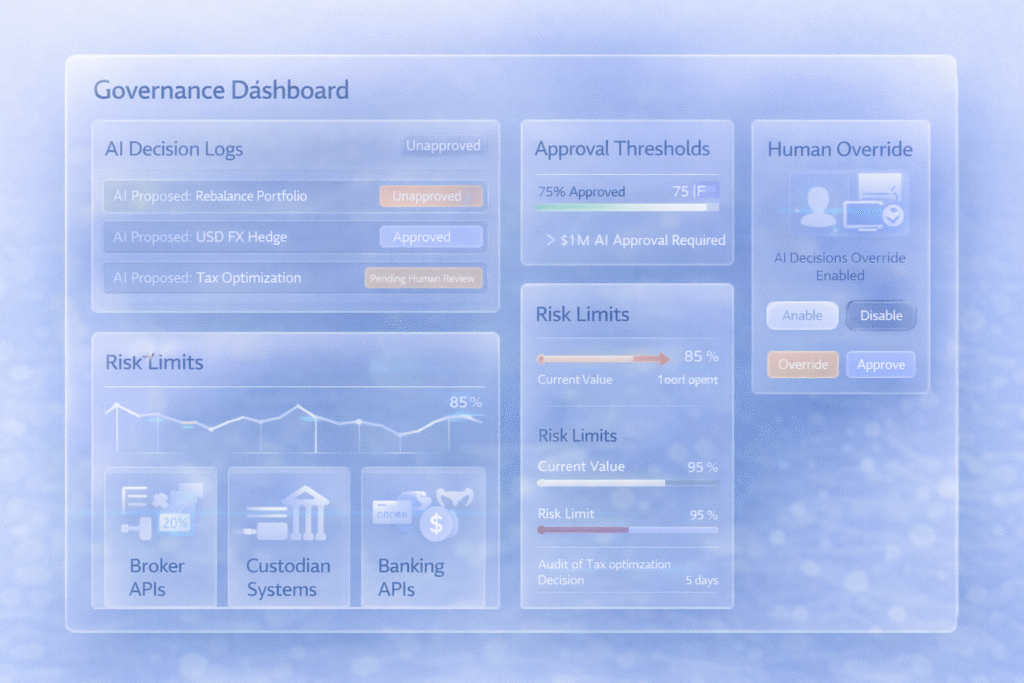
  4. Maintain Human Oversight โ€“ AI assists, humans approve.
  5. Train Your Teams โ€“ Educate advisors on how to interpret AI outputs

๐Ÿงญ Conclusion: From Automation to Autonomy

The convergence of Agentic AI and LLM Agents marks the next leap in financial innovation.
These systems are not just automating routine tasks โ€” theyโ€™re building intelligent, compliant, and adaptive wealth ecosystems that can understand clients as humans do and act as efficiently as machines can. In the coming years, wealth management will be defined not by โ€œwho manages your moneyโ€, but by โ€œhow intelligently itโ€™s managed.โ€ And thatโ€™s the power of Agentic AI in action.

๐ŸŒŸ 5 Pillars of Agentic AI in WealthTech: The Ultimate Guide to Autonomous Advisory Platforms

โ€œDiscover how Agentic AI is transforming WealthTechโ€”autonomous advisors, multi-agent architecture, compliance, and future trends in wealth management

๐ŸŒŸ Introduction: The Wealth Advisor That Never Sleeps

Imagine a financial advisor who can analyse thousands of portfolios overnight, suggest goal-based plans, rebalance investments in seconds, and talk to you in plain Englishโ€”or your native language.
Thatโ€™s not science fiction anymore. Agentic AIโ€”AI systems capable of acting autonomously to achieve specific goalsโ€”is reshaping the entire wealth-management industry. In this article, weโ€™ll break down what Agentic AI means in WealthTech, why it matters for both investors and firms, the building blocks of such platforms, and where the future is headed.

๐Ÿงฉ What is Agentic AI?

Agentic AI refers to AI-powered software โ€œagentsโ€ that can understand goals, reason about actions, and take stepsโ€”often across multiple apps or APIsโ€”to achieve those goals with minimal human input.

In WealthTech, that means:

  • Understanding investor goals: retirement, tax-efficient investing, or saving for a childโ€™s education.
  • Acting on behalf of the user: rebalancing portfolios, alerting on risks, executing trades, or updating KYC data.
  • Learning continuously: improving advice based on new market data and user behaviour.

Think of it as moving beyond traditional robo-advisors (which mostly follow predefined rules) to autonomous AI agents that can plan, execute, and adapt.

๐Ÿ’ก Why Wealth Firms Are Turning to Agentic AI

Wealth managers globally face four key challenges:

  1. High operational costs due to manual client onboarding, compliance, and rebalancing.
  2. Demand for personalized advice at scale across mass-affluent and NRI/HNI segments.
  3. Tight regulations & compliance needs (SEBI, MiFID II, SEC, MAS, etc.).
  4. Competitive pressure from fintechโ€™s and big-tech entrants.

Agentic AI addresses these by:

  • Reducing costs: automating repetitive workflows (onboarding, suitability checks).
  • Scaling personalization: tailoring portfolios to micro-segments or even 1-to-1.
  • Boosting client experience: offering 24ร—7, multilingual guidance.
  • Improving compliance: generating explainable decision trails

๐Ÿ“Š Benefits for Investors & Firms

For Investors

  • Always-on advisor: available 24ร—7 across mobile, WhatsApp, or web chat.
  • Faster decisions: instant portfolio diagnostics and recommendations.
  • Lower advisory fees: due to operational efficiency.
  • Goal-aligned strategies: AI adapts to life events (marriage, children, retirement).

For Wealth Firms

  • Up to 40โ€“60% cost savings in onboarding and middle-office operations.
  • Data-driven cross-selling: better matching of products to customer profiles.
  • Stronger retention: hyper-personalized nudges improve customer stickiness.
  • Regulatory readiness: automatic record-keeping of recommendations

 ๐Ÿ—๏ธ Designing an Agentic AI-Powered Wealth Platform

Hereโ€™s a five-step sequence for product owners and tech teams:

  1. Define Product Vision & Goals
    1. Examples: automated KYC & onboarding, risk-based portfolio rebalancing, global tax optimization.
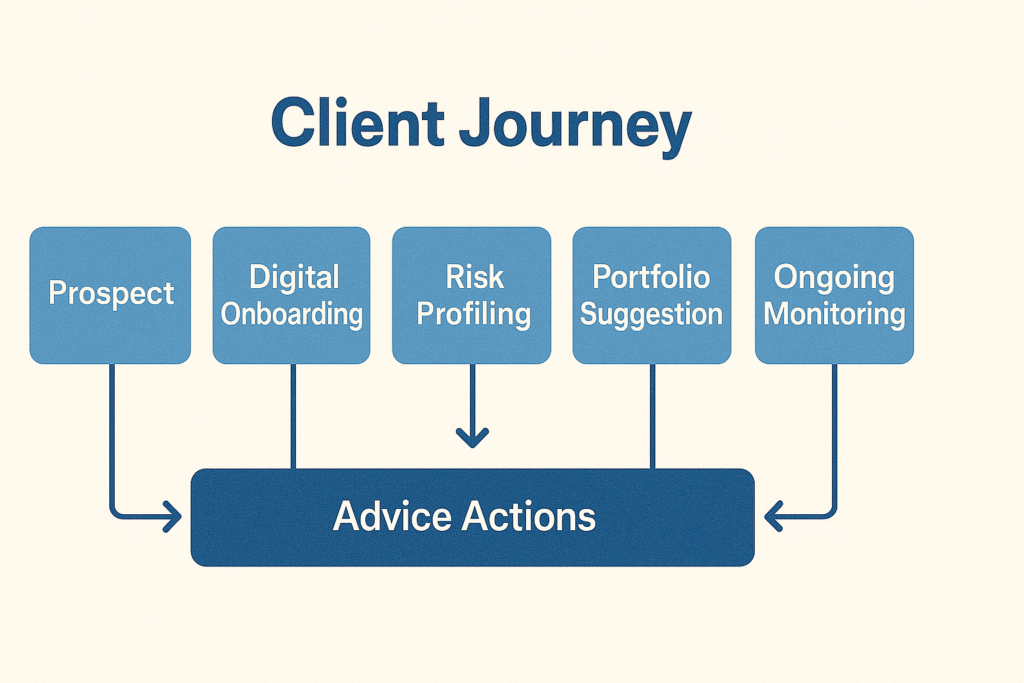
  2. Map Investor Journey
    1. Hero Chart: Client-Journey Map โ€“ Prospect โ†’ Digital Onboarding โ†’ Risk Profiling โ†’ Portfolio Suggestion โ†’ Ongoing Monitoring โ†’ Advice Actions.
Client journey map for AI-powered WealthTech advisory platform
  1. Select AI Core & Agents
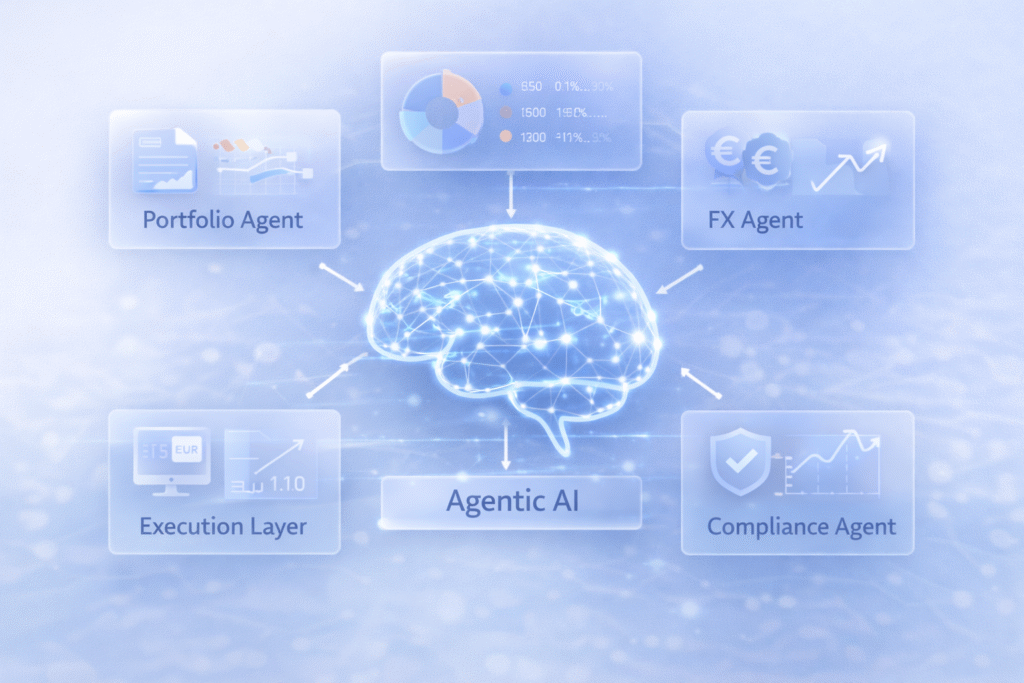
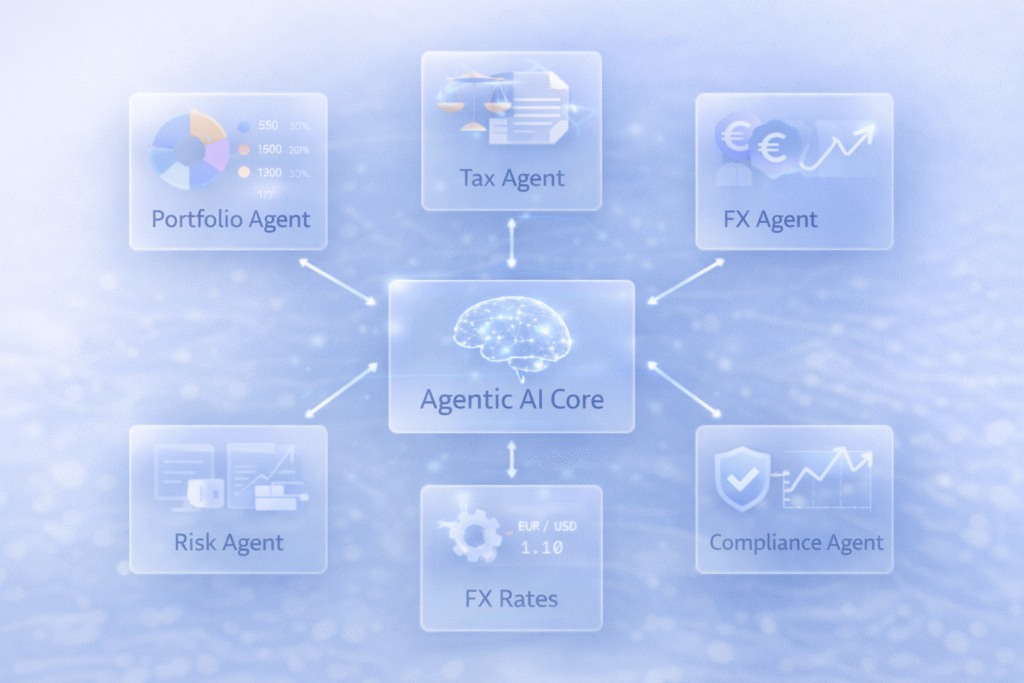
    1. Use a multi-agent system:
    2. Data Ingestion Agent: pulls live market, ESG, & macro data.
    3. Risk Agent: runs stress tests.Advice Agent: suggests allocation & rebalancing.
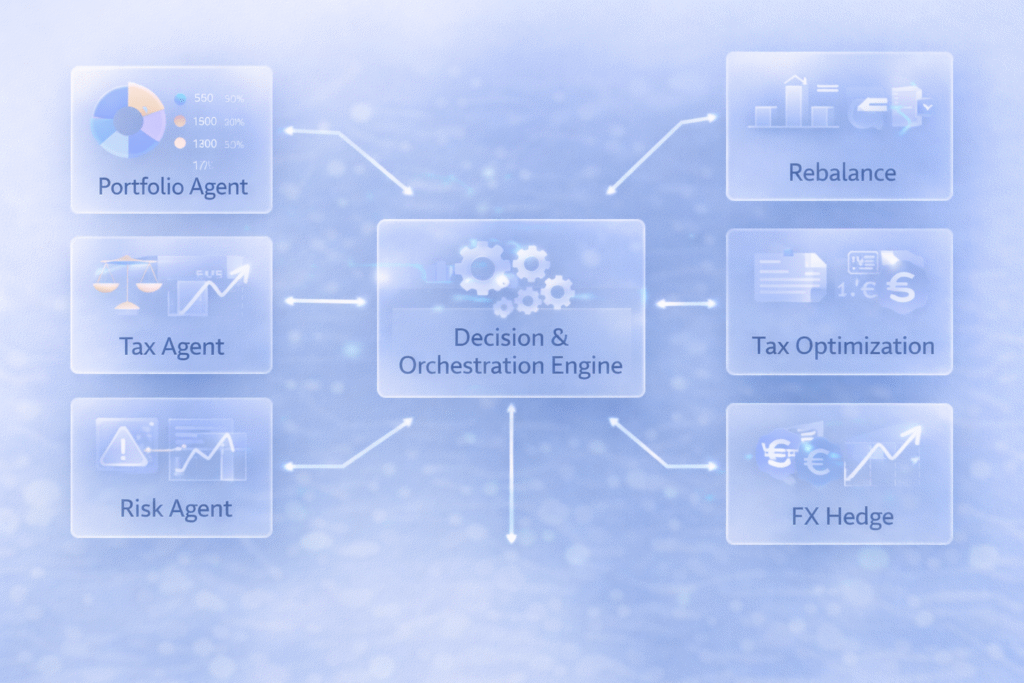
    4. Compliance Agent: ensures SEBI/SEC rules before execution.
  2. Design Human-in-the-Loop Controls
    1. Advisors supervise AI actions for high-net-worth clients.
  3. Integrate APIs & Compliance Layers
  4. Connect with trading, KYC, CRM, AML, and reporting systems

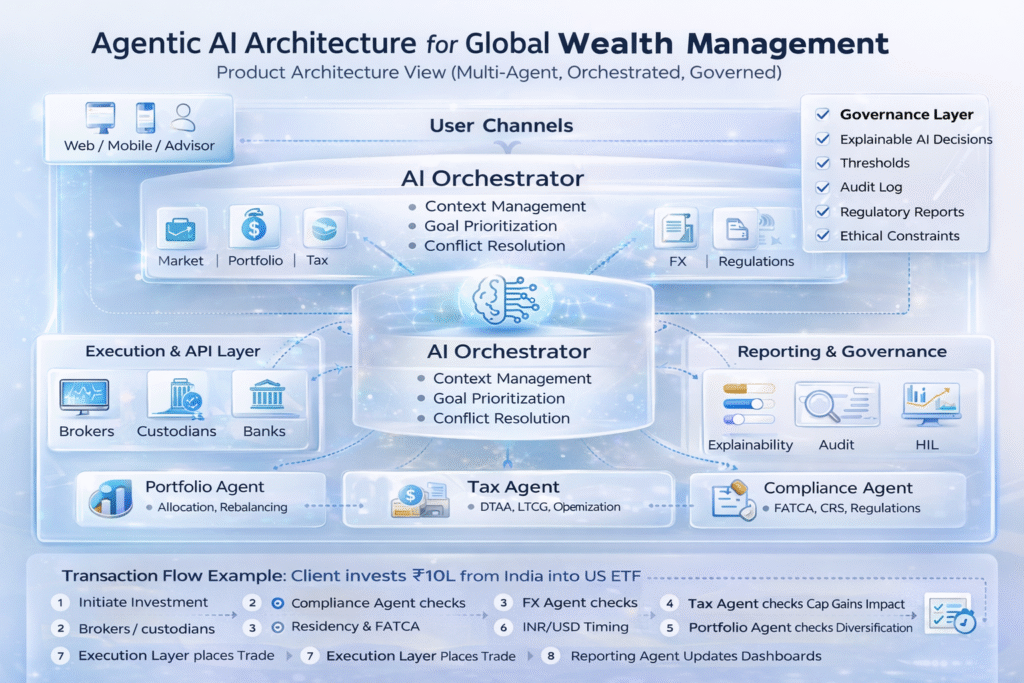
๐Ÿ”— Architecture Snapshot

Architecture diagram of Agentic AI in WealthTech showing multi-agent system design

๐Ÿ”ฅ Future Trends to Watch (2025โ€“2030)

  1. Multi-modal financial assistants: integrating text + voice + AR dashboards.
  2. ESG & Impact Investing agents: AI that optimizes for carbon footprint & social impact.
  3. Personalized tax agents: cross-border tax optimization for NRIs.
  4. AI-driven estate & retirement planning: deeper life-event modelling.
  5. Federated & privacy-preserving AI: compliant with Indiaโ€™s DPDP Act, EUโ€™s GDPR.
  6. Blockchain-based agent settlement: faster cross-border payments

๐Ÿ“ Steps for Wealth Firms to Get Started

  • Begin with one high-impact use case (e.g., automated onboarding).
  • Pilot with synthetic data & sandbox environments.
  • Ensure explainability & audit trails for every recommendation.
  • Partner with FinTech vendors or build in-house multi-agent frameworks.
  • Train teamsโ€”BA/PO, compliance, and advisorsโ€”to supervise AI actions

๐Ÿ’ฌ Key Takeaways

Agentic AI isnโ€™t replacing human advisorsโ€”itโ€™s augmenting them to deliver personalized, compliant, and cost-efficient services at scale.
Wealth firms that adopt early can improve client trust, reduce costs, and build competitive moats

๐Ÿš€ Conclusion

The journey from robo-advisors to agentic, autonomous advisory platforms is underway. By embracing this shift nowโ€”building human-AI partnerships and focusing on explainabilityโ€”WealthTech players can unlock new opportunities for millions of investors worldwide.

Scroll to Top