



Filter by

Prashant Gavhane CFPยฎ CSMยฎ CSPOยฎ

 Explore our expert insights across Agile & Scrum, SAFe Agile, Project Management, Business Analysis, Product Management, Tools & Technology, Domain Knowledge, and Artificial Intelligence. Discover tips, best practices, and industry trends to enhance your skills, manage projects effectively, and stay ahead in the digital world.

Recent Posts

Categories

Tags

๐Ÿ“š Domain Knowledge

๐Ÿง How Intelligent AI Agents Are Transforming Payments Security in 2025 and Beyond

Agentic AI is transforming real-time fraud detection in payments. Learn how autonomous AI agents prevent fraud, reduce losses, and improve security

โœจ Introduction: Why Fraud in Payments Is No Longer a โ€œFuture Problemโ€

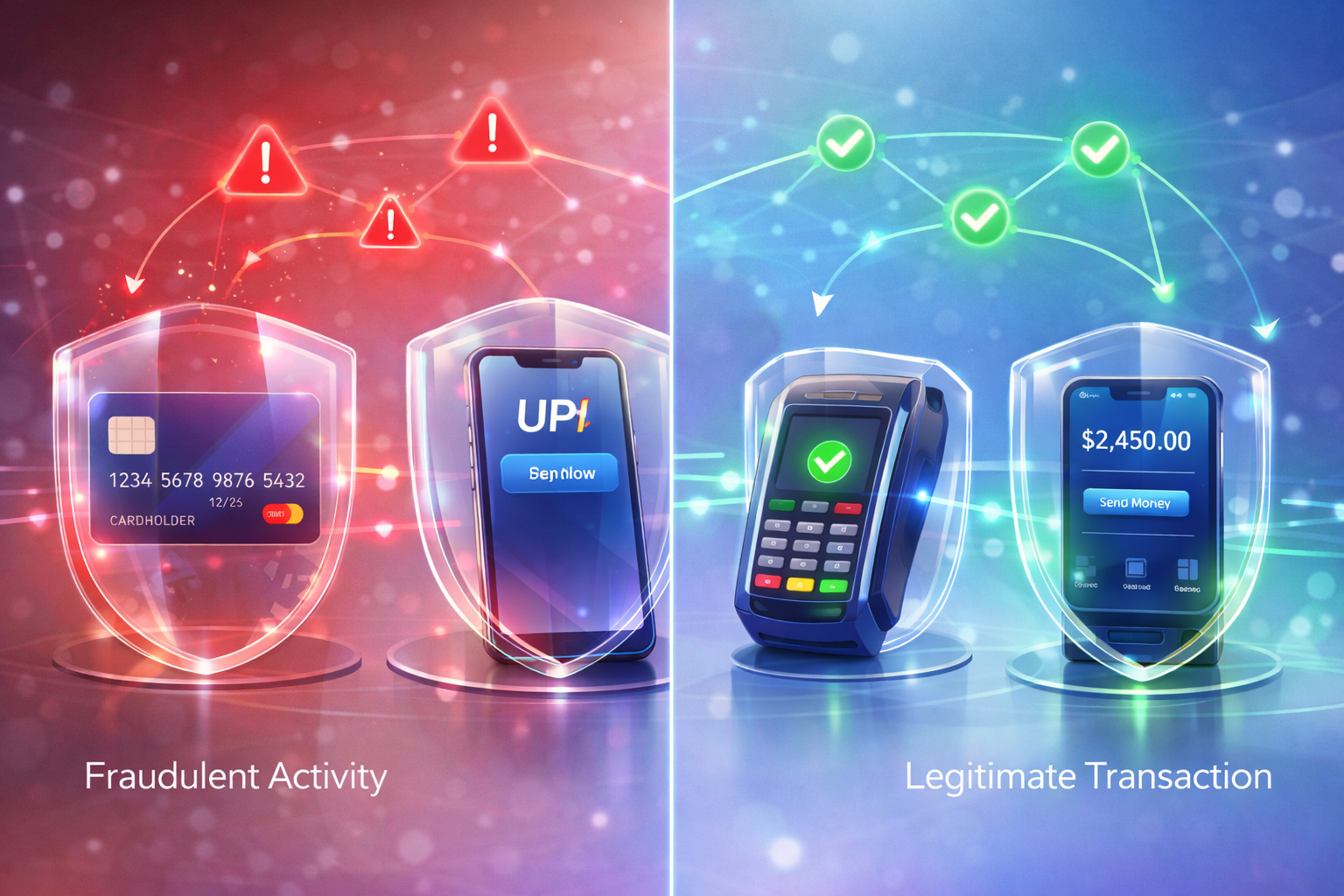
Imagine youโ€™re making a simple UPI payment or tapping your card at a store.
Behind the scenes, hundreds of checks happen in milliseconds โ€” location, device, spending pattern, merchant behavior, and more.

Now imagine fraudsters evolving faster than traditional systems.

Thatโ€™s exactly where Agentic AI comes in.

In 2025, real-time fraud detection is no longer rule-based or reactive. Itโ€™s autonomous, adaptive, and proactive โ€” powered by AI agents that think, decide, and act on their own.

This article explains:

  • What Agentic AI really means (in simple words)
  • How it works in the payment domain
  • Why banks, fintechs, and payment gateways are adopting it fast
  • Real-world benefits, architecture, and future trends

Letโ€™s break it down step by step ๐Ÿ‘‡

๐Ÿง  What Is Agentic AI? (Simple Definition)

Agentic AI refers to autonomous AI agents that can:

  • Observe data in real time
  • Make independent decisions
  • Take actions without human intervention
  • Learn continuously from outcomes

In simple terms:

Agentic AI behaves like a smart digital employee who doesnโ€™t wait for instructions every time.

๐Ÿง  How Itโ€™s Different from Traditional AI

Traditional AIAgentic AI
Reacts to inputsActs autonomously
Fixed workflowsDynamic decision paths
Limited contextFull situational awareness
Human approval neededSelf-executing actions

๐Ÿ“ฒ Why the Payment Domain Needs Agentic AI (Urgently)

Payment fraud today includes:

  • UPI fraud
  • Card-not-present fraud
  • Account takeover
  • Merchant fraud
  • Synthetic identity fraud
  • Friendly fraud (false chargebacks)

๐Ÿšจ The Core Problem

Traditional fraud systems:

  • Depend heavily on static rules
  • Generate high false positives
  • Block genuine customers
  • React after damage is done

Agentic AI flips this approach

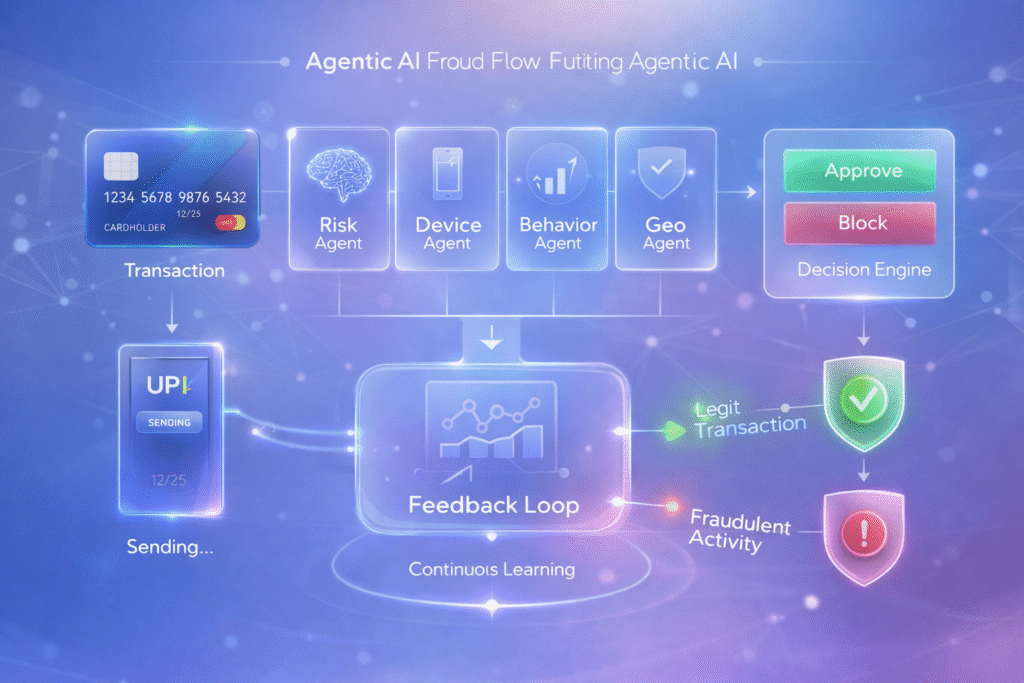
๐Ÿ” How Agentic AI Works in Real-Time Fraud Detection

Agentic AI fraud detection flow in real-time payment transactions

โš™๏ธStep-by-Step Sequence

1.      Transaction Initiated
Card, UPI, wallet, or BNPL payment starts
2.      AI Agents Activate
Risk Agent
Behavior Agent
Device Agent
Network Agent
Compliance Agent
3.      Real-Time Data Analysis
User history
Device fingerprint
Location mismatch
Velocity checks
Merchant risk score
4.      Autonomous Decision
Approve instantly
Trigger step-up authentication
Block and alert
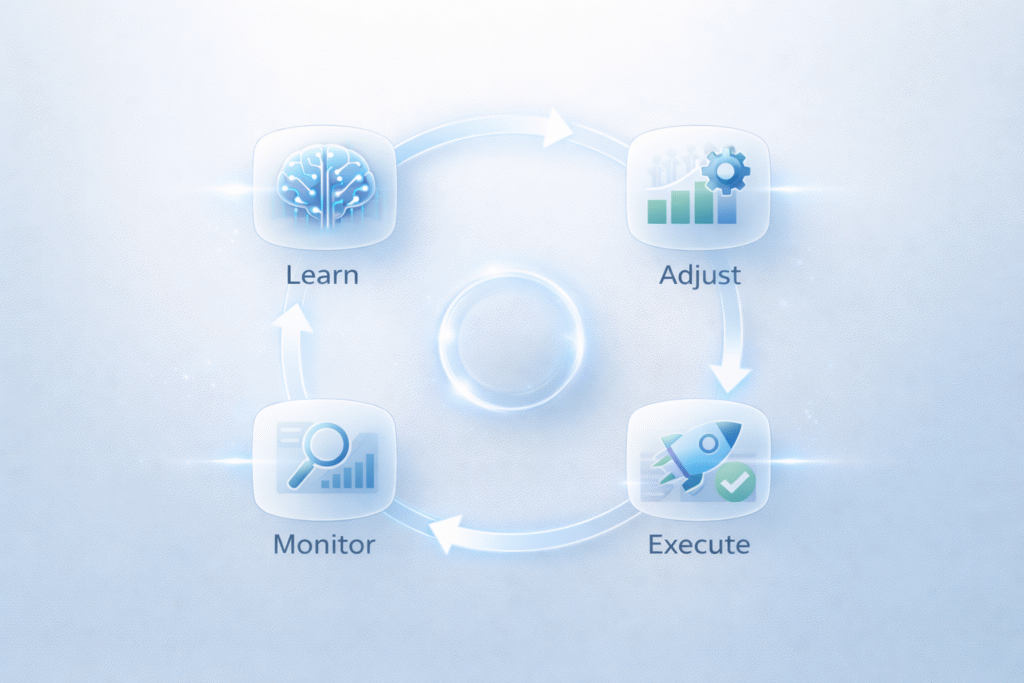
5.      Continuous Learning
Feedback loop improves future decisions

โฑ๏ธ All of this happens in under 300 milliseconds

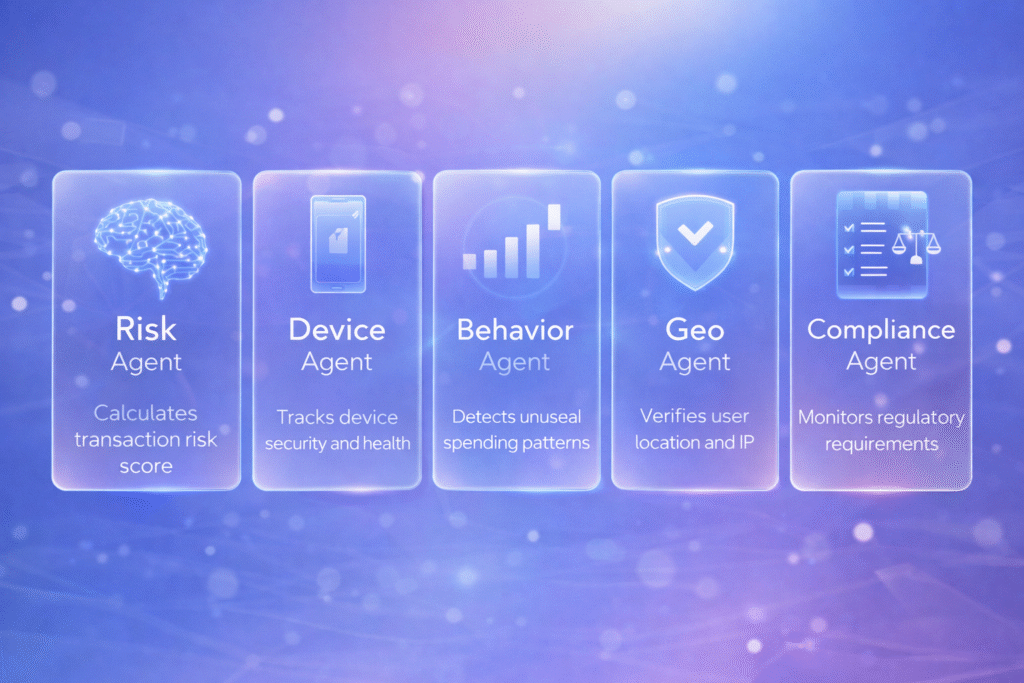
๐Ÿ“Š Key AI Agents Used in Payment Fraud Systems

AI agents roles in payment fraud detection system

๐Ÿง  Risk Assessment Agent

  • Calculates transaction risk score
  • Uses ML + behavioral analytics

๐Ÿ“ฑ Device Intelligence Agent

  • Tracks device ID, OS, emulator detection
  • Flags jailbroken or rooted devices

๐Ÿ” Behavioral Pattern Agent

  • Detects unusual spending patterns
  • Identifies bot-like activity

๐ŸŒ Geo-Location Agent

  • Compares IP, GPS, merchant location
  • Detects impossible travel patterns

โš–๏ธ Compliance & AML Agent

  • Ensures regulatory alignment
  • Flags suspicious transactions for reporting

๐Ÿ’ก Benefits of Agentic AI in Payment Fraud Prevention

๐Ÿš€ 1. Real-Time Protection

No delays. Fraud is stopped before money leaves the account.

๐ŸŽฏ 2. Fewer False Positives

Legitimate customers face fewer declines โ†’ better UX.

๐Ÿ“ˆ 3. Scales Automatically

Handles millions of transactions without manual tuning.

๐Ÿ”„ 4. Continuous Self-Learning

Adapts to new fraud patterns without rewriting rules.

๐Ÿ’ฐ 5. Cost Reduction

  • Lower chargebacks
  • Reduced manual reviews
  • Fewer customer complaints

๐Ÿ“Š Business Impact for Banks & Fintechs

AreaImpact
Customer Trustโ†‘ Higher
Fraud Lossesโ†“ 40โ€“70%
Transaction Approval Rateโ†‘ 5โ€“10%
Compliance Riskโ†“ Significantly
Operational Costโ†“ Major savings

โš™๏ธ Reference Architecture (Payment Domain)

๐Ÿงฉ Architecture Layers

  1. Transaction Layer
    1. Cards, UPI, wallets, POS
  2. Data Ingestion Layer
    1. Kafka, APIs, event streams
  3. Agentic AI Layer
    1. Multiple AI agents (risk, behavior, device)
  4. Decision Engine
    1. Approve / Challenge / Block
  5. Learning & Feedback Loop
    1. Model retraining
    1. Reinforcement learning

๐Ÿง  Role of LLMs in Agentic Fraud Systems

Large Language Models (LLMs) add:

  • Explainable decisions
  • Fraud reasoning summaries
  • Investigator support
  • Natural-language alerts

Example:

โ€œTransaction blocked due to unusual merchant behavior combined with new device and location mismatch.โ€ This improves trust and auditability

๐ŸŒ Real-World Use Cases (2025)

  • UPI fraud prevention in India
  • Card fraud detection for global payment gateways
  • BNPL risk scoring
  • Merchant onboarding fraud
  • Cross-border payment security

๐Ÿ“ˆ Future Trends in Agentic AI for Payments

๐Ÿ”ฎ Whatโ€™s Coming Next?

  • Self-negotiating AI agents between banks and merchants
  • Federated learning (privacy-first fraud detection)
  • AI-driven regulatory reporting
  • Voice & biometric fraud agents
  • Autonomous chargeback handling

By 2027, most payment fraud systems will be fully agent-driven

๐Ÿ Conclusion: The Future of Payment Security Is Autonomous

Agentic AI is not just an upgrade โ€”
itโ€™s a fundamental shift in how payment systems think and protect users.

For banks, fintechs, and payment companies, the message is clear:

Fraud prevention must be real-time, intelligent, and autonomous.

And Agentic AI is the technology making that possible. If you found this useful, share it, bookmark it, or drop a comment โ€” because the future of payments is being built right now

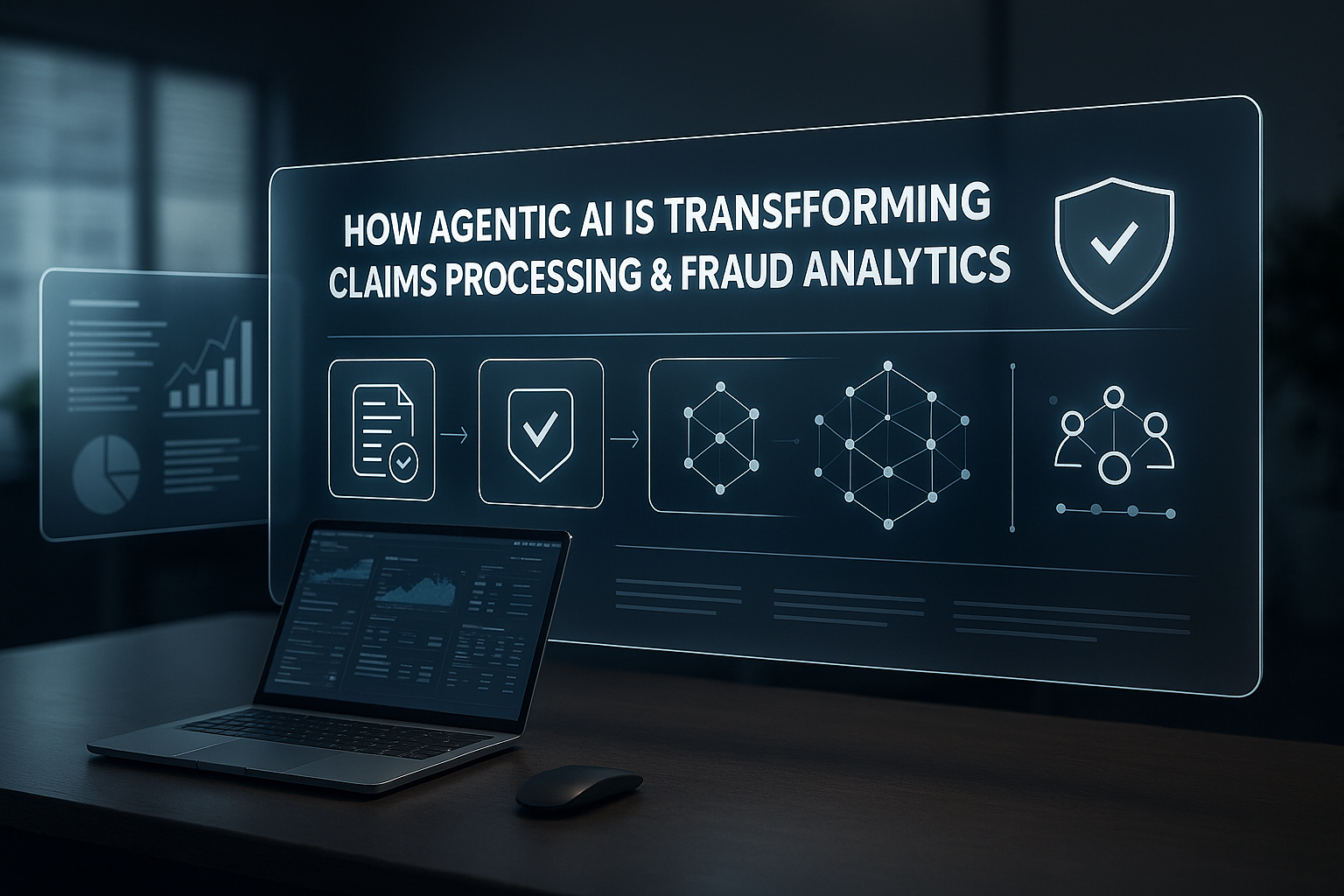
โญ How Agentic AI Is Transforming Insurance Claims Processing & Fraud Analytics

Agentic AI transforms insurance claims processing and fraud analytics with automation, accuracy, speed, and predictive intelligence. Learn benefits, use cases & future trends.

๐Ÿง  Introduction: The Insurance Industryโ€™s Biggest Turning Point

Insurance companies are under pressure like never before โ€” rising claims volume, customer expectations for instant decisions, and increasingly sophisticated fraud patterns. Traditional manual processes simply cannot keep up.

This is where Agentic AI steps in.

Unlike traditional automation or simple chatbots, Agentic AI can think, decide, learn, and act without human intervention. It can process claims end-to-end, detect fraud using patterns humans miss, and make decisions with accuracy and explainability.

In this article, youโ€™ll learn:

  • What Agentic AI really means (simple definition)
  • How it works in claims processing
  • Benefits for insurers, TPAs, and policyholders
  • Real-world use cases
  • Step-by-step implementation roadmap
  • Tools, architecture, diagrams, and visuals
  • Future trends shaping insurance in 2030
  • SEO insights, keywords, and more

Letโ€™s dive in.

โš™๏ธ What Is Agentic AI? (Simple Definition)

Agentic AI refers to systems that can autonomously plan, reason, and perform tasks without needing constant human instructions.

Unlike traditional AI that only responds when asked, Agentic AI:

  • Understands goals
  • Breaks work into steps
  • Executes workflows
  • Learns from outcomes
  • Makes decisions
  • Self-improves over time

It acts like an intelligent insurance employee that never sleeps

๐Ÿ“ฒ Why Insurance Needs Agentic AI Now

The insurance industry faces five major challenges:

๐Ÿ“Š 1. Rising Claims Volume

More customers, more policies โ†’ more claims. Manual teams canโ€™t scale.

โš ๏ธ 2. Increased Fraud Attempts

Fraud networks are using deepfakes, forged documents, synthetic IDs.

๐Ÿ•’ 3. Long Processing Times

Customers expect instant approvalsโ€”not 7 to 15 days.

๐Ÿงพ 4. High Operational Costs

Claims and fraud units represent 30โ€“40% of insurer expenses.

๐Ÿ”„ 5. Compliance & Audit Pressure

Regulators demand transparency, audit trails, and fairness. Agentic AI solves these problems by automating, optimizing, and explaining decisions

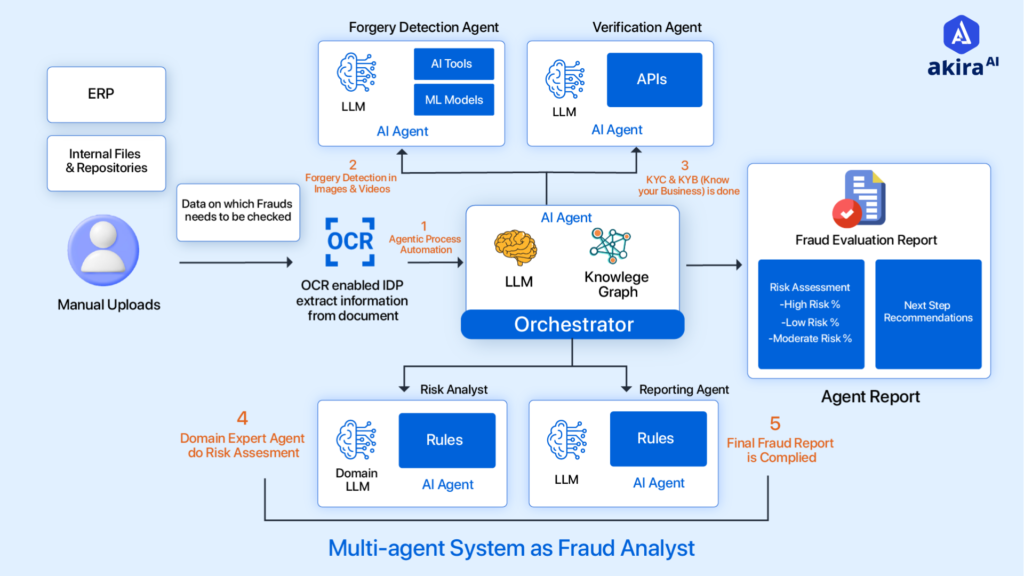
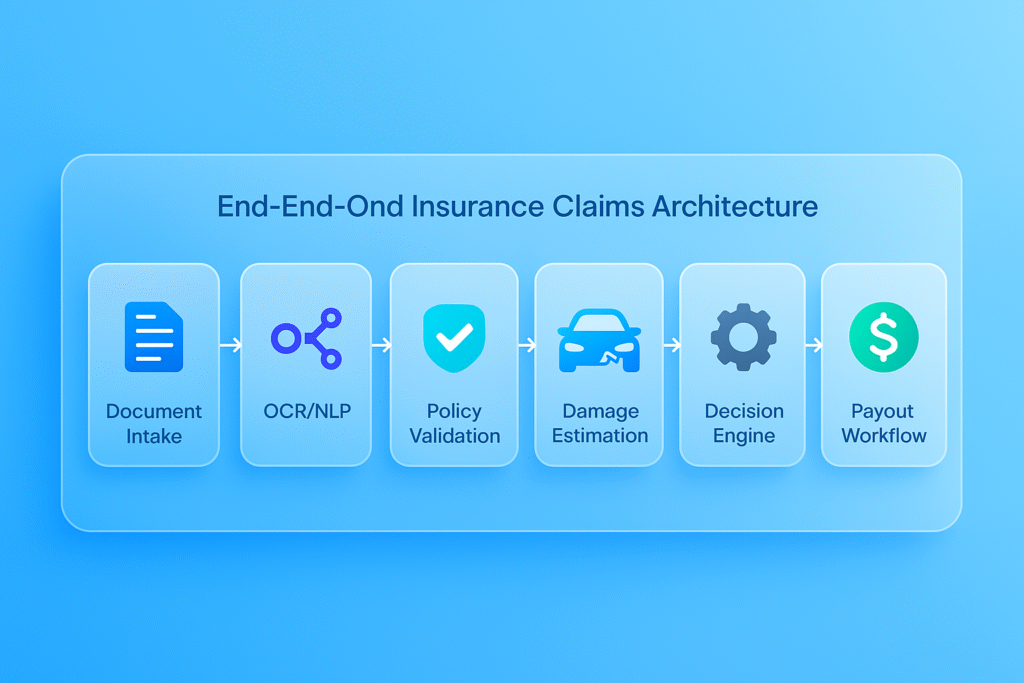
๐Ÿ“Š How Agentic AI Works in Claims Processing (Step-by-Step)

1๏ธโƒฃ Claim Intake & Document Understanding

Agentic AI extracts information automatically from:

  • PDFs
  • Photos
  • Medical reports
  • Invoices
  • Police reports
  • Videos

๐Ÿ“Œ Uses: Computer vision, OCR, NLP.

2๏ธโƒฃ Policy & Coverage Validation

AI checks:

  • Policy status
  • Sum insured
  • Co-payment
  • Waiting periods
  • Exclusions
  • Deductibles

โš™๏ธ Done through: Large Language Models (LLMs) + rule engines.

3๏ธโƒฃ Damage Assessment (Auto, Health, Property)

AI models can:

  • Read vehicle damage photos
  • Interpret X-rays & prescriptions
  • Analyze fire/flood property images

๐Ÿ“ˆ Accuracy: 90โ€“95% with real-world datasets.

4๏ธโƒฃ Fraud Risk Scoring

Agentic AI performs:

  • Pattern detection
  • Cross-customer comparison
  • Network graph analysis
  • Fake document detection
  • Behavioural risk scoring
  • Deepfake identification

๐Ÿ” Stops fraud before payout.

5๏ธโƒฃ Decision Recommendation or Auto-Approval

Based on risk + rules + history:

  • Low-risk claims get auto-approved
  • High-risk claims go to human adjuster

๐Ÿ“ฒ Standard approvals happen in minutes.

6๏ธโƒฃ Workflow Automation

AI triggers tasks:

  • Pay-out initiation
  • Customer notifications
  • Report generation
  • Investigation alerts

โš™๏ธ Integrates with: Guidewire, Duck Creek, Majesco, SAP, Salesforce

AI claims architecture from intake to payout in glass morphism style

๐Ÿ“ˆ Benefits of Agentic AI for Insurers

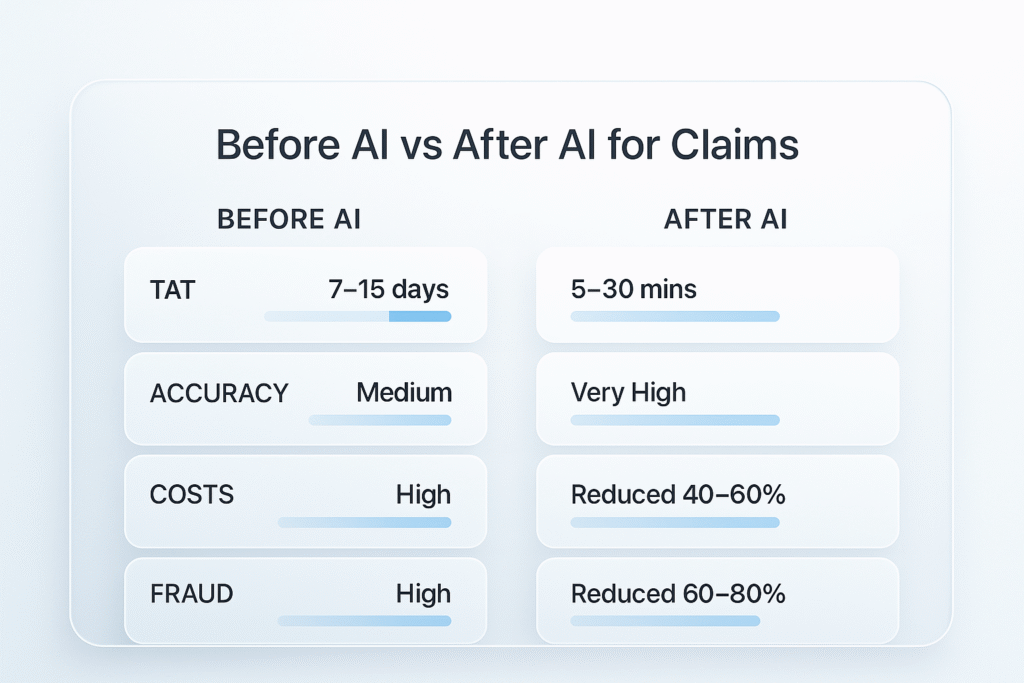
๐ŸŽ๏ธ 1. Faster Claim Settlements (Up to 70% Faster)

Automation reduces TAT from days โ†’ minutes.

๐Ÿ’ฐ 2. 40โ€“60% Cost Reduction

Less manual work โ†’ lower operational cost.

๐Ÿ”’ 3. Fraud Reduction by 50โ€“80%

AI catches suspicious patterns that humans miss.

๐Ÿ” 4. Zero Errors & High Accuracy

Consistent decisions โ†’ fewer disputes.

๐Ÿ“ž 5. Better Customer Satisfaction

Instant claim decisions boost trust.

๐Ÿ“‘ 6. Complete Audit Trails

Every AI decision is documented โ†’ compliance friendly.

Before and after AI claims comparison showing TAT, accuracy, cost, and fraud impact

๐Ÿ“Š Benefits for Policyholders

  • Faster settlements
  • Transparent decisions
  • Reduced fraud โ†’ lower premiums
  • 24×7 assistance
  • Less paperwork

๐Ÿข Benefits for Adjusters & Fraud Analysts

  • AI handles low-complexity claims
  • Analysts focus only on high-risk cases
  • Improved investigation accuracy
  • Less burnout, more productivity

๐ŸŒ Industry Use Cases (Practical Examples)

๐Ÿฅ Health Insurance

  • Medical bill validation
  • Treatment verification
  • Hospital fraud pattern detection

๐Ÿš— Motor Insurance

  • Vehicle damage AI scoring
  • Replacement part cost estimation
  • Telematics-based fraud modelling

๐Ÿ˜๏ธ Property Insurance

  • Satellite image-based disaster claims
  • Wildfire and flood assessment
  • Drone image analytics

๐Ÿ“ฆ Life & Term Insurance

  • Death certificate verification
  • Identity fraud scoring
  • Beneficiary validation

๐Ÿงญ Step-by-Step Implementation Roadmap

1. Start With High-Volume Claims

Motor & health -> best ROI.

2. Integrate OCR + LLM for Document Processing

Extract essential data with high accuracy.

3. Deploy Fraud Scoring Models

Use supervised + unsupervised models + graph analytics.

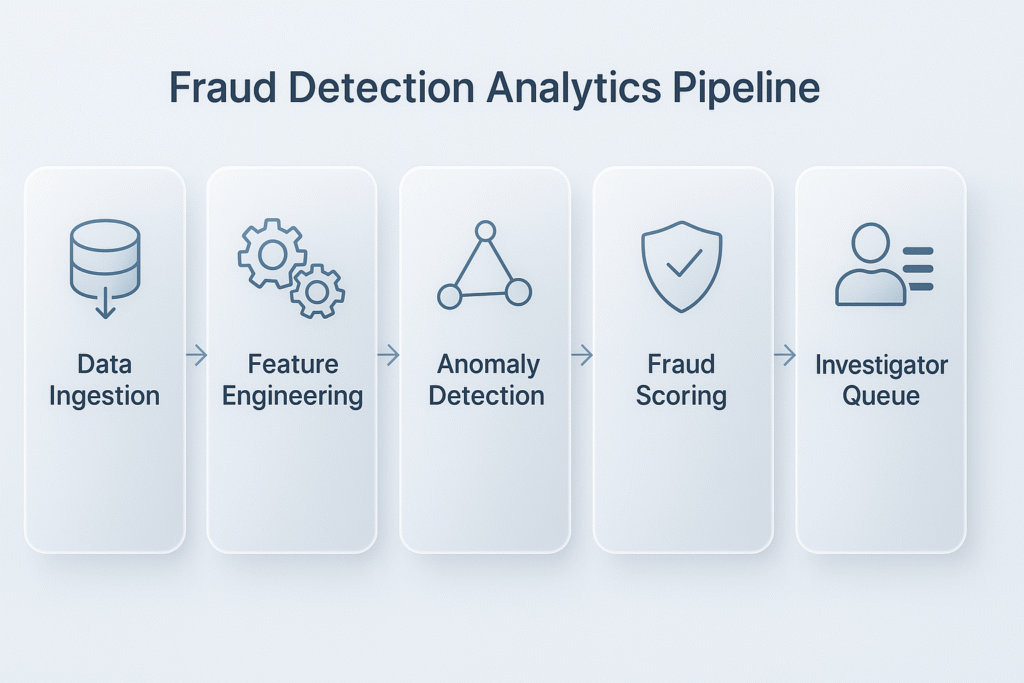
Fraud detection pipeline showing ingestion, features, anomalies, and scoring

4. Introduce Auto-Approvals

Start with low-risk claims.

5. Build Human-in-the-Loop Workflows

Humans review high-risk cases.

6. Automate End-to-End Claims

Payout initiation + audit logs + customer communication.

7. Scale Across All Lines of Business

Property, life, travel, crop, marine.

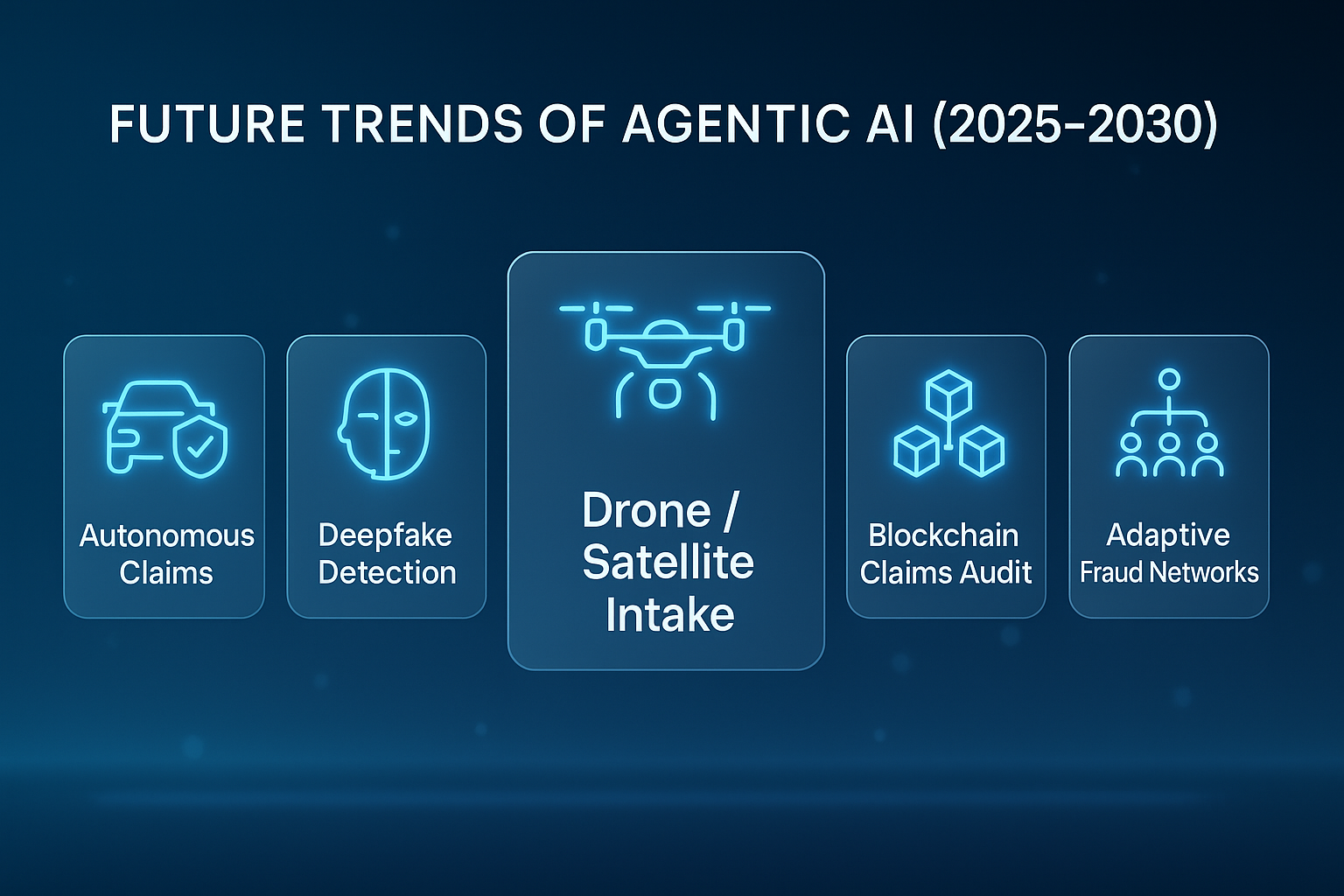
๐ŸŒ Future Trends of Agentic AI in Insurance (2025โ€“2030)

๐Ÿ” 1. AI-Generated Video Evidence Validation

Detecting deepfake claims.

๐Ÿค– 2. Fully Autonomous Claims Handlers

AI agents managing 100% of simple claims.

๐Ÿ“ก 3. Satellite + Drone + IoT Integration

Real-time risk scoring.

๐Ÿ”„ 4. Dynamic Fraud Networks

Self-learning fraud detection graphs.

๐Ÿ” 5. Zero Trust Claims

Blockchain + AI for tamper-proof claims.

๐Ÿ’ฌ 6. Voice-Based Claim Filing

Alexa/Siri-like assistants for insurance.

๐Ÿ“ˆ 7. On-Chain Micro-Insurance Smart contracts + AI โ†’ instant payouts

Future agentic AI trends including autonomous claims, deepfake detection, drone intake, blockchain audit, and fraud networks

๐Ÿ’ก Conclusion

Agentic AI is not a future concept โ€” itโ€™s already transforming claims and fraud operations around the world. Insurers using Agentic AI are experiencing:

  • Faster payout cycles
  • Massive cost reductions
  • Higher customer satisfaction
  • Lower fraud losses
  • Better compliance and reporting

The next 5 years will create a huge competitive gap between insurers who adopt Agentic AI early and those who donโ€™t. Now is the best time to modernize and build an intelligent, automated, fraud-resistant insurance ecosystem

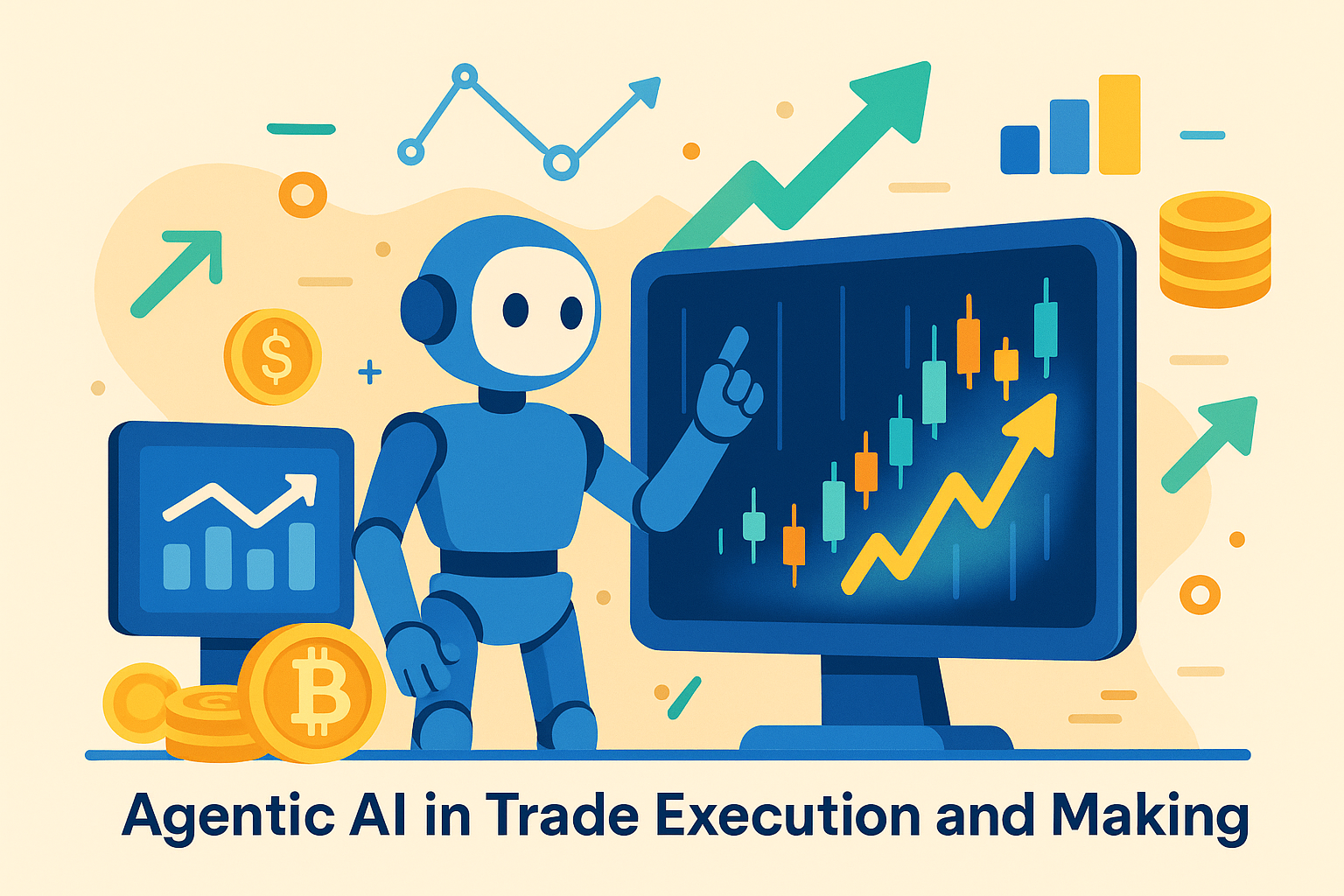
Agentic AI Is Redefining Trade Execution and Market Making

๐Ÿ’ก6 Powerful Benefits of Agentic AI in Trade Execution and Market Making

Agentic AI is transforming trade execution and market making with adaptive, self-learning trading systems. Learn how AI improves liquidity, pricing, and efficiency.

๐Ÿ’กHow Agentic AI Is Redefining Trade Execution and Market Making

Trade execution and market making shape the heart of global finance. Whether it’s stocks, crypto, forex, commoditiesโ€”or even tokenized assetsโ€”markets move because traders buy and sell continuously. But today, something groundbreaking is happening:

Agentic AI is entering the trading floor.

Unlike traditional trading algorithms that follow fixed rules, Agentic AI can think, decide, learn, negotiate, collaborate, and adapt in real timeโ€”just like a skilled human trader.

This shift is so massive that analysts believe:

โ€œAgentic AI will become the core engine of modern markets, automating 60โ€“80% of trade decisions by 2030.โ€ Letโ€™s dive into how Agentic AI is transforming trade execution and market makingโ€”and what it means for investors, institutions, exchanges, and regulators

โœ… What is Agentic AI? (Simple Explanation)

Agentic AI is AI that behaves like an intelligent agent.
It doesn’t just respond to commands โ€” it:

  • Understands context
  • Sets goals
  • Creates strategies
  • Executes actions
  • Learns from outcomes
  • Self-improves continuously

In trading, this means:

Traditional AlgorithmAgentic AI
Follows fixed rulesThinks, adapts, and optimizes
Needs manual tuningSelf-learns through feedback loops
Responds to eventsAnticipates events before they happen
Good in stable marketsDesigned for volatile environments

This makes Agentic AI the next evolution of quant trading

๐Ÿ“ˆ Where Agentic AI Fits in Financial Markets

Agentic AI is now being used in:

AreaExample of Use
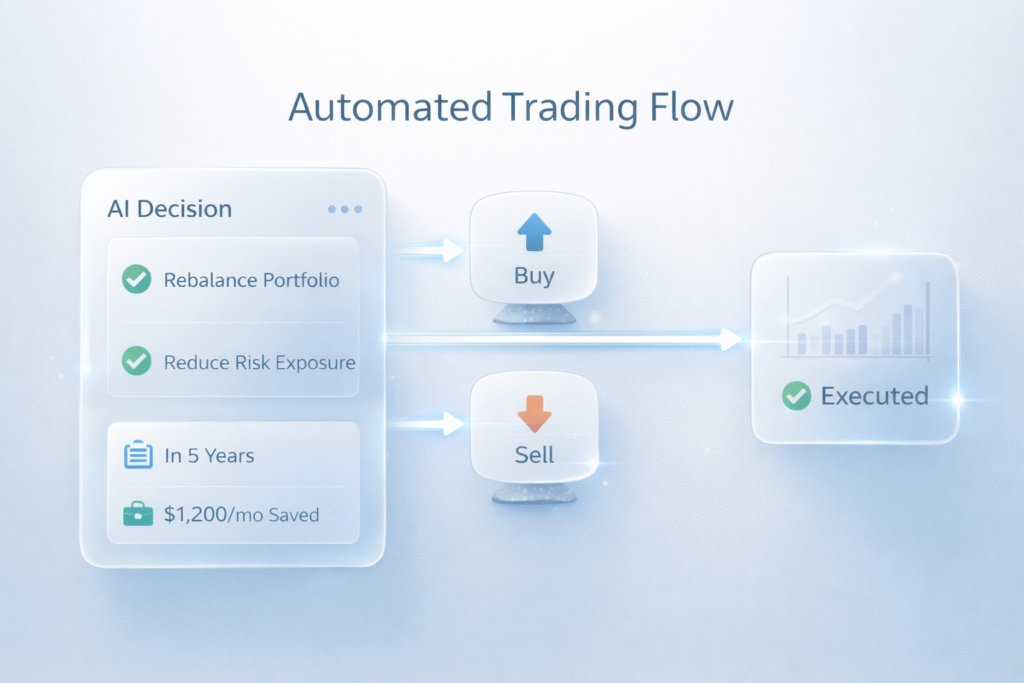
Trade ExecutionDeciding when/how to execute buy/sell orders
Market MakingProviding liquidity & managing inventories
ArbitrageExploiting price differences across exchanges
Portfolio RebalancingAdjusting asset weights dynamically
Risk ManagementPredicting drawdowns and volatility exposure

๐Ÿ’ก How Trade Execution Works (Before vs. After AI)

Before AI

A trader would:

  • Observe the market
  • Decide when to buy/sell
  • Split orders manually
  • Avoid slippage based on experience

With Agentic AI

The AI:

  • Reads order books, news feeds, on-chain data
  • Executes smart order routing across multiple venues
  • Minimizes slippage automatically
  • Times orders for best price fill
  • Learns from every executed trade

๐Ÿง  How Agentic AI Market Makers Operate

Market makers provide liquidity by quoting buy (bid) and sell (ask) prices.

Agentic AI does this better by:

  • Predicting near-term price movements
  • Adjusting spreads dynamically
  • Managing inventory automatically
  • Avoiding losses during volatility spikes

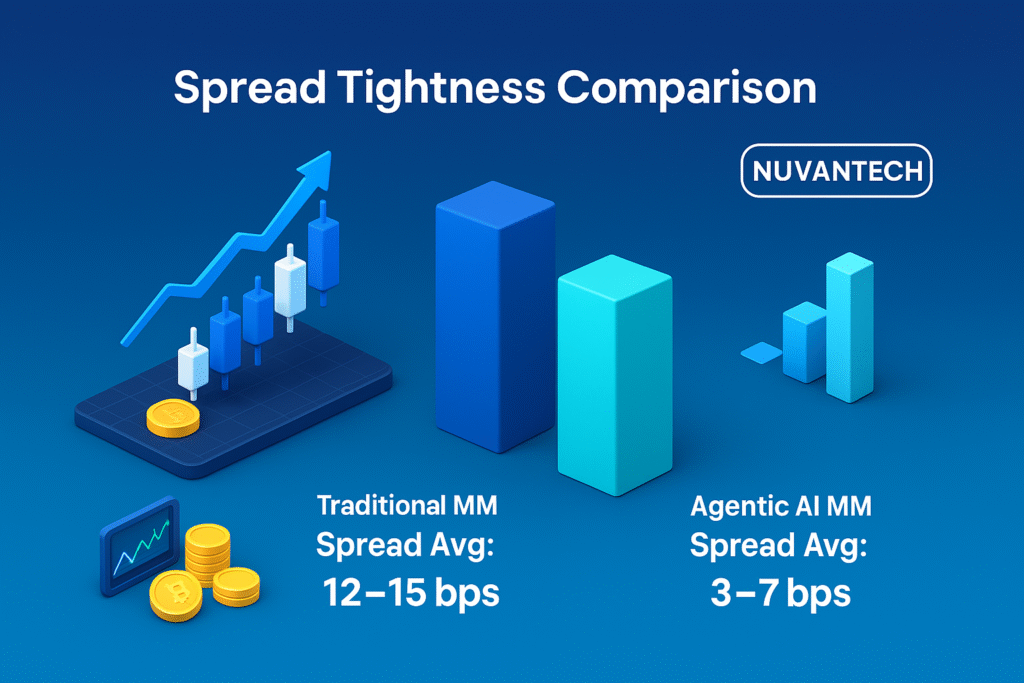
This leads to tighter spreads, better liquidity, and lower trading costs for everyone.

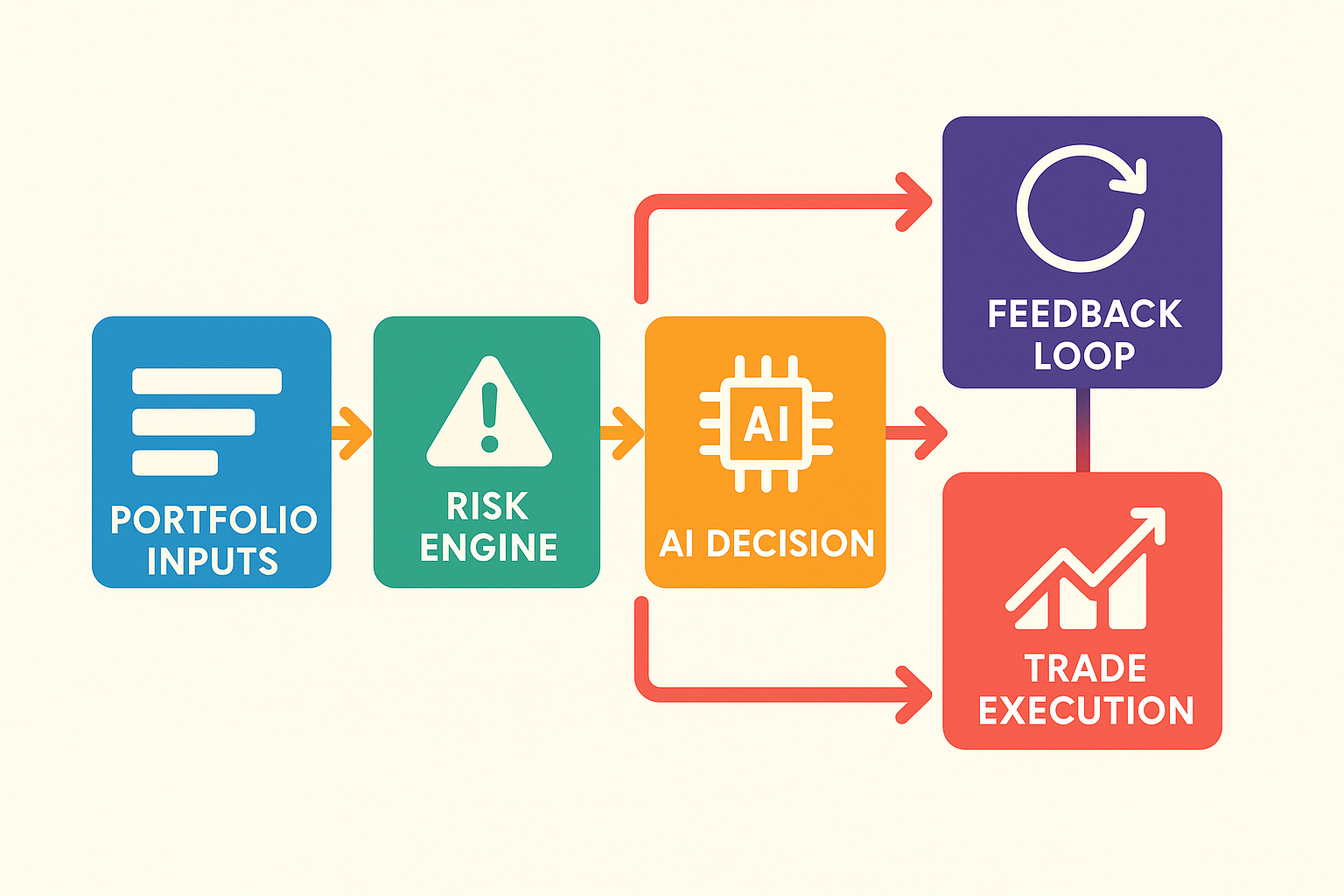
๐Ÿงฉ Core Components of an Agentic Trading System

ComponentRole
Market Data LayerReads tick-by-tick prices, depth, news, crypto mempools
Decision Engine (LLM + RL model)Determines best trading strategy
Execution EngineSplits and routes orders
Risk EngineMonitors portfolio exposure and drawdown
Feedback LoopLearns from outcomes to self-improve

ย ๐Ÿ› ๏ธ Step-by-Step Workflow of Agentic AI in Trade Execution

  1. Ingest Data (Price, liquidity, volatility, sentiment)
  2. Predict Short-Term Market Direction
  3. Determine Desired Trade Size
  4. Select Execution Strategy (TWAP, VWAP, Sniper, Iceberg, Dark Pools)
  5. Place Smart Routed Orders
  6. Monitor Fill Status and Market Conditions
  7. Adjust Orders Dynamically
  8. Record Outcome for Self-Improvement

โญ 6 Benefits of Agentic AI in Market Making and Execution

BenefitExplanation
Better PricingAI narrows bid-ask spreads intelligently
Lower SlippageSmarter order timing & routing
Higher LiquidityAI provides liquidity even in volatility
Faster Reaction TimeMicrosecond trade execution
Reduced Human BiasNo emotional trading mistakes
Scalable Across MarketsAI can run 24/7 globally

๐Ÿ“Š Example Visualization: AI-Based Vs Traditional Market Maker

AI-Based Vs Traditional Market Maker

๐Ÿš€ Real-World Use Cases in 2025

CompanyHow They Use AI
Citadel SecuritiesUltra-low-latency AI execution
Jump TradingMachine learning-driven crypto market making
Jane StreetAI-based arbitrage and ETF pricing
Binance & Coinbase ProAI liquidity bots managing order books
Uniswap v4 & CurveOn-chain automated market making (AMMs) with reinforcement agents

๐Ÿ”ฎ Future Trends (2025โ€“2030)

  1. Fully autonomous trading desks
  2. Agent-to-Agent market negotiation
  3. Decentralized AI market makers on-chain
  4. 24/7 cross-asset execution systems
  5. Regulated AI market governance frameworks

โš ๏ธ Risks & Challenges

RiskImpact
Flash CrashesAI reacting too quickly to noise
AI CollusionAgents unintentionally coordinating prices
Regulatory GapsLaws not yet adapted for AI decision-making
Model BiasIncorrect predictions under rare events

Regulators are working on AI audit trail and explainability frameworks.

๐ŸŽฏ Conclusion โ€” The Market Is Changing Fast

Agentic AI isnโ€™t just making trading fasterโ€”
it is fundamentally changing how markets operate.

From hedge funds to crypto exchanges to retail brokers, everyone is rapidly integrating AI to:

  • Improve liquidity
  • Optimize trade execution
  • Reduce risk
  • Increase profitability

The future of markets is:

AI-driven, self-learning, globally connected, and continuously adaptive.

If youโ€™re an investor, trader, or fintech builder โ€” this is the moment to learn and adapt.

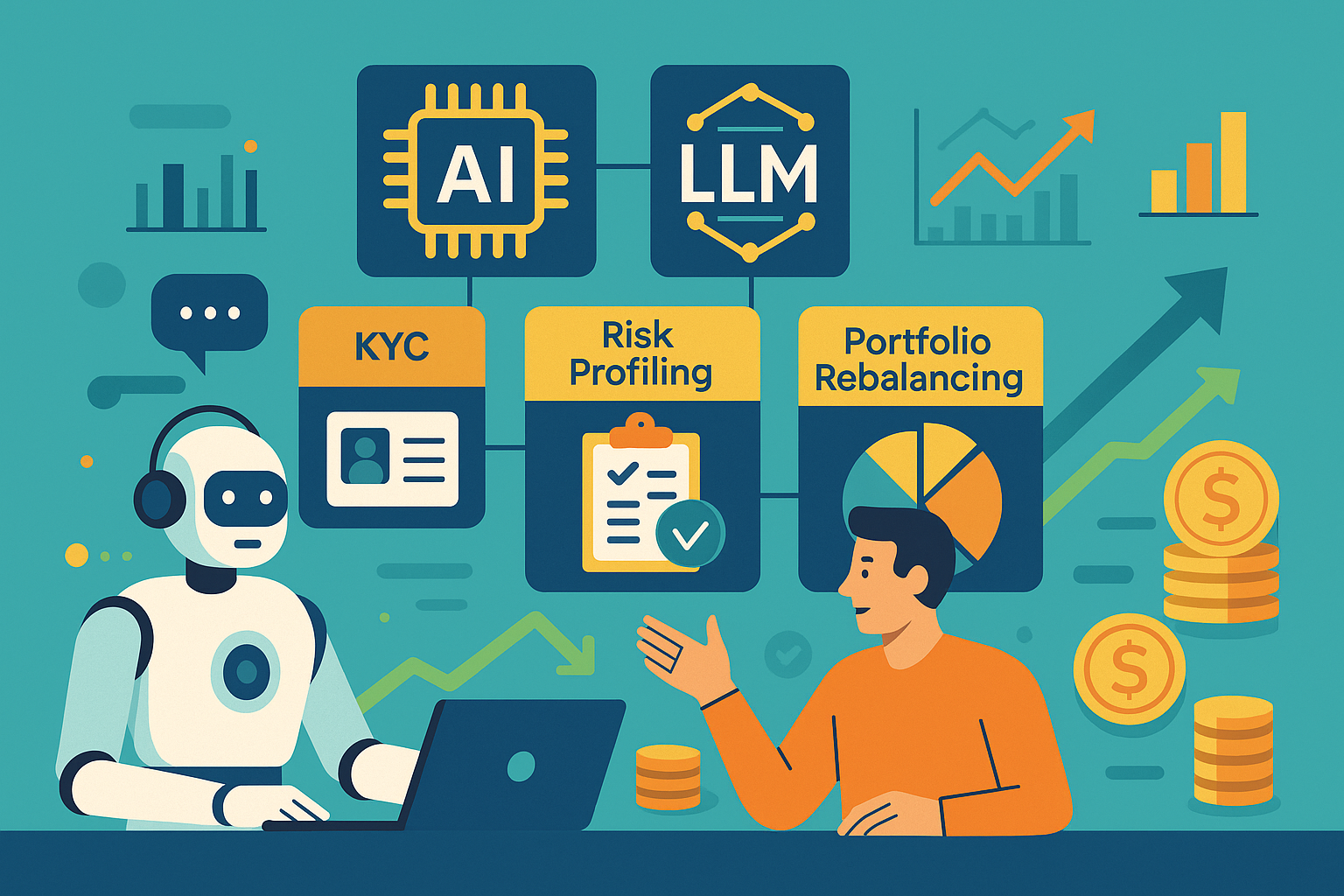
๐Ÿค– Agentic AI + Large Language Model Agents: Automating KYC, Risk Profiling & Portfolio Rebalancing

Discover how Agentic AI and Large Language Model (LLM) Agents automate KYC, risk profiling, and portfolio rebalancing โ€” simplifying wealth management

๐ŸŒ Introduction: From Manual to Autonomous Wealth Management

Think about your last financial task โ€” verifying your identity, filling a risk-profiling form, or adjusting your investment portfolio.
Now imagine a world where all of this happens automatically โ€” accurately, securely, and in real-time โ€” powered by Agentic AI and Large Language Model (LLM) Agents.

Welcome to the new era of intelligent wealth management โ€” where AI systems donโ€™t just assist humans; they act like humans, making financial workflows faster, more compliant, and deeply personalized.

This article breaks down how these intelligent agents are revolutionizing KYC (Know Your Customer), Risk Profiling, and Portfolio Rebalancing โ€” three pillars of modern financial services.

๐Ÿง  Understanding Agentic AI and LLM Agents

๐Ÿงฉ What Is Agentic AI?

Agentic AI refers to artificial intelligence systems that can act independently toward a specific goal using reasoning, memory, and feedback loops.
Unlike traditional AI models that require constant instructions, agentic AI can:

  • Analyze data
  • Make context-based decisions
  • Execute tasks automatically
  • Learn continuously from outcomes

In wealth management, this means AI systems that can analyse client data, suggest actions, and even implement investment decisions โ€” all while staying compliant

๐Ÿ—ฃ๏ธ What Are Large Language Model (LLM) Agents?

Large Language Models (like GPT or Gemini) are AI systems trained on massive datasets of text and code.
When combined with agentic frameworks, they evolve into LLM Agents โ€” capable of:

  • Understanding human language and context
  • Conducting conversations naturally
  • Connecting to APIs, databases, and fintech tools
  • Executing step-by-step financial workflows autonomously

In simpler words, LLM Agents = AI Advisors that talk, think, and act.

๐Ÿง  Agentic AI + LLM Agents = The Smartest Financial Assistant

๐Ÿง  Agentic AI + LLM Agents = The Smartest Financial Assistant

When you combine Agentic AIโ€™s reasoning with LLMโ€™s conversational understanding, you get autonomous systems that can handle complex, regulated workflows in wealth management.

๐Ÿฆ 1. Automating KYC (Know Your Customer) with Agentic AI

๐Ÿงพ The Problem: Manual KYC = Slow, Costly, Error-Prone Traditional KYC involves collecting IDs, verifying documents, checking databases, and logging audit trails โ€” often done manually by back-office teams.
This process can take days and increase onboarding costs significantly

โš™๏ธ The Solution: AI-Powered, Autonomous KYC

Agentic AI systems can automate the entire KYC journey end-to-end:

๐Ÿ”„ Step-by-Step Sequence:

  1. Data Capture โ€“ Extracts customer info using OCR (Optical Character Recognition) from uploaded documents.
  2. Identity Verification โ€“ Compares face, signature, and ID using computer vision models.
  3. Database Check โ€“ Integrates with APIs for AML (Anti-Money Laundering) and sanctions screening.
  4. LLM-Driven Reasoning โ€“ Interprets KYC anomalies and generates audit notes in plain English.
  5. Decision Engine โ€“ Approves or flags cases for compliance officer review.

๐Ÿ’ก Benefits of AI-KYC

BenefitExplanation
SpeedInstant identity checks within minutes instead of days
AccuracyNear-zero human error with machine-based verification
ScalabilityHandles thousands of KYC requests simultaneously
ComplianceBuilt-in regulatory rule engines (FATF, SEBI, FINTRAC)
User ExperienceSeamless onboarding across web & mobile
Automating KYC (Know Your Customer) with Agentic AI

๐Ÿ“Š 2. AI-Driven Risk Profiling: Understanding Investors Like Humans Do

๐Ÿ’ฌ The Challenge Human advisors spend hours asking clients about their income, goals, and risk tolerance โ€” but answers can be inconsistent, subjective, and hard to quantify

๐Ÿค– The AI-LLM Solution

LLM Agents can converse like a financial planner โ€” analyzing tone, keywords, and context โ€” while Agentic AI models translate responses into actionable financial insights.

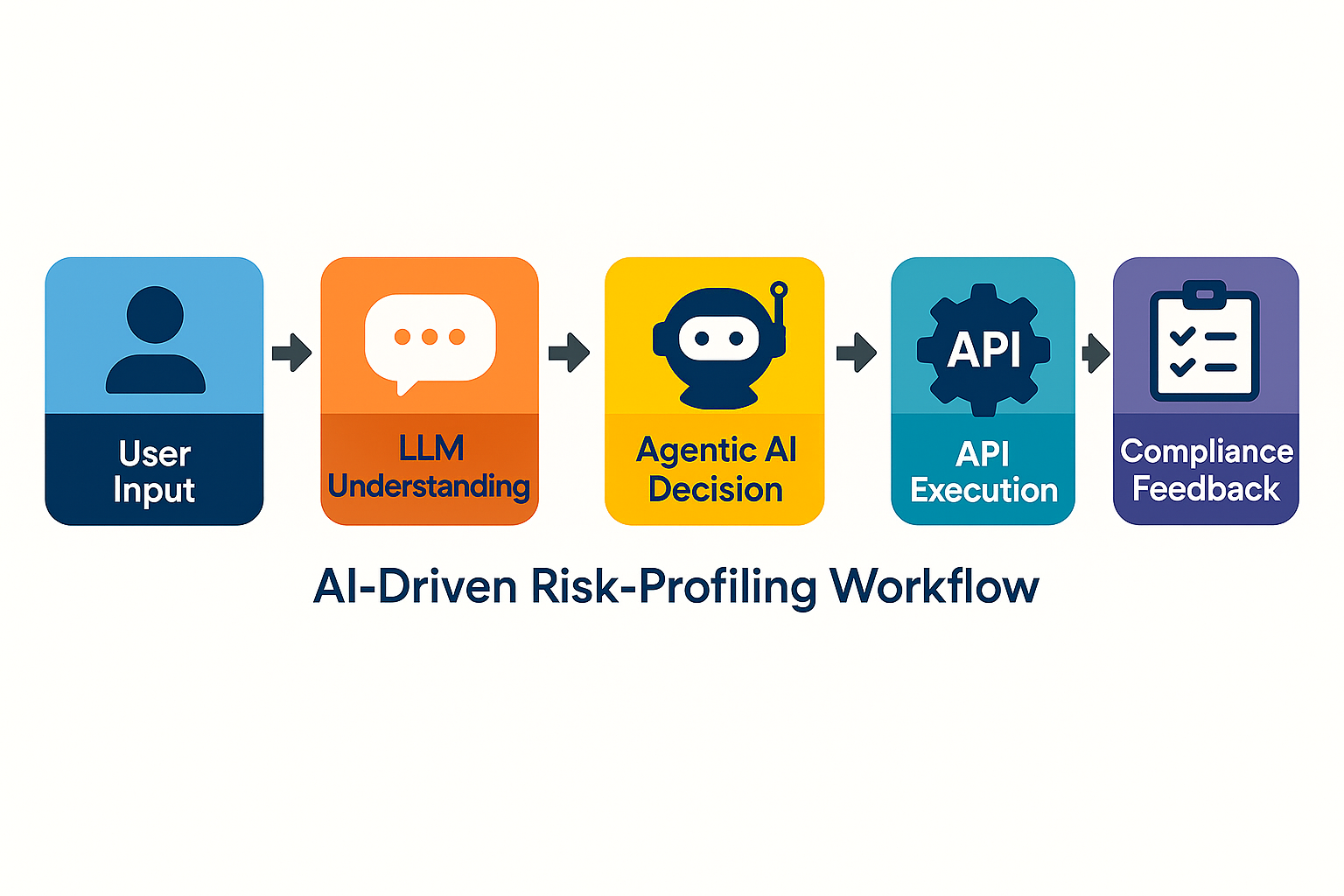
๐Ÿ’ก Step-by-Step AI Risk Profiling Flow

  1. Interactive Chat Interface โ€“ LLM agent conducts a natural-language interview (โ€œTell me about your investment goalsโ€).
  2. Sentiment Analysis โ€“ AI detects optimism, fear, or uncertainty in answers.
  3. Quantitative Scoring โ€“ Risk algorithms assign numerical tolerance scores.
  4. Dynamic Profiling โ€“ AI adjusts risk appetite automatically as client data changes.
  5. Feedback Loop โ€“ Results feed back into portfolio models and compliance systems
AI-Driven Risk Profiling: Understanding Investors Like Humans Do

๐Ÿงฎ Benefits of AI Risk Profiling

BenefitDescription
PersonalizedAdapts to lifestyle, emotions, and real-time financial data
Continuous UpdatesProfile evolves as markets and goals change
Emotion DetectionUnderstands fear, greed, or overconfidence in clients
Regulatory AlignmentAutomatically maps answers to risk categories (Conservative, Balanced, Aggressive)

๐Ÿงฉ Example

Imagine an investor says:

โ€œIโ€™m nervous about market drops, but I still want some growth.โ€

A human might interpret this vaguely.
An LLM-powered AI agent instantly categorizes this as Moderate Risk, balances equity vs. debt allocation, and logs the reasoning transparently for compliance.

๐Ÿ’ฐ 3. Portfolio Rebalancing: Intelligent, Real-Time Adjustments

๐Ÿ“‰ The Traditional Way

Portfolio rebalancing is often periodic โ€” monthly or quarterly โ€” and heavily manual.
Advisors check deviations, analyse market performance, and then recommend changes. This process is slow and reactive.

โš™๏ธ The AI Way: Continuous & Autonomous

Agentic AI systems use autonomous decision loops to monitor portfolios continuously and rebalance automatically when needed.

๐Ÿง  AI Workflow Sequence

  1. Data Ingestion โ€“ AI fetches market data, asset prices, and portfolio weightages in real-time.
  2. Deviation Detection โ€“ Identifies drift beyond pre-set thresholds.
  3. LLM Reasoning โ€“ Explains rationale in human terms (โ€œEquity overweight due to market surgeโ€).
  4. Execution Layer โ€“ Automatically triggers rebalancing via broker APIs.
  5. Audit & Feedback โ€“ Logs every action for transparency and learning
Portfolio Rebalancing: Intelligent, Real-Time Adjustments

๐ŸŒŸ Benefits of AI Portfolio Rebalancing

BenefitExplanation
24/7 MonitoringAI never sleeps โ€” tracks all portfolios in real-time
Emotion-Free DecisionsNo panic selling or over-optimism
Cost EfficiencyFewer manual analysts and faster execution
Performance OptimizationBetter returns through timely, rule-based adjustments
ExplainabilityEach trade decision is documented in plain language

4 ๐Ÿ”’ Compliance & Transparency: The Core of AI Automation

No automation is complete without trust and auditability.
Agentic AI systems are built with Explainable AI (XAI) and RegTech integration โ€” ensuring every action is justified and traceable.

โš–๏ธ Key Compliance Features:

  • KYC Audit Logs: Every client verification step is timestamped and recorded.
  • Regulatory Mappings: MiFID II, SEBI, or FINRA standards embedded in algorithms.
  • Explainable Outputs: Each AI decision includes a human-readable summary.
  • Anomaly Detection: AI flags suspicious transactions automatically.

๐Ÿ’ฌ Example:

โ€œClientโ€™s risk profile has shifted from Moderate to Aggressive due to income increase โ€” system recommends adjusting equity ratio.โ€

Thatโ€™s not just automation โ€” itโ€™s AI governance in action.

Compliance & Transparency The Core of AI Automation
LayerDescription
LLM AgentsUnderstand natural language, handle user interaction
Agentic AI LayerExecutes logic, decisions, and continuous learning
API GatewayConnects with KYC, brokerage, and analytics systems
Data LakeStores transactions, logs, and performance data
Compliance EngineValidates every action against regulations

5 ๐ŸŒ Real-World Applications (2025 & Beyond)

CompanyInnovation
JP Morgan COINAI contract intelligence for compliance
Wealthfront 2.0Automated tax-loss harvesting with AI agents
Kristal.AI & QuantelaHybrid human + AI advisory
Finbox, Plaid, DriveWealthAPI ecosystems enabling real-time automation

๐Ÿ”ฎ Future Trends (2025โ€“2030)

TrendImpact
Multi-Agent SystemsSpecialized AI agents for KYC, trading, and compliance collaborating autonomously
Voice-Based AdvisoryTalk to your AI wealth manager via Alexa-style assistants
Emotion-Aware AIDetects stress or bias before executing trades
DeFi + AI IntegrationCross-border asset management on decentralized ledgers
Zero-Touch Onboarding100% AI-managed client journeys from signup to investment

๐Ÿ’ก Practical Tips for Wealth Managers

  1. Start Small โ€“ Automate just KYC or risk profiling first.
  2. Choose Secure APIs โ€“ Partner only with audited fintech API providers.
  3. Invest in Explainability โ€“ Use dashboards showing AI reasoning.
  4. Maintain Human Oversight โ€“ AI assists, humans approve.
  5. Train Your Teams โ€“ Educate advisors on how to interpret AI outputs

๐Ÿงญ Conclusion: From Automation to Autonomy

The convergence of Agentic AI and LLM Agents marks the next leap in financial innovation.
These systems are not just automating routine tasks โ€” theyโ€™re building intelligent, compliant, and adaptive wealth ecosystems that can understand clients as humans do and act as efficiently as machines can. In the coming years, wealth management will be defined not by โ€œwho manages your moneyโ€, but by โ€œhow intelligently itโ€™s managed.โ€ And thatโ€™s the power of Agentic AI in action.

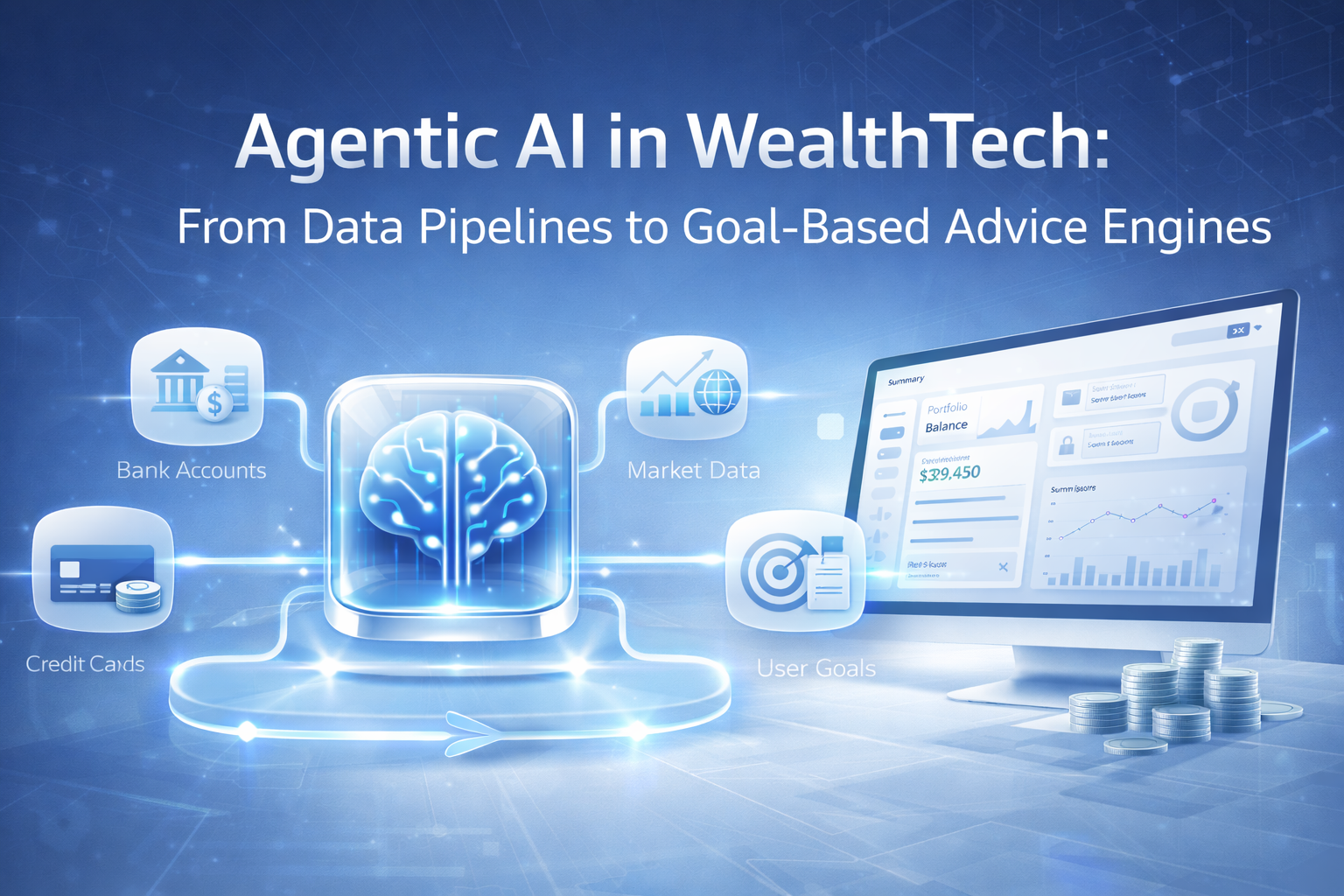
๐ŸŒŸ 5 Pillars of Agentic AI in WealthTech: The Ultimate Guide to Autonomous Advisory Platforms

โ€œDiscover how Agentic AI is transforming WealthTechโ€”autonomous advisors, multi-agent architecture, compliance, and future trends in wealth management

๐ŸŒŸ Introduction: The Wealth Advisor That Never Sleeps

Imagine a financial advisor who can analyse thousands of portfolios overnight, suggest goal-based plans, rebalance investments in seconds, and talk to you in plain Englishโ€”or your native language.
Thatโ€™s not science fiction anymore. Agentic AIโ€”AI systems capable of acting autonomously to achieve specific goalsโ€”is reshaping the entire wealth-management industry. In this article, weโ€™ll break down what Agentic AI means in WealthTech, why it matters for both investors and firms, the building blocks of such platforms, and where the future is headed.

๐Ÿงฉ What is Agentic AI?

Agentic AI refers to AI-powered software โ€œagentsโ€ that can understand goals, reason about actions, and take stepsโ€”often across multiple apps or APIsโ€”to achieve those goals with minimal human input.

In WealthTech, that means:

  • Understanding investor goals: retirement, tax-efficient investing, or saving for a childโ€™s education.
  • Acting on behalf of the user: rebalancing portfolios, alerting on risks, executing trades, or updating KYC data.
  • Learning continuously: improving advice based on new market data and user behaviour.

Think of it as moving beyond traditional robo-advisors (which mostly follow predefined rules) to autonomous AI agents that can plan, execute, and adapt.

๐Ÿ’ก Why Wealth Firms Are Turning to Agentic AI

Wealth managers globally face four key challenges:

  1. High operational costs due to manual client onboarding, compliance, and rebalancing.
  2. Demand for personalized advice at scale across mass-affluent and NRI/HNI segments.
  3. Tight regulations & compliance needs (SEBI, MiFID II, SEC, MAS, etc.).
  4. Competitive pressure from fintechโ€™s and big-tech entrants.

Agentic AI addresses these by:

  • Reducing costs: automating repetitive workflows (onboarding, suitability checks).
  • Scaling personalization: tailoring portfolios to micro-segments or even 1-to-1.
  • Boosting client experience: offering 24ร—7, multilingual guidance.
  • Improving compliance: generating explainable decision trails

๐Ÿ“Š Benefits for Investors & Firms

For Investors

  • Always-on advisor: available 24ร—7 across mobile, WhatsApp, or web chat.
  • Faster decisions: instant portfolio diagnostics and recommendations.
  • Lower advisory fees: due to operational efficiency.
  • Goal-aligned strategies: AI adapts to life events (marriage, children, retirement).

For Wealth Firms

  • Up to 40โ€“60% cost savings in onboarding and middle-office operations.
  • Data-driven cross-selling: better matching of products to customer profiles.
  • Stronger retention: hyper-personalized nudges improve customer stickiness.
  • Regulatory readiness: automatic record-keeping of recommendations

 ๐Ÿ—๏ธ Designing an Agentic AI-Powered Wealth Platform

Hereโ€™s a five-step sequence for product owners and tech teams:

  1. Define Product Vision & Goals
    1. Examples: automated KYC & onboarding, risk-based portfolio rebalancing, global tax optimization.
  2. Map Investor Journey
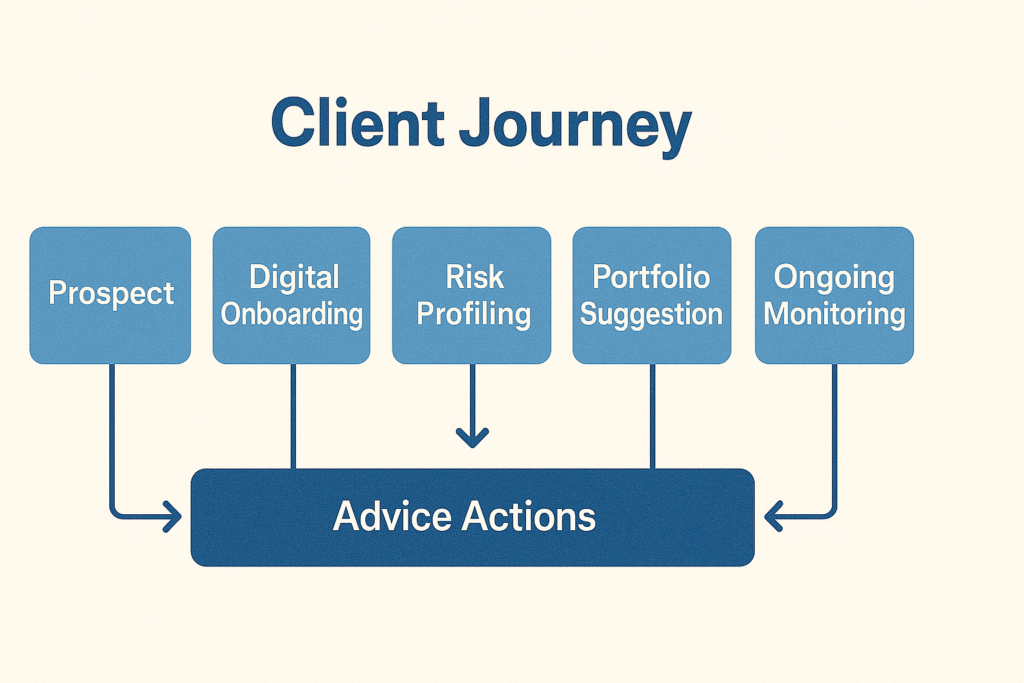
    1. Hero Chart: Client-Journey Map โ€“ Prospect โ†’ Digital Onboarding โ†’ Risk Profiling โ†’ Portfolio Suggestion โ†’ Ongoing Monitoring โ†’ Advice Actions.
Client journey map for AI-powered WealthTech advisory platform
  1. Select AI Core & Agents
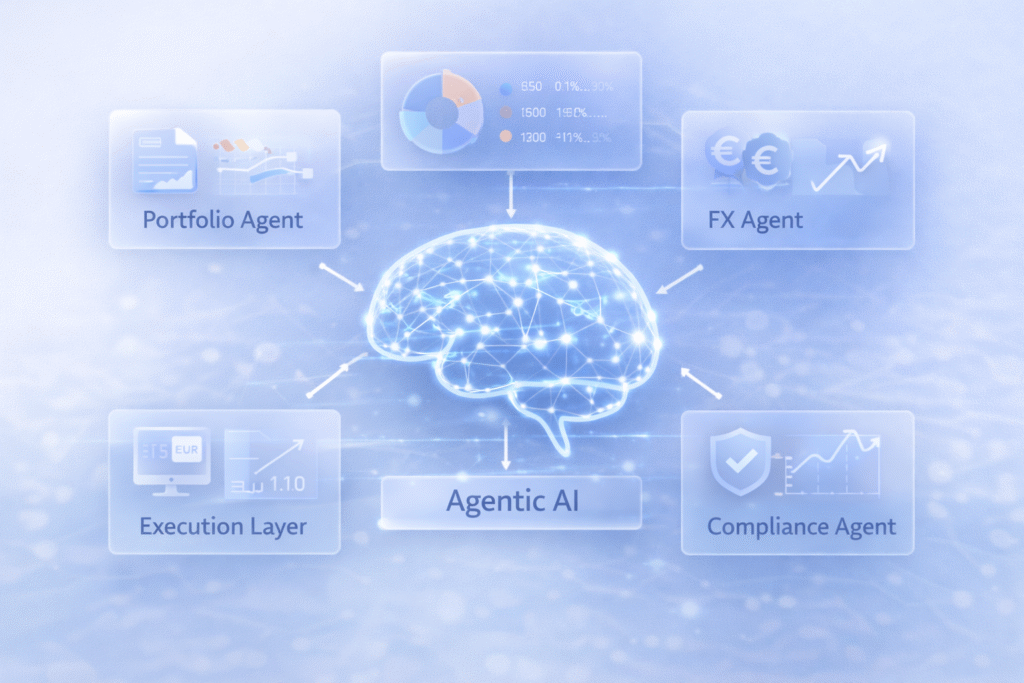
    1. Use a multi-agent system:
    2. Data Ingestion Agent: pulls live market, ESG, & macro data.
    3. Risk Agent: runs stress tests.Advice Agent: suggests allocation & rebalancing.
    4. Compliance Agent: ensures SEBI/SEC rules before execution.
  2. Design Human-in-the-Loop Controls
    1. Advisors supervise AI actions for high-net-worth clients.
  3. Integrate APIs & Compliance Layers
  4. Connect with trading, KYC, CRM, AML, and reporting systems

๐Ÿ”— Architecture Snapshot

Architecture diagram of Agentic AI in WealthTech showing multi-agent system design

๐Ÿ”ฅ Future Trends to Watch (2025โ€“2030)

  1. Multi-modal financial assistants: integrating text + voice + AR dashboards.
  2. ESG & Impact Investing agents: AI that optimizes for carbon footprint & social impact.
  3. Personalized tax agents: cross-border tax optimization for NRIs.
  4. AI-driven estate & retirement planning: deeper life-event modelling.
  5. Federated & privacy-preserving AI: compliant with Indiaโ€™s DPDP Act, EUโ€™s GDPR.
  6. Blockchain-based agent settlement: faster cross-border payments

๐Ÿ“ Steps for Wealth Firms to Get Started

  • Begin with one high-impact use case (e.g., automated onboarding).
  • Pilot with synthetic data & sandbox environments.
  • Ensure explainability & audit trails for every recommendation.
  • Partner with FinTech vendors or build in-house multi-agent frameworks.
  • Train teamsโ€”BA/PO, compliance, and advisorsโ€”to supervise AI actions

๐Ÿ’ฌ Key Takeaways

Agentic AI isnโ€™t replacing human advisorsโ€”itโ€™s augmenting them to deliver personalized, compliant, and cost-efficient services at scale.
Wealth firms that adopt early can improve client trust, reduce costs, and build competitive moats

๐Ÿš€ Conclusion

The journey from robo-advisors to agentic, autonomous advisory platforms is underway. By embracing this shift nowโ€”building human-AI partnerships and focusing on explainabilityโ€”WealthTech players can unlock new opportunities for millions of investors worldwide.

Scroll to Top